



Zipline Safety Lanyard Guide: Standards, Specs, and Operator Safety (2026)
A single hairline fracture or a few frayed threads in your zipline safety lanyard can be the difference between a successful season and a catastrophic liability claim. In an industry where gravity never takes a day off, your equipment shouldn't either. You already know that rider safety is the non-negotiable foundation of your business. However, keeping pace with shifting regulations like the 2026 ANSI/ACCT revisions often feels like a moving target. It's difficult to manage high-volume throughput while worrying if your hardware truly meets the latest industrial-grade benchmarks for durability and strength.
This guide will help you master the technical requirements and safety standards for zipline lanyards to ensure maximum rider security and operational compliance. We'll examine the critical differences between MIL-SPEC webbing and standard materials, provide a clear roadmap for equipment retirement criteria, and break down the specific 23kN load ratings required for commercial environments. We'll also look at how the latest ASTM developments impact your daily inspections. By the end, you'll have the technical assurance needed to protect your guests, your staff, and your professional reputation.
Key Takeaways
- Understand why a 23kN minimum breaking strength is the industrial benchmark for ensuring maximum security in commercial environments.
- Learn to identify physical "red flags" like glazing, fraying, and chemical exposure that signal immediate equipment retirement.
- Compare fixed, adjustable, and Y-style configurations to find the right zipline safety lanyard for your specific trolley and rider height needs.
- Navigate the 2026 ANSI/ACCT and ASTM standard revisions to maintain full operational compliance and minimize liability.
- Discover how MIL-SPEC webbing and reinforced bar-tack stitching extend equipment lifespan in high-volume, high-cycle environments.
What is a Zipline Safety Lanyard and Why Does Quality Matter?
A Lanyard in a vertical environment is the critical bridge between security and catastrophe. Specifically, a zipline safety lanyard is a high-strength tether designed to connect a rider's harness to the trolley. While the trolley and harness are often the most visible pieces of gear, the lanyard is the silent workhorse of the safety chain. It's the most flexible component, meaning it absorbs the most movement, vibration, and friction during every run. Professional operators recognize that this component is the most vulnerable link because it's prone to internal wear and environmental degradation that isn't always visible during a cursory glance.
Using dedicated tethers instead of general climbing slings is a vital part of liability management. Climbing slings are typically designed for low-frequency fall arrests in recreational settings. In contrast, professional zipline equipment must withstand high-cycle use while exposed to harsh outdoor elements. Choosing gear engineered for these specific stresses provides a sobering sense of security for operators who face rigorous daily inspections and high-volume throughput. It reflects a commitment to industrial reliability over recreational compromise.
The Role of the Lanyard in Aerial Adventure
The lanyard serves as the primary load-bearing connection in most commercial zipline configurations. In many systems, a single lanyard or a Y-style tether acts as both the main support and the backup safety connection. This creates a direct load path from the harness gear loops through the high-strength webbing and into the trolley. High-frequency use in adventure parks puts immense strain on these textile fibers. Every time a rider launches, the lanyard experiences tension and potential abrasion against other hardware. You must visualize the load path clearly; if any part of this textile bridge fails, the mechanical integrity of the harness and trolley becomes irrelevant.
Industrial vs. Recreational Standards
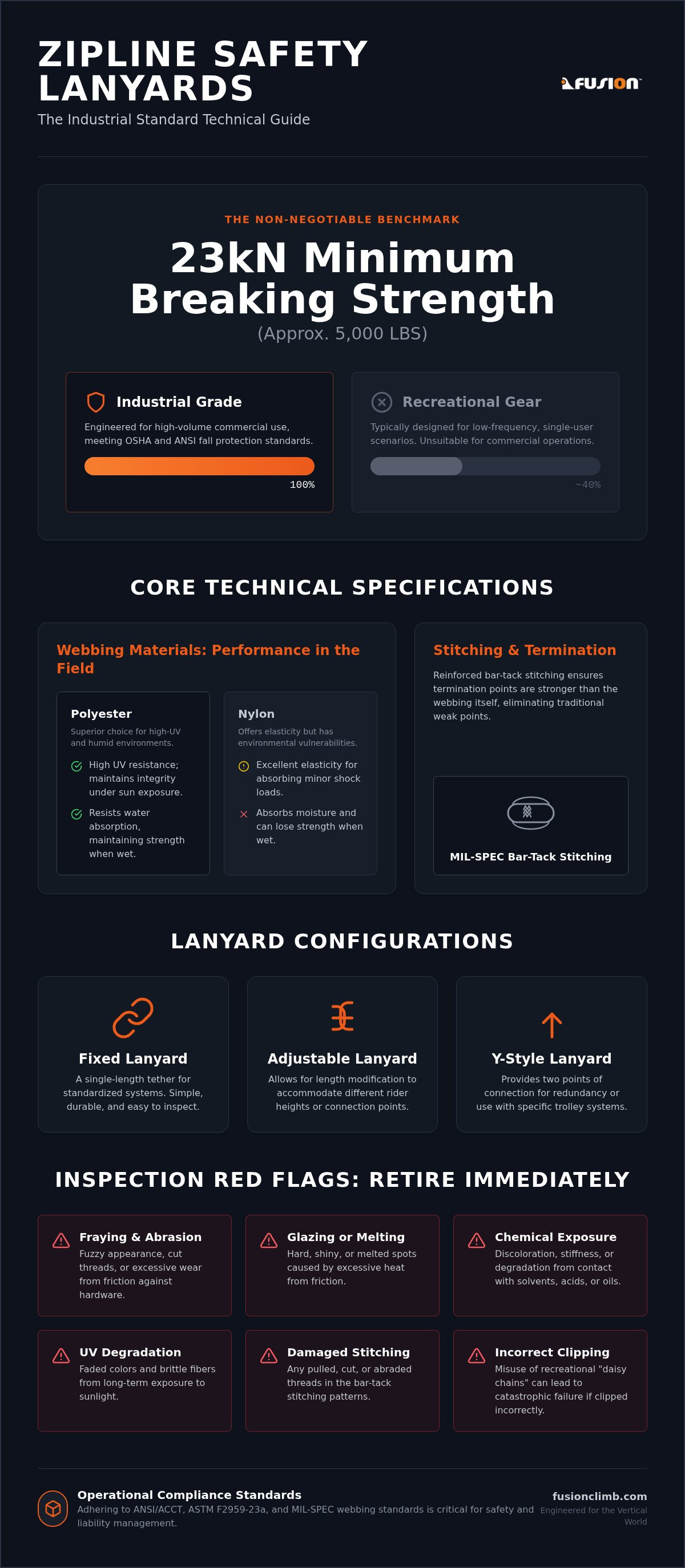
In the commercial zipline industry, 23kN (5,000 lbs) is the non-negotiable benchmark for minimum breaking strength. This standard aligns with OSHA and ANSI requirements for industrial fall protection. Some operators mistakenly use recreational "daisy chains" for rider connections. These are dangerous because they aren't rated for the dynamic loads found in ziplining and can fail if a single loop is clipped incorrectly. Industrial-grade gear uses MIL-SPEC webbing and reinforced bar-tack stitching to ensure maximum durability. Adhering to these standards isn't just about following rules; it's about providing a professional-grade experience that stands up to the high-stakes nature of the industry.
Technical Specifications: Webbing, Stitching, and Load Ratings
Every strand of a zipline safety lanyard represents a deliberate engineering choice. In a high-stakes vertical environment, material science dictates the longevity and reliability of your gear. While recreational users might focus on aesthetics, commercial operators must prioritize technical specs that withstand the relentless cycle of daily use. Industrial tethers are built to meet a 23kN (5,000 lbs) minimum breaking strength, ensuring they can handle the dynamic loads of a rider in motion without hesitation. This level of precision is required to meet the safety benchmarks set by ASTM F2959-23a, which governs the design and performance of equipment used in aerial adventure courses.
Webbing Materials and Environmental Performance
The choice between nylon and polyester webbing significantly impacts how your equipment ages in the field. Nylon offers excellent elasticity, which helps absorb minor shock loads, but it tends to absorb moisture and can lose strength when wet. Polyester is the superior choice for high-UV environments or humid climates. It resists water absorption and maintains its structural integrity better under constant sun exposure. For commercial operations, 1.75-inch webbing provides a much larger surface area for abrasion resistance compared to standard 1-inch straps. MIL-SPEC webbing is an industrial standard for high-tensile reliability, ensuring that the base material meets strict military-grade quality controls before it ever enters the manufacturing process.
Reinforced Stitching and Termination Strength
The point where the webbing loops back on itself is traditionally the weakest part of any tether. Professional manufacturers solve this through reinforced bar-tack stitching, a process that uses dense, computer-controlled patterns to distribute weight evenly across the fibers. This engineering ensures the termination is just as strong as the webbing itself. Choosing between soft eye loops and metal delta rings depends on your specific trolley and harness setup. Soft eyes offer flexibility and weight reduction, while delta rings provide a rigid, wear-resistant connection point for carabiners. You should always opt for factory-sewn terminations over field-tied knots, as knots can reduce the strength of the webbing by up to 50 percent. When you evaluate your fleet, choosing a high-strength lanyard and tether with reinforced bar-tacking ensures your operation stays compliant and your riders stay secure.
Selecting the Right Lanyard: Fixed, Adjustable, and Y-Styles
Choosing a zipline safety lanyard isn't just about meeting a strength requirement; it's about matching the hardware to your course's specific geometry. Commercial operators must select configurations that balance rider ergonomics with operational efficiency. While every industrial-grade tether must maintain a 23kN minimum breaking strength, the physical design determines how effectively your guides can manage throughput. A poorly matched lanyard can lead to rider discomfort or, more seriously, difficulty reaching the trolley during a mid-line rescue. You need gear that acts as a silent partner in your safety protocol.
Fixed vs. Adjustable Tethers
Fixed-length tethers are the gold standard for simplicity and risk reduction. They eliminate the possibility of improper adjustment by guests or inexperienced staff. A 19-inch lanyard is often the ideal choice for compact trolley setups, while a 24-inch version provides the necessary clearance for larger riders or specific commercial zipline pulleys. Conversely, adjustable lanyards offer unmatched versatility for diverse populations. These tethers utilize hitch-loop mechanisms to accommodate varying rider heights, ensuring the trolley remains within a safe reaching distance at all times. This adaptability is essential for multi-user parks where a "one size fits all" approach creates operational friction.
Y-Lanyards and Transition Safety
In environments with high-risk transition zones, the Y-lanyard, or "lobster claw," is an essential piece of ropes course safety equipment. These tethers provide redundant security by allowing for 100% tie-off during platform transfers. A rider remains securely connected to a safety line with one arm of the "Y" while moving the second arm to the next anchor point. This protocol is a cornerstone of the safety standards developed by the Association for Challenge Course Technology (ACCT). Double-tethering isn't just a backup; it's a proactive defense against human error during the most vulnerable moments of an aerial tour.
Specialized operations might also require lanyards with integrated gear loops or reinforced handles. These features allow riders to stabilize themselves during high-speed descents or help guides manage equipment more effectively at the landing platform. Every specialized feature must still adhere to the same rigorous testing and MIL-SPEC webbing standards that define professional-grade equipment. Don't compromise on the form factor; choose the style that reinforces your specific safety workflow.
Operational Safety: Inspection and Retirement Protocols
Maintaining a rigorous inspection schedule is the only way to ensure your zipline safety lanyard continues to meet industrial benchmarks. For high-volume parks, a multi-tiered approach is essential. Daily checks catch immediate damage; monthly audits identify progressive wear; and annual professional inspections provide the documentation needed for insurance compliance. You shouldn't rely on the "Five Year Rule" alone. While many manufacturers suggest a maximum five-year shelf life, the reality of high-cycle use often dictates a much shorter operational lifespan. If you wait for the calendar to tell you when to retire gear, you're already operating at a deficit.
Documentation is your primary defense against liability concerns. Keeping detailed safety logs for every piece of gear proves that you prioritize rider security and follow national standards. These logs should track the date of first use, the number of cycles, and any specific environmental exposures. A well-documented gear history is a hallmark of a professional operation and provides peace of mind during internal audits or third-party inspections.
The Daily Inspection Checklist
Your guides are the first line of defense. They must perform a tactile inspection of every lanyard by sliding their hands along the webbing to feel for "crunchy" or stiff sections. These stiff spots often indicate internal fiber damage or chemical contamination. A visual inspection should focus on the reinforced bar-tack stitching. Look for popped or loose threads that could compromise the termination strength. Finally, check all hardware. Delta rings and carabiners must be free of deep grooves or burrs. OSHA requires hardware to withstand a tensile loading of 4,000 pounds without cracking or permanent deformation, so any visible distortion means immediate retirement.
When to Retire a Zipline Lanyard Immediately
Immediate retirement is mandatory if you identify more than 10% fiber loss in any section of the webbing. Deep cuts, significant fraying, or visible glazing from friction heat are non-negotiable red flags. Sun-bleaching is another silent killer. UV exposure progressively brittleizes nylon and polyester fibers, leading to a drastic reduction in tensile strength over time. ANSI Z359 standards require that any lanyard involved in a fall or displaying significant structural degradation must be removed from service immediately. If you're unsure about a piece of gear, cut it up and throw it away. Upgrade your fleet with industrial-grade zipline safety lanyards to ensure your operation stays within the highest safety margins.
The Fusion Climb Advantage: Engineered for the Vertical World
Fusion Climb isn't just a manufacturer; we're a silent partner in your operation's success. With over 25 years of specialized experience in vertical environments, we understand that a zipline safety lanyard must be more than just a piece of webbing. It's a precision-engineered tool designed to withstand the relentless cycles of a busy adventure park. Our commitment to industrial reliability means we don't settle for "good enough." While other manufacturers might offer 23kN (5,000 lbs) as a premium upgrade, it remains the non-negotiable standard for our ProGrip series. We prioritize substance over style, ensuring every stitch and fiber is ready for real-world application in high-stakes environments.
Built for High-Cycle Commercial Use
Generic climbing gear isn't built for the abrasive environment of a commercial zipline course. Fusion lanyards are constructed using high-strength MIL-SPEC webbing and reinforced bar-tack stitching to ensure they outlast generic alternatives by a significant margin. This industrial durability is essential for maintaining high-volume throughput without compromising your safety margins. There's a distinct synergy between our harnesses, pulleys, and lanyards. They're designed to work as a unified system that minimizes wear on individual components. For a deeper look at material selection and technical assurance, review our zipline lanyards and tethers guide to see how we've optimized our gear for the 2026 season.
Your Partner in Aerial Safety
Choosing the right rigging hardware requires more than a simple catalog search. It requires technical expertise. We provide custom solutions for commercial operators who need gear tailored to specific trolley configurations or unique rider demographics. We're a dependable guardian for your business, offering the technical assurance you need to push physical limits safely. Beyond individual components, we provide bulk wholesale solutions to keep your entire fleet current, compliant, and cost-effective. Don't leave your liability to chance or settle for recreational-grade equipment. Equip your park with Fusion Climb safety lanyards today and experience the difference that professional-grade craftsmanship brings to your daily operations.
Elevating Your Safety Standards for the 2026 Season
Operational success in the aerial adventure industry is built on a foundation of technical assurance. You now understand how 23kN load ratings and MIL-SPEC webbing transition a simple tether into a professional-grade component. Maintaining these standards through disciplined inspection protocols isn't just about compliance; it's about protecting every rider who steps off your platform. Choosing a high-performance zipline safety lanyard ensures your gear outlasts the high-cycle demands of a busy season while minimizing your long-term liability. There's no room for compromise when you're operating in a high-stakes vertical environment.
Fusion Climb has spent over 25 years perfecting manufacturing processes to act as a dependable guardian for your business. Our reinforced bar-tack stitching and industrial-grade materials provide the sobering sense of security you need to focus on the guest experience. It's time to move beyond recreational compromises and invest in equipment engineered for the vertical world. Shop Professional Zipline Lanyards & Tethers to secure your fleet with industrial-grade reliability. Your commitment to safety is the most important investment you'll make this year.
Frequently Asked Questions
What is the minimum breaking strength for a zipline safety lanyard?
The minimum breaking strength for a commercial zipline safety lanyard is 23kN, which translates to approximately 5,000 pounds. This industrial benchmark ensures the gear can withstand dynamic shock loads during a rider's descent. While recreational equipment often carries lower ratings, commercial adventure parks must adhere to these higher standards to maintain compliance with ACCT and ANSI regulations. Using gear rated below this threshold introduces unacceptable risk into your safety chain.
Can I use a standard climbing sling as a zipline lanyard?
You shouldn't use standard climbing slings for commercial zipline operations. While climbing slings are excellent for low-frequency fall arrest in recreational settings, they aren't engineered for the high-cycle demands and constant abrasion of a zipline course. Dedicated tethers feature reinforced bar-tack stitching and MIL-SPEC webbing specifically designed to maintain integrity over thousands of rider cycles. Professional operators prioritize industrial-grade hardware to manage liability and ensure long-term reliability.
How often should commercial zipline lanyards be replaced?
Commercial lanyards should be replaced based on actual wear and tear rather than just calendar dates. While many manufacturers suggest a maximum shelf life of five years, high-volume parks often retire gear much sooner. You must establish a retirement schedule based on daily inspections. If a lanyard shows 10 percent fiber loss, significant glazing, or deep cuts, it must be removed from service immediately regardless of its age or previous history.
What is the difference between nylon and polyester zipline tethers?
Nylon tethers offer superior elasticity and shock absorption, making them comfortable for riders, but they can lose strength when wet. Polyester webbing is the preferred choice for humid or high-UV environments because it resists water absorption and maintains structural integrity under constant sun exposure. Choosing the right material depends on your local climate and course geometry. Both materials must meet the 23kN standard to be considered professional-grade equipment for your operation.
What does the 23kN rating on a lanyard actually mean?
A 23kN rating indicates that the lanyard can withstand 23 kilonewtons of force before failing, which is roughly equivalent to 5,170 pounds of static weight. This isn't just a random number; it's the industrial standard required to ensure a safety factor that accounts for dynamic forces. When a rider stops suddenly or experiences a jolt, the force applied to the lanyard can far exceed their body weight, making this high rating essential for safety.
How do I inspect a lanyard for UV damage?
You can identify UV damage by looking for significant color fading and checking the physical texture of the webbing. Sun-bleached fibers often become brittle or stiff to the touch, losing the flexibility found in new gear. If the webbing feels crunchy or displays a powdery residue when flexed, the internal fibers have likely degraded. Since UV damage is cumulative and irreversible, any zipline safety lanyard showing these signs must be retired immediately.
Are adjustable lanyards safe for high-speed ziplines?
Adjustable lanyards are safe for high-speed lines as long as they meet the 23kN industrial load rating. These tethers are particularly useful for ensuring that riders of different heights can comfortably reach the trolley for braking or positioning. You must ensure the adjustment mechanism, such as a hitch loop, is properly secured and inspected daily for wear. When used correctly, they provide the technical assurance needed for complex, multi-user aerial adventure courses.
What is a Y-lanyard and when is it required?
A Y-lanyard, often called a lobster claw, features two separate webbing arms connected to a single attachment point. It's required in environments where 100 percent tie-off is mandatory during platform transitions or course maneuvers. This design allows a rider to remain securely connected to one safety anchor while moving the second arm to the next point. It provides a vital layer of redundancy that eliminates the risk of accidental disconnection in high-exposure zones.