



Confined Space Rescue Harness: 2026 Professional Guide
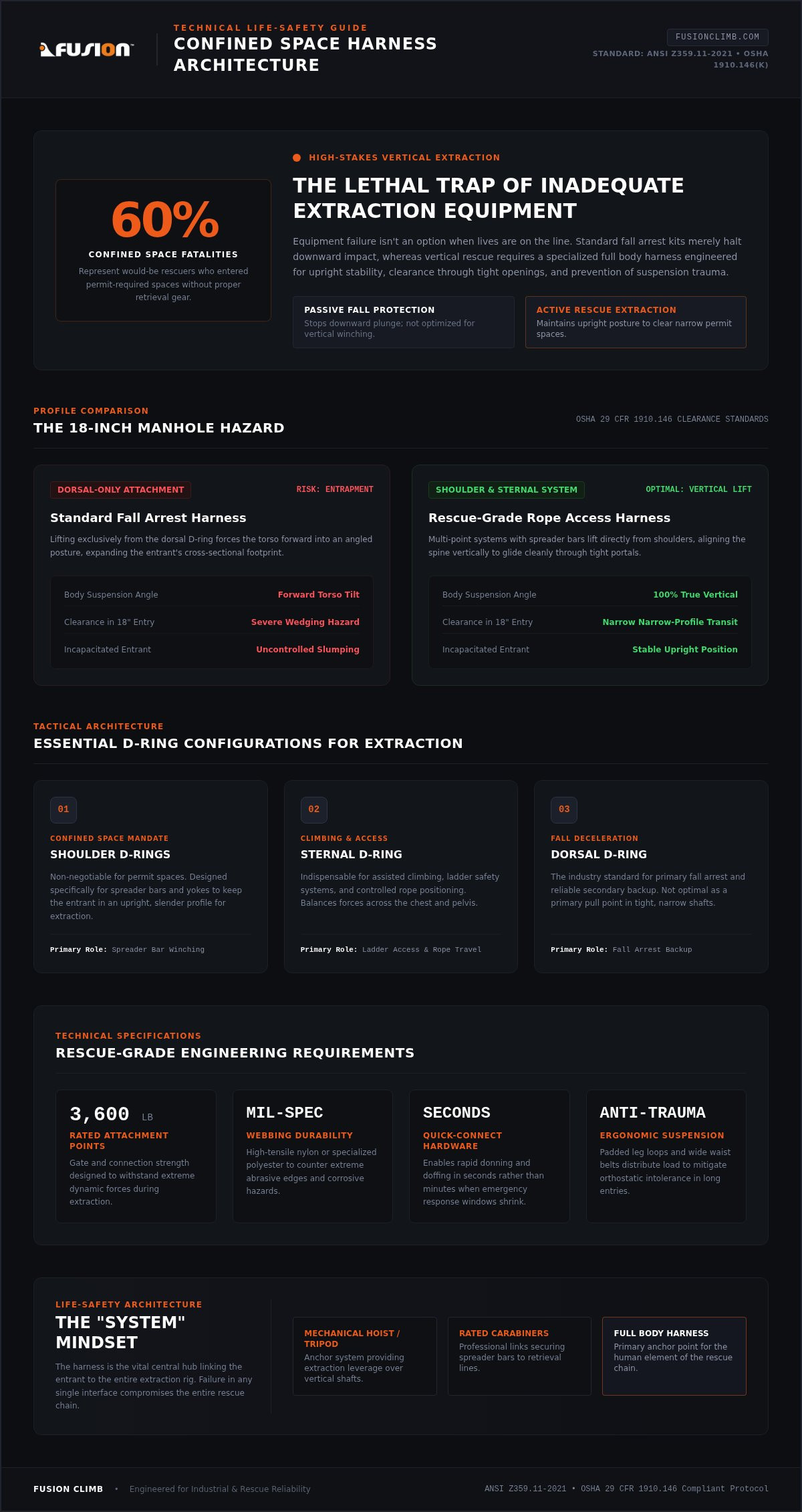
Approximately 60% of all confined space fatalities are would-be rescuers who entered permit spaces without the proper retrieval equipment or respiratory support. It's a sobering reality that underscores the high stakes of vertical extraction. You understand that equipment failure isn't an option when lives are on the line, yet the difference between a standard fall arrest kit and a specialized full body harness for rope access often creates dangerous confusion.
This guide helps you master the technical requirements and safety standards for selecting a rescue-grade harness that ensures rapid extraction and industrial reliability. We'll explore how to meet federal safety mandates while prioritizing the rapid donning and doffing capabilities essential for emergency response. You'll learn to identify the ergonomic features that prevent suspension trauma during long-duration entries in narrow spaces. From MIL-SPEC webbing to 3,600 lb rated attachment points, we provide the technical assurance you need to operate as a dependable guardian in any environment.
Key Takeaways
- Understand the critical distinctions between standard fall protection and a specialized full body harness for rope access to ensure your team is prepared for complex vertical maneuvers.
- Identify the essential D-ring configurations and hardware specifications required by ANSI Z359.11-2021 for rapid, safe extraction from permit-required spaces.
- Determine how your specific entry environment and rescue role dictate the choice between lightweight rescue models and padded technical suspension styles.
- Master the 2026 inspection protocols and federal mandates to maintain compliance and ensure equipment integrity in harsh industrial settings.
The Critical Role of Specialized Full Body Harnesses in Confined Space Rescue
Confined space environments demand more than just standard fall protection. They require precision extraction capabilities. When a worker enters a permit-required space, they face narrow manholes and vertical shafts that leave zero room for equipment failure. For drainage professionals who use specialized tools from Razorback Drain Pros to inspect these subterranean assets, ensuring the safety of the entry technician is as important as the precision of the diagnostic data. Standard fall arrest kits focus on stopping a downward plunge, but they often fail to address the complexities of a vertical rescue. In the 2026 regulatory landscape, OSHA 1910.146(k) and ANSI Z359.11-2021 mandate that retrieval systems must facilitate rapid extraction without increasing the hazard to the entrant. A specialized full body harness for rope access provides the necessary suspension stability to keep a victim upright, which is critical if they are unconscious or incapacitated.
Fall Arrest vs. Rescue: Knowing the Difference
The mechanical requirements for a controlled lift differ significantly from those of a fall arrest event. While a dorsal D-ring is the standard for stopping a fall, using it for extraction often tilts the torso forward. This creates a larger physical profile that can become wedged in an 18 inch opening. Modern industrial safety harness designs solve this by incorporating sternal and shoulder attachment points. These multi-point systems distribute weight across the pelvis and shoulders, ensuring the entrant remains perfectly vertical during a winch operation. This alignment isn't just about comfort. It's about clearing the extraction path quickly and safely. A professional full body harness for rope access is engineered to manage these forces during prolonged suspension, preventing the dangerous pressure points common in basic gear.
The "System" Mindset in Rescue Procurement
Think of the harness as the central hub of a safety chain. It must integrate seamlessly with other hardware to be effective. For example, the harness interacts directly with professional climbing carabiners to link the entrant to the mechanical hoist or tripod. If the webbing materials aren't compatible with the environmental hazards, such as corrosive chemicals or abrasive edges, the entire system is compromised. A high-quality full body harness for rope access acts as the primary anchor point for the human element of the rescue. It bridges the gap between the worker and the rescue team, turning individual components into a cohesive life-safety system. Choosing a harness is a commitment to the reliability of that entire chain.
Essential Features: What to Look for in a Rescue-Grade Harness
Selecting a rescue-grade harness requires a shift in perspective from passive fall protection to active life support. Every buckle, strap, and D-ring serves a specific tactical purpose during a vertical extraction. In high-pressure scenarios, quick-connect buckles are essential. These hardware components allow rescuers to don gear in seconds rather than minutes, which is vital when every moment counts. Padded leg loops and wide waist belts are equally critical. They distribute the user's weight to mitigate the risk of suspension trauma, also known as orthostatic intolerance, during extended rescue operations. When you choose a professional full body harness for rope access, you are investing in a tool that prevents fatigue and ensures operational readiness.
D-Ring Configurations for Extraction
Attachment points define the specific utility of your gear. A dorsal D-ring remains the standard for primary fall arrest and serves as a reliable backup point. However, it is rarely the right choice for narrow extractions because it can cause the body to tilt forward. Sternal D-rings are indispensable for assisted climbing and connecting to ladder safety systems. For true confined space work, shoulder D-rings are non-negotiable. They allow for the use of spreader bars or yokes that keep the entrant in a perfectly vertical orientation. This specific geometry is a core component of OSHA 29 CFR 1910.146 retrieval requirements. These federal mandates ensure that entrants can be pulled through tight openings, such as 18-inch manholes, without their torso tilting and becoming stuck. This specialized configuration distinguishes a professional full body harness for rope access from basic industrial kits.
Material Durability and Comfort
Durability must match the specific hazards of the job site. Heavy-duty nylon webbing offers excellent strength and abrasion resistance for general use. In contrast, polyester is often the preferred choice for environments with high chemical concentrations or intense UV exposure. Look for reinforced stitching and wear guards in high-friction areas like the hips and shoulders to prevent premature gear failure. Comfort also directly impacts safety. Breathable mesh linings and 3D foam padding help combat heat stress in poorly ventilated tanks or silos. High-visibility webbing is another vital feature for low-light industrial environments. It ensures the rescue team can monitor the entrant's position even in murky, dark conditions. Integrated gear loops allow rescuers to carry critical hardware, including carabiners and pulleys, without compromising their mobility or snagging on obstacles. Check out our latest selection of professional full body harnesses to find the right fit for your team.
Selecting the Right Harness for Your Environment
The geometry of the workspace dictates your equipment choice. A vertical entry through a 24-inch manhole requires a different approach than a horizontal entry into a large storage tank. For vertical extraction, a sleek profile is mandatory. You need a full body harness for rope access that minimizes snag points while providing the structural integrity for a winch-based lift. In contrast, horizontal entries may allow for more padding and gear loops, as the primary concern shifts from narrow clearance to long-duration comfort during technical maneuvers. Your environment isn't just a backdrop. It's the primary factor in your safety strategy.
Team roles also influence gear selection. The authorized entrant needs maximum mobility to perform tasks in cramped quarters. They often prefer a lightweight full body harness for rope access that provides a high strength-to-weight ratio. The standby rescuer, however, must be prepared for long-duration suspension. They require a harness with superior load distribution to remain effective while managing a haul system. Weight capacity is another non-negotiable factor. Standard ANSI Z359.11-2021 compliant harnesses are tested for a worker capacity range of 130 to 310 lbs. Ensure your team members, including their tools and protective gear, fall within these certified limits to maintain the system's safety factor.
Technical Rescue vs. Daily Work at Height
Technical rescue often involves specialized positioning. You might need integrated zipline lanyards and tethers to maintain a stable work position while attending to a victim. For daily work at height where fall arrest is the primary goal, a Y-lanyard configuration is common to ensure 100% tie-off during movement. However, if the job requires hanging in suspension for hours, a seat-style harness is the better investment. These designs prevent the leg loops from cutting off circulation, which is a critical advantage in complex industrial environments where rescue might be delayed.
Sizing and Fitting for Safety
A harness only works if it fits. Follow the "two-finger" rule: you should be able to slide two fingers between the webbing and the user's body at the leg loops and chest strap. This ensures the gear is tight enough to prevent the user from slipping out during an inversion but loose enough to allow full range of motion. Modern rescue harnesses offer wide adjustability ranges. This is vital when layering gear over bulky protective clothing or hazmat suits. Before entering any live environment, always perform a suspension test in a controlled area. Hanging in the harness for a few minutes reveals pressure points and allows for final adjustments before the stakes become real.
Safety Standards and Rigorous Inspection Protocols for 2026
Safety in vertical environments isn't a matter of chance. It's a matter of compliance. The ANSI Z359.11-2021 standard serves as the benchmark for every professional full body harness for rope access used in the United States. This standard mandates that attachment points must sustain a static test load of 3,600 lbs for one minute without structural failure. OSHA 1910.146 complements this by requiring mechanical retrieval systems for any permit-required confined space entry deeper than five feet. These regulations work together to ensure that rescuers have the technical assurance required for rapid, vertical extraction. Third-party testing remains the only way to validate these manufacturer claims, providing a sobering sense of security that the gear will perform under the extreme forces of a dynamic fall.
The 5-Step Pre-Use Inspection Checklist
Compliant gear only protects you if it's in top condition. Perform this five-step check before every shift to identify hidden hazards. Don't rush. Your life depends on the integrity of these components.
- 1. Webbing: Check for cuts, burns, chemical staining, or frayed edges. Run your fingers along the straps to feel for heat-hardened fibers or "crusty" spots that indicate internal damage.
- 2. Hardware: Inspect all D-rings and buckles for cracks, distortion, or deep corrosion. Ensure that quick-connect buckles click into place firmly and don't release under tension.
- 3. Stitching: Look for pulled, broken, or rotted threads at critical load points. Pay close attention to the contrasting color stitching that highlights the structural integrity of the harness.
- 4. Labels: Ensure all safety and compliance labels are present and legible. If the ANSI or OSHA certification markings are worn away, the harness must be removed from service.
- 5. Impact Indicators: Verify that the harness has not been involved in a fall. Most modern designs include a "fold" in the webbing that tears open during an arrest event. If this indicator is visible, the harness is dead.
Documentation and Compliance Tracking
Maintaining a formal inspection log is a legal requirement under ANSI Z359.2. This documentation tracks the lifecycle of your gear and prepares your team for annual professional audits. Use the unique serial number on each full body harness for rope access to log its history, from the first day of service to its final retirement. Tracking these numbers prevents the accidental use of expired equipment in high-stakes environments. Synthetic webbing components must be retired from service no later than ten years from their date of manufacture, even if they appear to be in pristine condition. Stay ahead of your compliance schedule and inspect our ANSI-compliant rescue gear to ensure your team is always mission-ready.
Why Professional Rescuers Trust Fusion Climb for Confined Space Safety
Reliability in the field starts on the factory floor. When you select a full body harness for rope access from Fusion Climb, you're choosing a piece of equipment that bridges the gap between industrial strength and tactical agility. Every harness is manufactured in the USA. This domestic focus allows for rigorous, real-time quality control and rapid fulfillment for teams that can't afford to wait on international shipping delays. Government agencies and municipal rescue teams rely on this consistency. They know that a "Made in USA" label represents a commitment to localized testing and meticulous manufacturing standards that exceed basic requirements.
A rescue harness shouldn't exist in a vacuum. It must function as part of a larger mechanical advantage system. Fusion Climb designs its gear with a focus on hardware compatibility. Our harnesses integrate seamlessly with commercial zipline pulleys to create efficient haul systems for vertical extraction. This synergy reduces friction and increases the speed of the rescue. We also apply the same high-level ropes course safety equipment standards across our entire industrial line. This cross-industry expertise ensures that our hardware handles the dynamic loads and repetitive stress common in high-stakes environments.
Rugged Reliability by Design
We prioritize substance over style. While some manufacturers opt for lightweight aluminum to reduce cost, we utilize forged steel hardware for maximum industrial durability. Steel resists the crushing forces and abrasive environments found in petrochemical tanks and silos. Our full body harness for rope access engineering ensures that every component, from the MIL-SPEC webbing to the reinforced stitching, meets the highest standards of the 2026 safety landscape. This "Dependable Guardian" philosophy is woven into every stitch. It's a promise that your gear will remain a silent, sturdy partner during your most challenging missions. We also offer customization options to meet the specialized requirements of elite rescue teams, ensuring your kit is as unique as your operational needs.
Ready for the Mission: Next Steps
Equipping a professional team requires more than just a purchase. It requires a partnership. You can consult with a Fusion Climb safety expert for bulk fleet procurement to ensure every member of your team has the right fit and configuration. We provide full access to technical data sheets and compliance certifications to simplify your internal safety audits. Don't leave your team's safety to chance. Equip your team with Fusion Climb professional harnesses today.
Mastering the Vertical Extraction
Confined space rescue is a game of precision where every second and every piece of hardware counts. You now understand that standard fall arrest kits are often insufficient for complex technical maneuvers; true safety requires the specific D-ring configurations and suspension stability found in a dedicated full body harness for rope access. By prioritizing ANSI Z359.11 compliant hardware and maintaining rigorous pre-use inspection protocols, you ensure your team remains prepared for the most demanding vertical extractions in harsh industrial environments. These standards aren't just checkboxes; they are the foundation of a successful rescue operation.
Fusion Climb provides the technical assurance of Made in the USA quality, delivering gear that is trusted by industrial rescue professionals nationwide. Our commitment to rugged reliability means your equipment acts as a dependable guardian during high-stakes missions. Don't compromise on the integrity of your life-safety system when lives are on the line. Shop Professional Full Body Harnesses at Fusion Climb today to equip your team with the precision-engineered tools they need to succeed. Stay focused, stay compliant, and stay ready for the challenges of the vertical world.
Frequently Asked Questions
What is the most important D-ring for confined space rescue?
Shoulder D-rings are the most critical for vertical confined space extraction. While the dorsal D-ring manages primary fall arrest, shoulder points allow the use of a spreader bar to keep the entrant upright. This vertical orientation is essential for navigating narrow 18 inch manholes without the torso tilting and becoming wedged. Sternal D-rings also play a vital role in ladder safety systems, ensuring the user remains stable during the transition into the space.
How often should a full body rescue harness be inspected?
You must perform a pre-use inspection before every shift to identify immediate hazards like frayed webbing or damaged hardware. Additionally, ANSI Z359.2 requires a formal, documented inspection by a designated Competent Person at least once every 12 months. In harsh industrial environments, such as those with high chemical exposure or extreme heat, you should increase this frequency to every three or six months to maintain the technical assurance of your life safety equipment.
Can I use a standard climbing harness for industrial rescue?
No, you cannot use a standard recreational climbing harness for industrial rescue. Recreational gear lacks the necessary ANSI Z359.11 certification and the specific attachment points required for retrieval systems. A professional full body harness for rope access is engineered with reinforced load points and industrial-grade webbing that meets federal safety mandates. Using non-compliant gear in a permit-required space can result in significant OSHA penalties and increased risk to the entrant.
What is the maximum weight capacity for an ANSI-compliant harness?
The standard weight capacity for an ANSI-compliant harness is 130 to 310 lbs (59 to 140 kg). This range includes the weight of the worker plus all their tools and protective equipment. If a team member exceeds this limit, you must consult the manufacturer for a harness specifically rated for higher capacities. This ensures that the 3,600 lb static test load and dynamic arrest force requirements remain valid for the individual user's safety.
How do I know if my harness has been involved in a fall?
Look for the visual fall arrest indicators integrated into the webbing. Most manufacturers use a specific stitching pattern or a folded section of webbing that tears open when subjected to the force of a fall. If these indicators are visible, or if the webbing appears elongated or glazed, you must remove the harness from service immediately. Never attempt to reuse or repair a harness that has arrested a fall, as the internal fibers are likely compromised.
What are the OSHA requirements for confined space extraction gear?
OSHA 29 CFR 1910.146(k)(3) requires non-entry retrieval systems for permit-required confined spaces unless the equipment increases the overall hazard. For vertical entries deeper than five feet, a mechanical retrieval device must be connected to the entrant’s harness. Each entrant must wear a full body harness with the retrieval line attached to either the dorsal D-ring or the shoulder D-rings to facilitate a safe, vertical extraction during an emergency response.
What is the difference between a Class III and Class IV rescue harness?
In the context of life safety rope equipment, a Class III harness is a full body harness designed for fall arrest, suspension, and work positioning. It supports the entire torso and pelvis. Modern rescue standards like NFPA 2500 primarily utilize Class III designations for comprehensive protection. A Class IV designation is not a standard industrial rescue term under current ANSI or NFPA protocols. Your full body harness for rope access should always carry the Class III rating to ensure maximum stability.
How should I store my rescue harness to prevent webbing degradation?
Store your rescue harness in a cool, dry, and dark environment to prevent premature degradation of the synthetic fibers. Ultraviolet light from the sun and high heat from industrial machinery can weaken the webbing over time. Keep the gear away from corrosive chemicals, sharp tools, and damp surfaces. Using a dedicated gear bag helps protect the hardware from environmental contaminants between missions, ensuring that every component remains mission-ready for your next vertical challenge.