



Compare backyard single wheel pulleys by speed and weight
The fewest wheels aren’t automatically the right choice. A rider-carrying zipline trolley typically has two or more pulley wheels, even when you’re comparing a single-wheel zipline pulley for a backyard setup. Treat a single wheel as one component, not as proof that a one-wheel trolley is suitable for carrying a rider. Start by comparing the trolley’s rated capacity and cable compatibility.
It’s understandable to focus first on speed and weight limits. But a suitable rating alone doesn’t settle the decision: wheel count, bearing design, and cable fit also affect performance. Match the stated capacity to the intended rider and carried gear, then compare the maximum cable diameter with your cable’s specifications.
This guide explains how to compare trolley speed and weight limits, check cable compatibility, and decide how many pulley wheels your setup calls for. It also clarifies why a single-wheel pulley and a multi-wheel trolley aren’t interchangeable terms, so you can assess the equipment as a complete system instead of choosing by wheel count alone.
Key Takeaways
- Compare speed and load ratings together; a trolley that rolls faster still needs suitable braking performance.
- Match the trolley’s stated cable-diameter range to the cable so the wheels seat and travel correctly.
- Use wheel count to distinguish a pulley component from a rider-carrying trolley, and consider how the arrangement affects stability.
- Before choosing a single-wheel pulley for backyard use, weigh bearing design and intended use alongside speed and capacity.
Trolley speed and weight specifications
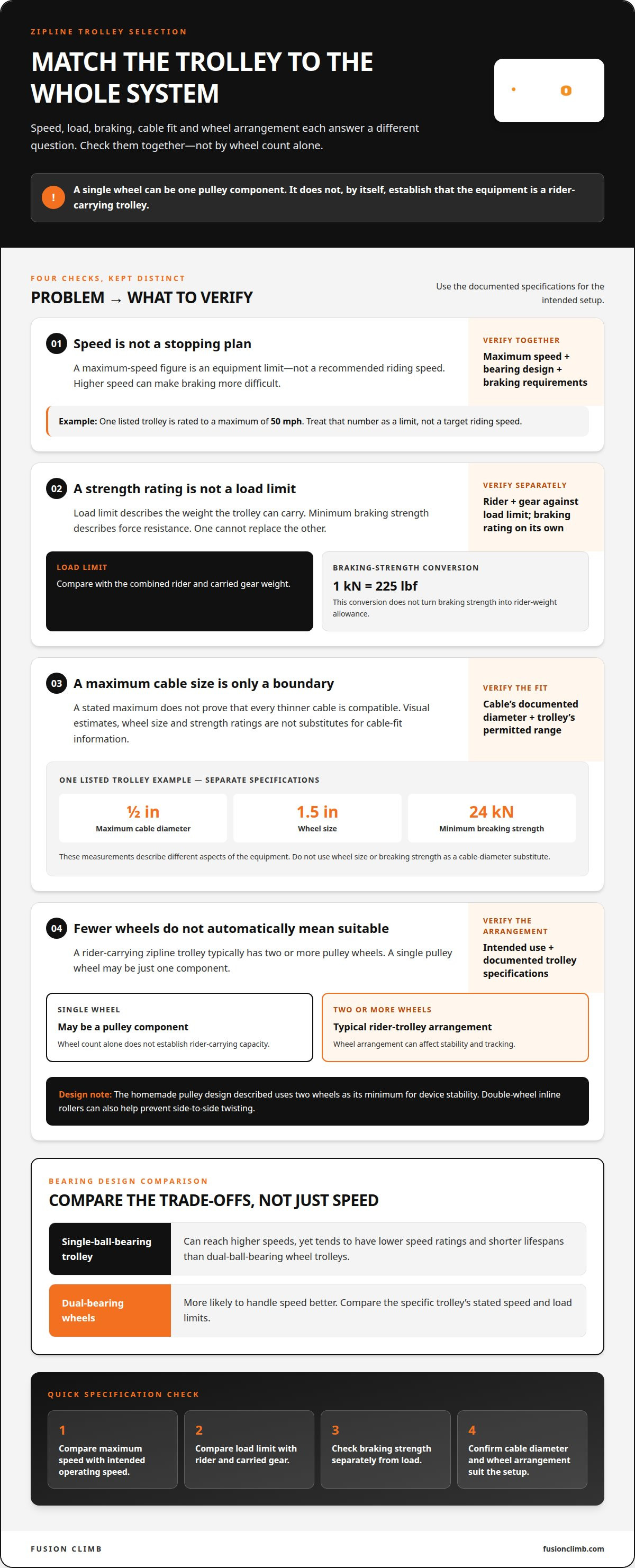
Compare stated speed limits with bearing design, braking requirements, and load rating. These figures describe different limits, so don’t treat one as a substitute for another.
Trolley Speed Specifications
Speed specifications state the maximum speed a trolley is rated to handle. One listed trolley example has a maximum speed of 50 mph, but that figure is an equipment limit, not a recommended riding speed. Single-ball-bearing trolleys can reach higher speeds, yet they tend to have lower speed ratings and shorter lifespans than dual-ball-bearing wheel trolleys. Dual-bearing wheels are more likely to handle speed better. Reduced friction can also increase speed and make braking more difficult.
Trolley Weight Specifications
A load limit describes the weight the trolley can carry; a braking-strength rating describes force resistance. Keep these specifications separate when comparing equipment. Trolleys usually show a minimum braking-strength rating on the trolley or in its item description. The conversion is 1 kN equals 225 lbf, but that conversion does not turn braking strength into a rider-weight allowance. Use the stated load limit for the rider and carried gear.
| Option | Speed behavior | Rating and comparison |
|---|---|---|
| Single-ball-bearing trolley | Can reach higher speeds | Tends to have a lower speed rating and shorter lifespan |
| Dual-ball-bearing wheel trolley | More likely to handle speed better | Compare its stated speed and load limits |
| Model with a maximum-speed figure | Use the listed figure as a limit | One example is rated to 50 mph |
Choose equipment by matching its ratings to the planned use, not by selecting the highest speed figure. First, compare the trolley’s maximum speed with the intended operating speed. Next, compare its load limit with the combined rider and gear weight. Then check its braking-strength rating separately. Higher speeds can make braking more difficult, so consider speed and stopping capability together. For a backyard setup, a single-wheel pulley alone doesn’t establish a rider-carrying trolley’s capacity. The trolley’s specified limits and bearing design determine how its ratings apply.
Cable diameter compatibility
A trolley’s cable limit must match the cable’s diameter. For example, one listed trolley has a maximum cable diameter of 1/2 inch, a 1.5-inch wheel, and a 24 kN minimum breaking strength. Treat those as separate specifications: cable fit, wheel size, and strength describe different aspects of the equipment.
Start with the cable’s stated diameter and compare it with the trolley’s permitted range. A maximum diameter sets an upper boundary; it doesn’t establish that every thinner cable is compatible. The trolley’s specifications must support the cable you’re using. Don’t infer compatibility from wheel size or breaking strength.
Diameter affects how the cable sits in the pulley groove. A mismatch can prevent the wheel from tracking as intended, so the listed cable range matters more than a visual estimate. Use the cable’s documented size rather than judging it by appearance. A 1/2-inch maximum is a specific limit, not a general description of the cable systems a trolley can accommodate.
- Identify the cable: Use its stated diameter, not a guess based on appearance.
- Read the trolley limit: Compare the cable measurement with the specified compatibility range.
- Keep ratings distinct: Don’t use the 24 kN strength rating or 1.5-inch wheel measurement as a cable-diameter substitute.
For a practical comparison, record the cable diameter beside each trolley’s permitted cable size. If a specification gives only a maximum, don’t assume it supplies a complete range. The example with a 1/2-inch maximum supports comparison against that stated boundary, while its 24 kN minimum breaking strength remains a separate rating. This prevents a strength figure from being mistaken for a fit specification.
Check the cable and trolley specifications together before comparing other features. You can’t judge a single-wheel pulley for a particular line by wheel size alone: its stated cable compatibility must also suit the cable. Keep each measurement tied to its specification, and rule out any option whose compatibility information doesn’t cover the cable diameter.
Choosing the number of pulley wheels
A rider-carrying zipline trolley typically has two or more pulley wheels, while a single pulley wheel may be just one component. Wheel count affects stability and tracking, so compare the trolley’s configuration with how it will carry and guide the rider.
The homemade pulley design described here uses two wheels as its minimum for device stability. Double-wheel inline rollers can also help prevent side-to-side twisting on a zipline. This makes a one-wheel design different from a multi-wheel rider trolley: fewer wheels don’t automatically make a complete riding system. Choose according to the intended use and the equipment’s documented specifications, not wheel count alone.
What safety standards or certifications should a zipline pulley meet? Focus on the manufacturer’s documentation, including the trolley’s load limit and minimum braking-strength rating. A certification name alone doesn’t show whether the wheel arrangement, cable fit, and ratings suit your setup.
How much do single-wheel zipline pulleys for backyard use cost? Price depends on construction, bearing design, and intended load. Compare those specifications rather than choosing by wheel count or price alone.
How do you install and inspect a backyard zipline pulley? Follow the trolley manufacturer’s instructions for attaching it to the cable and connecting the riding attachment. Before each use, inspect the wheels, axle, attachment points, and cable contact for visible wear or damage, and confirm that the trolley rolls freely.
What are the risks of using a single-wheel zipline pulley? A single wheel may provide less stability than the two-wheel minimum used in the homemade design described here, and it won’t offer the side-to-side resistance of double-wheel inline rollers. Poor tracking or twisting can affect the ride, so don’t treat a standalone wheel as a complete rider trolley.
Make your choice in this order: identify whether the pulley is a component or a rider trolley, compare wheel count and stability, then match documented ratings and cable fit to the setup. For a rider-carrying system, a multi-wheel trolley aligns with the usual two-or-more-wheel configuration; a single wheel alone does not establish suitability.
Which single-wheel zipline pulleys are suitable for backyard use?
For a backyard line, suitability depends on the pulley’s intended role, wheel size, bearing, and stated ratings. Zipline trolleys commonly use 1.5-inch or 2-inch wheels, but diameter alone doesn’t establish that a pulley can carry a rider. A single wheel may be a component rather than a complete rider-carrying trolley.
Start by matching the pulley to the cable and intended use. The wheel must fit the cable specification, and the trolley’s documentation must establish its load and braking-strength limits. Bearing strength matters because the bearing must withstand forces during a ride; a wheel that turns freely by hand doesn’t demonstrate its capacity under load.
Compare 1.5-inch and 2-inch wheel options by their full specifications, not by size alone. Bearing design, cable compatibility, and the trolley’s stated limits remain essential. The earlier speed comparison also applies: a faster-rolling option can make braking more difficult, so maximum speed should not be the only selection criterion.
- Confirm the purpose: Determine whether the single wheel is a pulley component or part of a complete rider trolley.
- Match the cable: Use the stated cable diameter and the pulley’s documented compatibility.
- Read each rating: Keep load capacity, braking strength, and speed limits distinct.
- Assess the arrangement: A rider trolley usually has two or more wheels; wheel count affects stability and tracking.
For example, a single-wheel pulley may suit a compatible application where its documented design and ratings match the setup. It isn’t automatically suitable as a standalone rider trolley. If the equipment description doesn’t establish rider use, cable fit, and relevant limits, those properties can’t be inferred from a 1.5-inch or 2-inch wheel.
Use the specifications as a complete set: role, cable fit, bearing, load capacity, braking strength, and speed. Then compare options against the actual line and intended use. Compare pulley specifications to narrow the choice to equipment suited to your setup.
Fusion Climb: Zipline Pulleys
Fusion Climb offers zipline pulleys for readers comparing equipment for a backyard line. Use the criteria in this guide to narrow your choice: intended use, cable compatibility, wheel arrangement, and the trolley’s stated ratings. A single wheel alone doesn’t establish that a pulley is suitable for carrying a rider, so compare the complete equipment specifications before selecting one.
For a coordinated setup, Fusion Climb also offers full body harnesses, Superman style harnesses, and lanyard and tether equipment. These categories serve different roles in the riding system, so select each according to its intended use and documented specifications.
To discuss pulley equipment for your setup, contact Fusion Climb.
Plan Your Next Step With Confidence
Turn your comparison into a clear equipment plan before moving forward. Note the intended use, cable details, and role of each component. This gives you a practical basis for assessing a single-wheel zipline pulley for a backyard line without treating one specification as proof of overall suitability.
Consider the pulley alongside the rest of the riding system. Fusion Climb offers zipline pulleys, full body harnesses, and Superman style harnesses. Matching each item to its intended role keeps your planning focused on the complete setup, not just the wheel.
If you’re ready to discuss pulley options for your setup, contact Fusion Climb about pulley options. Take the next step with a clear plan and build your backyard zipline decisions on careful comparison.
Frequently Asked Questions
What is a single-wheel zipline pulley and how does it work?
A single-wheel zipline pulley uses one grooved wheel, called a sheave, to roll along a compatible cable. The wheel rotates around an axle as the connected load travels along the line. A standalone pulley isn’t automatically a complete rider trolley: its design must provide a suitable rider connection and meet the intended use.
What cable diameter and type does a backyard zipline pulley require?
The required cable diameter and construction depend on the trolley’s stated compatibility. Match the cable’s documented specifications to the pulley instructions; diameter alone doesn’t identify a suitable cable type. For example, a trolley with a 1/2-inch maximum cable diameter has a stated upper limit, not a universal cable recommendation. Don’t assume a different cable construction fits simply because its diameter appears compatible.
How do you match pulley capacity to rider weight and zipline slope?
Use the trolley’s stated load limit for the combined rider and carried equipment, then consider how the line’s slope affects travel and stopping. A steeper line can produce faster movement, so a capacity figure alone doesn’t establish that the complete setup is appropriate. Compare the trolley’s intended-use documentation with the planned riders, gear, and line layout rather than estimating capacity from appearance.
How do single-wheel and dual-wheel zipline pulleys compare for speed and stability?
Wheel count and bearing count describe different design features. A single wheel refers to the number of sheaves; a single- or dual-bearing description refers to the wheel’s bearing arrangement. Compare these features separately. A dual-wheel inline layout can resist side-to-side twisting, while bearing design influences rolling behavior. Neither feature alone determines a trolley’s safe operating speed or suitability.
What additional zipline equipment is needed for a safe backyard setup?
A rider setup typically involves more than a pulley: it needs a compatible harness and the connection hardware specified for the system. Depending on the design, that may include a carabiner and lanyard or tether. The line also needs an appropriate braking and return arrangement. Use each component according to its intended role and equipment instructions, rather than combining parts based only on appearance.
What safety standards or certifications should a zipline pulley meet?
Check the manufacturer’s documentation for the trolley’s load limit and minimum braking-strength rating. Also confirm that its wheel arrangement and cable compatibility suit the setup.