



Building Rider Confidence Through Visible Zipline Safety
Trust starts before the launch. Building rider confidence through visible safety means making protective equipment, clear procedures, and calm, consistent communication easy for riders to recognize and understand. The thrill of a zipline matters, but riders are more likely to feel prepared when safety is treated as part of the experience, not an afterthought. The goal isn’t to remove the excitement, but to give riders a sound basis for taking part.
First-time and returning riders may look for reassurance before they commit. Visible safeguards can reduce uncertainty, while clear explanations help riders know what to expect and how to respond. Confidence comes from evidence and communication, not bold promises.
This article explains how visible safety practices build trust, why consistent messaging matters at every stage, and how equipment choices can reinforce a rider’s sense of security. You’ll learn to make safety easier to recognize without overstating what any single measure can do.
Key Takeaways
- Make protective measures easy to see and explain so riders can better understand what supports their safety.
- Use calm, clear guidance to help riders know what to expect and respond without rushing or panicking.
- Keep safety messages consistent across the rider experience to reduce confusion and reinforce safe behavior.
- Build confidence from the first interaction with practical preparation, suitable equipment, and clear expectations.
Practical solutions for rider confidence
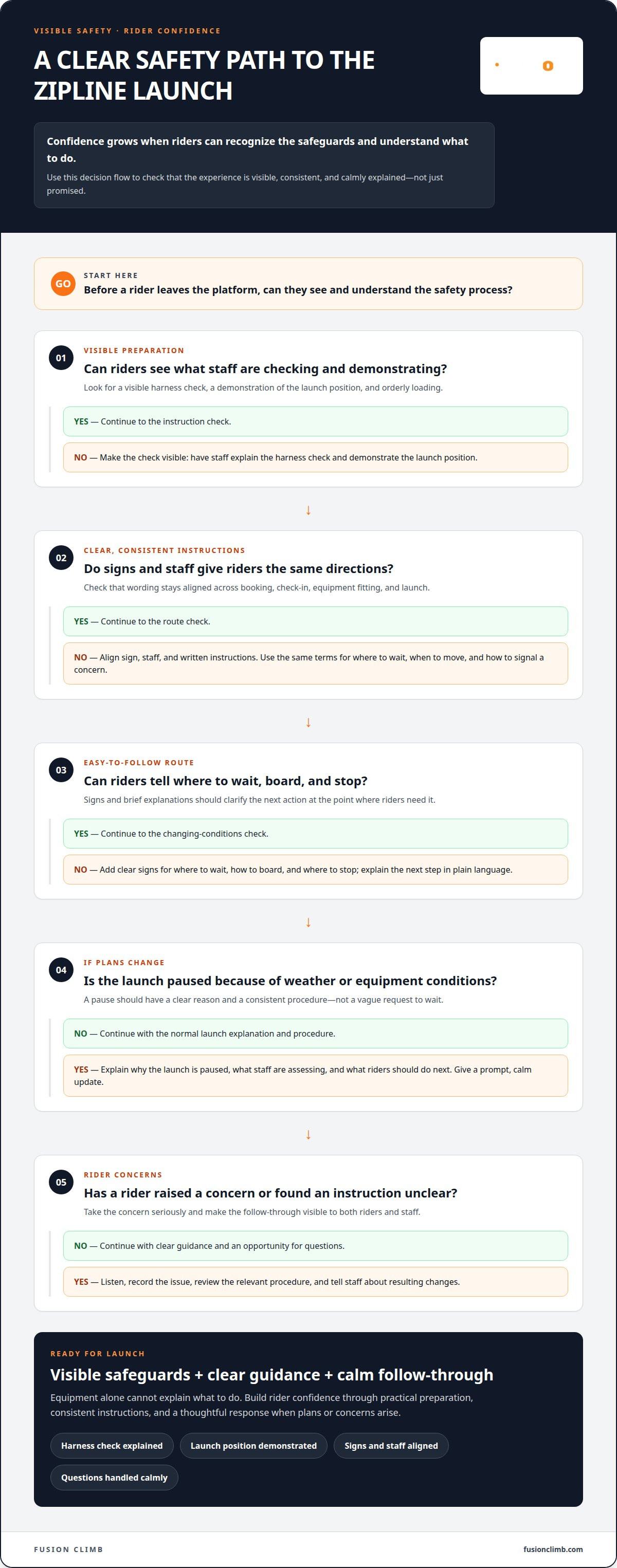
At a zipline launch, riders can watch staff explain the harness check and demonstrate the launch position. Clear signs showing where to wait, how to board, and where to stop make the process easier to follow. Visible equipment checks and orderly loading show that safety is part of every step, not just a promise. These practical cues help riders feel more confident before leaving the platform.
At transit stops and stations, visible staff, good lighting, clear wayfinding, and signs showing where to seek help make safety measures easier to recognize. Onboard, clear instructions and visible staff or security help riders understand what support is available. Calm, consistent communication matters too: equipment alone cannot explain what to do during a delay or when a concern arises.
Installation and maintenance costs depend on the site, the measures selected, and the work required to keep them functioning. A lighting project, for example, has different equipment and upkeep needs from staffing or onboard communication systems. Agencies can estimate costs by listing locations, installation requirements, inspection routines, and repair needs, then weighing options against operational priorities.
Agencies can measure perceived safety through short rider surveys, feedback channels, and reports of safety concerns. Ask about specific places and situations, such as waiting at a stop after dark or boarding a vehicle. Compare responses over time with incident reports. Together, these inputs can show where visible changes may improve comfort and where communication needs attention.
In the United States, safety concerns can be a barrier to full public transit ridership. Surveys can help agencies identify which settings or experiences cause concern, but the available facts here provide no survey percentages or findings by group. The practical takeaway is to gather local feedback and consider it alongside incident information, rather than treating one measure as proof of confidence.
Visible security measures can also raise privacy concerns or make a space feel overly controlled. A camera, for example, may reassure some riders while prompting others to ask how recordings are handled. Agencies should explain each measure’s purpose and maintain it properly. Clear limits and responsive staff help prevent the impression that visible equipment alone can stop every incident.
Building rider trust and confidence
Trust grows when riders see that safety decisions are consistent, not improvised. At a zipline site, explain why a launch is paused, what staff are assessing, and what riders should do while they wait. A clear reason is more useful than a vague request to be patient. It gives riders a practical reference point and shows that the pause has a purpose.
Consistency matters throughout the experience. If staff give conflicting instructions, riders may not know which direction to follow. Use the same terms for key actions, such as where to stand, when to move, and how to signal a concern. For example, make the pre-launch explanation consistent with the signs and staff instructions riders encounter at each stage.
Trust also depends on how staff respond when plans change. If weather or equipment conditions require a delay, communicate the decision promptly and explain what happens next. Take riders’ concerns seriously. A calm response, a clear update, and a consistent procedure show respect and help prevent confusion from spreading through a waiting group.
Public transit offers a useful comparison: visible security measures can deter crime and improve rider comfort, while safety concerns can keep people from using transit fully. For zipline operators, the lesson is that visible measures need to support a credible process. Displays and signs cannot replace staff attention, clear procedures, or a thoughtful response to riders’ questions.
Close the loop. If a rider reports unclear instructions or an uncomfortable moment, record the issue, review the relevant procedure, and tell staff about any resulting changes. This turns feedback into visible follow-through. Riders see that concerns are taken seriously, and staff gain a practical way to make the experience more consistent.
For a useful reference when reviewing the gear that supports a zipline setup, explore zipline safety equipment as part of the wider confidence-building process.
Confidence-building can begin again even when a horse is 10 or 20 years old. A horse lacking confidence may act more spooky and nervous in an unfamiliar place than at home, or, when lacking confidence with a rider, raise its head, widen its eyes, hollow its back, and stiffen its gait. The spirit aspect of a horse’s self-preservation is associated with sureness and confidence.
Consistent safety messaging
Riders receive safety instructions at several points: booking, check-in, equipment fitting, and launch. Consistent wording across these touchpoints reinforces safe behavior and reduces confusion. If a sign says “wait behind the line” but a staff member gives different directions, riders must interpret competing instructions. Use the same clear terms wherever riders encounter the procedure.
Build each message around one action and its purpose. For example, “Keep this area clear so staff can prepare the launch” gives a direct instruction and explains why it matters. Avoid vague phrases such as “be careful,” which don’t tell riders what to do. Pair signs with a brief verbal explanation when an instruction affects boarding or movement.
A useful communication sequence follows the rider’s route. At check-in, explain what happens next. During fitting, describe the steps riders need to follow and where to pause. Before launch, repeat the immediate instruction and invite questions. Keep these messages aligned with posted signs, staff language, and written rider instructions. Each point should clarify the next step, not introduce a conflicting version.
- Use matching terms for the same location and action.
- Put instructions where riders need them, such as waiting and launch areas.
- Have staff use the same concise explanation for routine pauses.
- Update signs and spoken guidance together when a procedure changes.
Consistent messaging also helps staff respond calmly when plans change. If a launch pauses, explain why, tell riders what to do, and provide an update when available. Riders are less likely to rush or guess when they understand the instruction. Informed riders are also less likely to panic during delays, a principle reflected in broader rider-safety messaging.
Review the experience from a first-time rider’s perspective. Follow the route from arrival to launch, noting where instructions appear, repeat, or conflict. Then revise unclear wording and brief staff on the updated version. This practical review makes safety communication easier to follow, especially for people encountering the activity for the first time.
Laying a foundation for confidence
A rider’s first experience shapes how they approach later rides. Before reaching the launch area, explain the basic sequence: where to wait, what staff will explain, and when to move forward. A clear preview replaces uncertainty with a practical sense of what comes next. Understanding the basics on a first trip can make later rides smoother and safer.
Preparation should suit the rider and the setting. For a first-time adult, explain the experience in plain language and leave time for questions before the activity begins. For a young rider, suitable protective equipment, adult supervision, and suitable private land are important foundations. Keep these safeguards distinct from zipline procedures, which depend on the activity and its operating environment.
Confidence also grows when expectations are realistic. Explain what riders may feel during launch and movement, and what actions staff will ask them to take. A short orientation, for example, can clarify where to look, how to follow instructions, and how to signal discomfort. Don’t frame normal nervousness as a problem; give riders time to understand their choices and the process.
- Describe the sequence before the rider reaches the launch point.
- Use language suited to the rider’s age and prior experience.
- Explain the next action before asking the rider to take it.
- Make room for questions without rushing the decision to participate.
These foundations work best as part of an ongoing approach. After a ride, invite riders to share which instructions helped and where they felt uncertain. Use that feedback to improve orientation and make explanations clearer for future participants. For a stronger preparation plan, explore ways to prepare riders for a confident first ride.
The Elevator Escalator Safety Foundation's 2026 Annual Conference and 35th Anniversary Celebration is scheduled for March 10 to 12, 2026. The Elevator Escalator Safety Foundation's 2026 Annual Conference is also a 35th Anniversary Celebration. The 2026 Elevator Escalator Safety Foundation Annual Conference and 35th Anniversary Celebration is being held at the Grand Hotel Golf Resort and Spa in Point Clear, Alabama. Such gatherings can complement practical preparation by giving safety professionals a place to discuss clear communication, rider expectations, and learning from feedback.
Fusion Climb
Fusion Climb helps zipline operators build rider confidence through visible safety with specialized aerial-adventure equipment. Its offerings include Full Body Harnesses, Superman Style Harnesses, Zipline Pulleys, and lanyards and tethers. These components can help operators choose equipment suited to their setup and the rider experience they want to support.
Consider these products when reviewing how equipment fits into your broader safety approach. Visible gear can contribute to a prepared, professional environment, while clear procedures and consistent communication remain essential to rider trust. Choose equipment based on its intended application and the system it will be used with.
For equipment options that support your zipline operation, contact Fusion Climb.
Make Confidence Part of Every Ride
Make rider trust an ongoing operational priority, not a one-time message. As your course, procedures, or rider needs change, review whether safety information remains clear and relevant. Invite riders to share where they felt uncertain, then use their feedback to guide practical improvements. Small, consistent refinements help keep the experience understandable from arrival through launch.
Building rider confidence through visible safety takes more than displaying equipment or posting instructions. It means aligning what riders see with what staff explain and how the operation responds. Treat every interaction as a chance to clarify expectations and help riders feel prepared to participate.
Choose a next step that fits your operation. Review one point in the rider journey, identify where greater clarity would help, and consider the equipment that supports your setup. Contact Fusion Climb about zipline safety to discuss equipment options for your operation. A deliberate approach helps keep adventure moving with confidence.
Frequently Asked Questions
What safety signage and communication practices reassure riders?
Place signs where riders can read them before they need to act. Pair a clear instruction with a recognizable symbol, such as one showing where to wait or where the route continues. Make urgent directions visually distinct from general information, and avoid crowding signs with multiple actions. Staff can reinforce key instructions in person and invite questions before riders proceed.