


Comprehensive Guide to Fall Protection Harnesses: Safety, Standards, and Selection (2026)
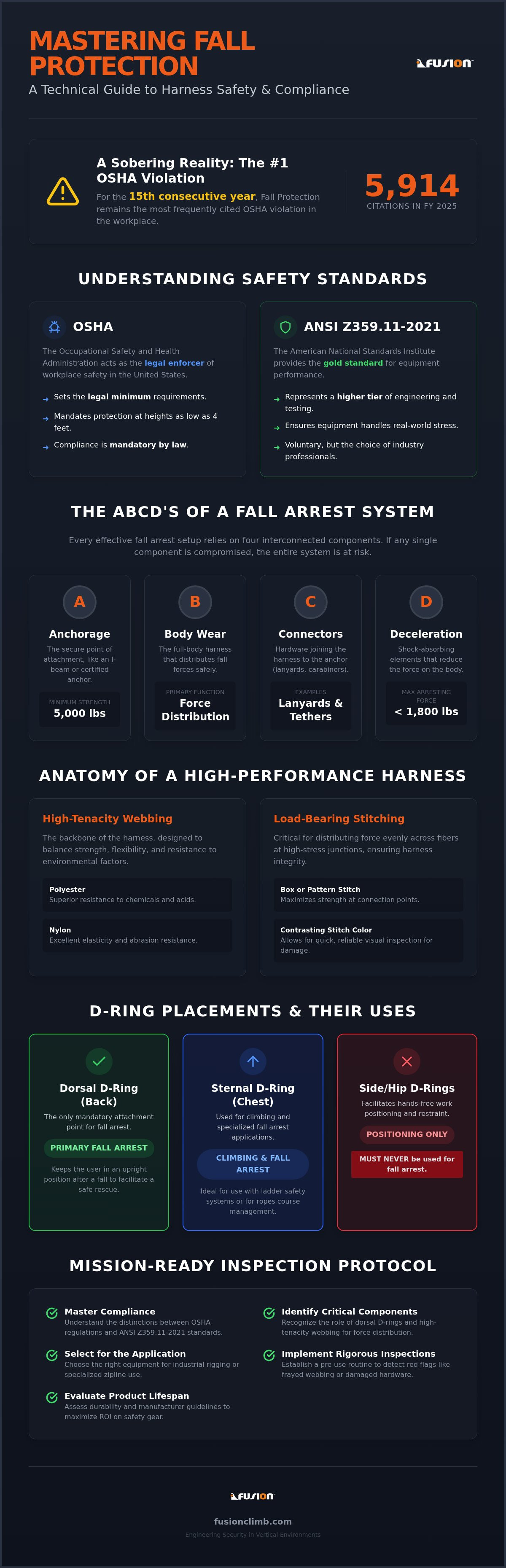
In fiscal year 2025, fall protection remained the most frequently cited OSHA violation for the 15th year in a row, with 5,914 citations recorded across the industry. This data highlights a sobering reality. Selecting the right fall protection harnesses is not just about checking a compliance box; it's a critical lifeline for your crew and your reputation. You already understand that a single oversight in equipment selection can lead to catastrophic failure or heavy legal penalties. However, the technical jargon often makes the choice feel unnecessarily complex.
This guide will help you master the technical requirements and selection criteria for fall protection harnesses to ensure maximum safety in industrial and aerial adventure environments. We'll clarify the latest ANSI Z359.11-2021 standards and explore specialized designs like Superman style harnesses for prone ziplining. You'll gain a clear understanding of harness components and the confidence to select durable equipment that withstands the rigors of your specific vertical environment. Safety is non-negotiable. Let's ensure your gear is up to the challenge.
Key Takeaways
- Master the technical distinctions between OSHA regulations and ANSI Z359.11-2021 standards to maintain absolute legal compliance.
- Identify the critical role of dorsal D-rings and high-tenacity webbing in fall protection harnesses for effective force distribution.
- Select the right equipment for specialized applications, including industrial rigging and high-performance Superman style zipline harnesses.
- Implement a rigorous pre-use inspection routine to detect red flags and ensure your gear is always mission-ready.
- Learn how to evaluate product lifespan and durability to maximize the return on your safety equipment investment.
Understanding Fall Protection Harnesses and Safety Compliance
A fall protection harness serves as the primary connection point in a personal fall arrest system, acting as the critical link between the user and their life-saving hardware. Its primary function is to distribute extreme impact forces across the strongest parts of the human anatomy, including the thighs, pelvis, chest, and shoulders. This distribution prevents concentrated trauma to vital organs during a fall. To fully understand What is a Safety Harness?, you must view it as a precision-engineered tool designed for specific vertical challenges. ANSI Z359.11 stands as the gold standard for full-body harness performance, ensuring that equipment meets rigorous testing for dynamic and static strength.
System selection depends on the specific task. Fall arrest systems stop a fall already in progress, while positioning systems allow workers to remain supported at height for hands-free operations. Restraint systems take a preventative approach, physically limiting a user’s range of motion so they can't reach a leading edge. Each application requires specific configurations of fall protection harnesses to maintain total security in high-stakes environments.
The Role of OSHA and ANSI in Fall Protection
OSHA acts as the legal enforcer of workplace safety, mandating that employers provide protection at heights as low as four feet in general industry. While OSHA sets the law, ANSI provides the voluntary consensus standards that often exceed these legal minimums. Professional riggers and adventure park operators prioritize ANSI-compliant gear because it represents a higher tier of engineering and testing. Choosing gear that meets ANSI Z359.11-2021 ensures your equipment is built to handle real-world stresses that basic legal compliance might overlook.
Fall Arrest System Components: The ABCDs
Every effective fall arrest setup relies on four interconnected components that must work in unison to protect the user.
- Anchorage: The secure point of attachment, such as an I-beam or a certified roof anchor, capable of supporting at least 5,000 pounds per person.
- Body Wear: The harness itself, which serves as the user's immediate protective layer and the focus of this technical guide.
- Connectors: The hardware that joins the harness to the anchor, including lanyards, tethers, and professional climbing carabiners.
- Deceleration: The shock-absorbing elements, such as rip-stitch lanyards, that deploy to reduce the maximum arresting force on the body to under 1,800 pounds.
If any single component is compromised, the entire system is at risk. Reliable performance starts with high-quality manufacturing and ends with a user who knows how to deploy their gear correctly.
The Anatomy of a High-Performance Safety Harness
High-performance fall protection harnesses are more than a collection of straps; they are precision-engineered safety tools designed for extreme environments. The backbone of any harness is its webbing. Manufacturers typically use high-tenacity polyester or nylon to balance strength and flexibility. Polyester offers superior resistance to chemicals and acidic environments, while nylon provides excellent elasticity and abrasion resistance. These materials ensure the harness maintains its structural integrity even when subjected to the high-energy impact of a fall arrest event.
Webbing and Load-Bearing Stitching
Webbing must endure harsh, repetitive conditions without failing. For outdoor aerial adventure parks, UV-resistant webbing is essential to prevent fiber degradation caused by constant sun exposure. Strength isn't just about the material; it's about how those materials are joined. High-stress junctions utilize a box stitch or pattern stitch to ensure the load is distributed evenly across the fibers. Using contrasting stitch colors is a standard safety practice because it allows for quick, reliable visual inspections to detect frayed or broken threads before a shift begins.
D-Ring Placements and Their Uses
Attachment points define the functionality of the equipment. The Dorsal D-ring, located on the back, is the only mandatory attachment point for fall arrest. It keeps the user upright after a fall and facilitates a safe rescue. The Sternal D-ring, located on the chest, is vital for climbing ladders or managing ropes course safety equipment. Side or Hip D-rings facilitate work positioning and restraint but must never be used for fall arrest. Adhering to OSHA regulations for fall protection ensures these components are used correctly to prevent severe injury.
Hardware evolution has significantly improved usability and safety. Traditional pass-through buckles remain a reliable, cost-effective choice for many industrial applications. Modern quick-connect buckles, however, allow for faster donning and a more consistent fit across long shifts. This consistency is critical for maintaining safety compliance with fall protection harnesses. Beneath the metal hardware, the sub-pelvic strap plays a silent but vital role. It supports the user in a seated position after a fall occurs. This design significantly reduces the risk of suspension trauma, a life-threatening condition where blood pools in the legs, by allowing for better circulation while the user awaits rescue.
Choosing the right hardware ensures your team stays mobile and secure. You can find specialized Full Body Harnesses that prioritize these critical engineering details at Fusion Climb.
Matching Harness Types to Industry Applications
One-size-fits-all is a dangerous myth in vertical safety. While a standard construction harness provides basic security on a roof, it lacks the specialized engineering required for a 200-foot cell tower or a high-speed zipline. Choosing the right fall protection harnesses requires a deep understanding of the specific physical demands and duration of the task at hand. You don't just need a harness that stops a fall; you need a system that supports your body through the unique stresses of your specific environment.
Industrial Fall Arrest vs. Work Positioning
Tower climbers and riggers face challenges that go beyond simple fall arrest. They need gear that supports them through hours of suspension while keeping tools within reach. This is where a Full Body Harness with reinforced padding and integrated seat slings becomes essential. These features distribute weight across the seat and thighs, preventing the "pinch points" that lead to premature fatigue. These professional setups must adhere to the OSHA Personal Fall Protection Systems Standard to ensure every connection point is rated for the load. In many multi-use vertical environments, these systems are paired with zipline lanyards and tethers to provide redundant security for workers who must navigate complex cable systems. While a lightweight harness is ideal for a mobile inspector, a technician performing a four-hour repair needs a padded waist belt to maintain stability and circulation.
Specialized Aerial Adventure and Zipline Harnesses
Commercial adventure parks demand a different tier of durability. Unlike industrial gear that might see one user per day, adventure park equipment faces high-cycle use from hundreds of guests. The webbing must withstand constant friction and frequent adjustments without losing its structural integrity. The Superman Style Harness is a standout in this category. Unlike a standard upright harness, a Superman Style Harness is engineered with a unique center-of-gravity to support a prone, flight-like position. This specialized geometry ensures the guest remains stable and horizontal throughout the ride, preventing the "tumble" effect that can occur in poorly balanced gear. These specialized harnesses are designed to integrate perfectly with commercial zipline pulleys, forming a complete, high-performance system that maintains professional-grade safety standards. Whether you're rigging a new industrial site or managing a high-volume ropes course, matching the harness to the application is the first step in total vertical security.
Critical Inspection and Maintenance Protocols
A mandatory pre-use inspection is the final barrier between a safe shift and a vertical disaster. Every time you don your gear, you are making a high-stakes decision about its structural integrity. Routine checks aren't just administrative requirements; they are survival protocols that catch micro-damage before it leads to macro-failure. While some industry myths suggest a hard 5-year expiration date, the reality of fall protection harnesses is more nuanced. Fusion Climb textile products are engineered for a 14-year shelf life from the date of manufacture and a 10-year service life. This extended lifespan is only valid if the harness passes every inspection by a competent person. Condition always dictates retirement over the calendar.
Step-by-Step Visual and Tactile Inspection
Perform these four steps before every climb to ensure your equipment remains mission-ready. Use your hands as much as your eyes to detect hidden flaws.
- Step 1: Webbing Integrity. Run your hands along all straps to feel for "fuzziness," which indicates surface abrasion. Look for deep cuts, chemical burns, or glazed areas caused by heat friction.
- Step 2: Hardware Condition. Examine D-rings, buckles, and adjusters for cracks, sharp edges, or pitting. Ensure all moving parts, such as quick-connect buckles, engage and release smoothly without sticking.
- Step 3: Load-Bearing Stitching. Focus on the box or pattern stitches at critical junctions. Any pulled, broken, or missing threads require the immediate retirement of the harness.
- Step 4: Label Legibility. Verify that the manufacturer's labels and ANSI Z359.11 markings are present and readable. If you can't identify the manufacture date or compliance status, the gear is legally and practically unsafe to use.
Cleaning and Storage Best Practices
Proper maintenance extends the life of your safety investment and ensures the reliability of fall protection harnesses. If your gear becomes soiled with dirt, grease, or sweat, clean it using only mild soap and water. Avoid harsh industrial solvents or bleach. These chemicals can degrade synthetic fibers without showing visible damage. Always air dry your gear in a well-ventilated area away from direct sunlight or intense heat sources. UV exposure is a silent killer for high-tenacity nylon and polyester. Store your equipment in a cool, dry place to prevent the growth of mold or mildew, which can weaken the structural webbing over time.
Maintain your safety standards by replacing compromised gear immediately. Explore our range of professional-grade Full Body Harnesses to ensure your team is protected by the best hardware in the industry.
Engineering Security: The Fusion Climb Approach to Vertical Safety
Since 1998, Fusion Climb has operated as a US-based manufacturer with a singular focus on technical integrity. We don't just assemble components; we engineer solutions for the high-stakes reality of vertical movement. This deep-seated expertise allows us to produce fall protection harnesses that offer rugged confidence to every user, from industrial riggers on cell towers to guides in aerial adventure parks. Our heritage is built on the belief that safety gear should be a silent, dependable partner in your journey, valuing substance and meticulous craftsmanship over marketing fluff.
Why Manufacturing Expertise Matters
A safety-first manufacturing philosophy is the bedrock of our operation. When lives depend on the strength of a single pattern stitch or the precision of a D-ring placement, there is no room for compromise. We act as a dependable guardian for vertical professionals by maintaining strict quality control over every production run. Our gear is intentionally designed to meet and exceed ANSI Z359.11 standards, providing professional peace of mind that mass-produced, non-compliant alternatives simply cannot match. You need equipment that remains reliable under constant stress, and our industrial-grade designs are tested to withstand the most punishing real-world applications without failure.
Complete Systems for Professional Operators
Total security requires more than just a good harness; it requires a synchronized system. We specialize in creating high-performance setups where Full Body Harnesses and Superman Style Harnesses integrate perfectly with Zipline Pulleys and professional carabiners. Sourcing your entire equipment list from a single, trusted manufacturer ensures total system compatibility. This approach eliminates the technical risks often associated with mixing hardware from different sources, which can lead to unexpected wear or mechanical interference. Our Superman style harnesses are specifically engineered to balance the user's center of gravity for prone flight, while our industrial fall protection harnesses prioritize ergonomic support for long shifts at height.
Choosing a unified system reduces the margin for error and maximizes the service life of your gear. We remain committed to being a bold innovator rooted in traditional values of strength and precision engineering. Elevate your vertical safety standards with gear designed for the most demanding environments. Explore the Fusion Climb Fall Protection Collection to find the hardware that matches your professional needs and ensures your team returns home safely every day.
Elevate Your Vertical Security Standards
Achieving total safety at height requires more than just meeting legal minimums. It demands a commitment to professional-grade hardware and a deep understanding of how your equipment functions under stress. Safety is non-negotiable. By mastering the technical nuances of fall protection harnesses and adhering to strict inspection protocols, you ensure that every member of your team remains secure during high-stakes operations. Whether you are rigging for industrial maintenance or managing a high-volume aerial adventure park, your gear must be as resilient as the professionals who wear it.
Fusion Climb has served as a US-based manufacturer since 1998, delivering rugged reliability across every product line. From specialized Superman style gear to traditional industrial options, our equipment reflects a legacy of meticulous engineering and rigorous adherence to ANSI standards. Don't leave your safety to chance. Upgrade your safety standards with Fusion Climb Professional Harnesses today. Step into your next project with the confidence that your equipment is mission-ready and built to last.
Frequently Asked Questions
How often should a fall protection harness be replaced?
Replace your harness immediately if it fails a pre-use inspection or is involved in a fall event. Fusion Climb textile products have a maximum shelf life of 14 years and a service life of 10 years from the date of first use. Regular inspections by a competent person are mandatory to ensure the gear remains mission-ready. Never continue using a harness with frayed webbing, broken stitching, or corroded hardware. Safety depends on your daily vigilance.
Can I use a climbing harness for industrial fall protection?
You cannot use recreational climbing harnesses for industrial fall protection. OSHA mandates full body harnesses for fall arrest systems to distribute impact forces across the thighs, chest, and shoulders. Recreational harnesses typically lack the dorsal D-ring and structural webbing required to meet ANSI Z359.11 standards. Using improper gear in a professional setting is a significant safety violation and increases the risk of severe internal injury during a fall. Always use application-specific hardware for maximum security.
What is the difference between a fall arrest harness and a positioning harness?
A fall arrest harness is designed to safely stop a person during a fall, utilizing a dorsal D-ring to keep the user upright. In contrast, a positioning harness allows a worker to be supported at height for hands-free work. While most fall protection harnesses include fall arrest capabilities, positioning gear adds side D-rings for lateral support. You must always use a separate fall arrest system when working in a positioning setup to ensure total redundancy and worker protection.
What does ANSI Z359.11 compliant mean for my safety gear?
ANSI Z359.11 compliance means the equipment has passed rigorous testing for static and dynamic strength, including headfirst drop tests. This voluntary standard exceeds basic OSHA requirements, offering a higher level of technical assurance for vertical professionals. It ensures that components like the sub-pelvic strap and D-rings perform reliably under extreme impact. Choosing gear with this rating provides the rugged confidence needed for high-stakes industrial and aerial adventure environments. It is the industry gold standard for safety.
How do I choose the correct size for a full body harness?
Choose your size based on the manufacturer’s height and weight chart, ensuring the harness fits snugly without restricting movement. A correctly sized full body harness should allow you to fit two fingers between the leg straps and your thighs. The dorsal D-ring must sit squarely between your shoulder blades. If the webbing is too loose, you risk falling out of the gear; if it's too tight, it causes discomfort. Proper fit is essential for effective force distribution.
Are Superman style zipline harnesses safe for commercial use?
Superman style harnesses are specifically engineered and safe for commercial zipline use when manufactured to professional standards. These harnesses support a prone position by shifting the center of gravity to maintain a horizontal flight path. They provide a unique guest experience while ensuring total security through high-tenacity webbing and reinforced attachment points. Always pair these with compatible pulleys and carabiners from a trusted manufacturer to maintain the integrity of the safety system and ensure guest comfort.
Can I wash my fall protection harness in a washing machine?
Never wash a safety harness in a washing machine. The mechanical agitation and harsh detergents can damage the synthetic fibers and weaken the load-bearing stitching. Instead, hand wash the webbing using mild soap and lukewarm water. Rinse thoroughly and air dry the gear in a well-ventilated area away from direct sunlight. High heat from a dryer or UV rays from the sun will degrade fall protection harnesses and compromise your safety. Proper care ensures your equipment longevity.
What is suspension trauma and how does a harness help prevent it?
Suspension trauma is a life-threatening condition where blood pools in the legs after a fall, potentially leading to orthostatic shock. Modern fall protection harnesses help prevent this through sub-pelvic straps that support the user in a seated position. This design facilitates better circulation while the user awaits rescue. Some operators also utilize trauma straps, which allow the fallen worker to stand and relieve pressure on the femoral arteries until help arrives. A rapid rescue plan remains a critical requirement.