



Webbing Lanyards for Industrial Workers and Worksites
Steel cable isn’t the only option for vertical work. Webbing lanyards for industrial use can serve as an alternative when the lanyard is designed for the task and compatible with the rest of the system. The right choice depends on how it will be used, whether that’s fall protection, tool retention, climbing, rescue, or a zipline course.
When equipment helps keep workers connected or secured, choose it based on its intended use and compatibility with the system. This guide covers selecting a suitable webbing lanyard, inspecting it before use, and cleaning and storing it. It also explains the differences between fall-arrest and work-positioning lanyards, what to consider for tools and connectors, and how lanyards fit into climbing, rescue, and zipline setups. Make the selection carefully and include inspection and maintenance in your routine.
Key Takeaways
- Match the lanyard to its job: fall arrest and work positioning require different equipment and must not be treated as interchangeable.
- Build a consistent pre-use routine that looks for cuts, damaged stitching, worn components, and other signs of deterioration.
- For tool retention, consider the combined weight of the worker’s tools and accessories, along with how the lanyard behaves during movement.
- For climbing, rescue, and zipline applications, consider webbing condition, connector compatibility, and how the lanyard fits the wider system.
Fall-protection lanyards for construction and roofing
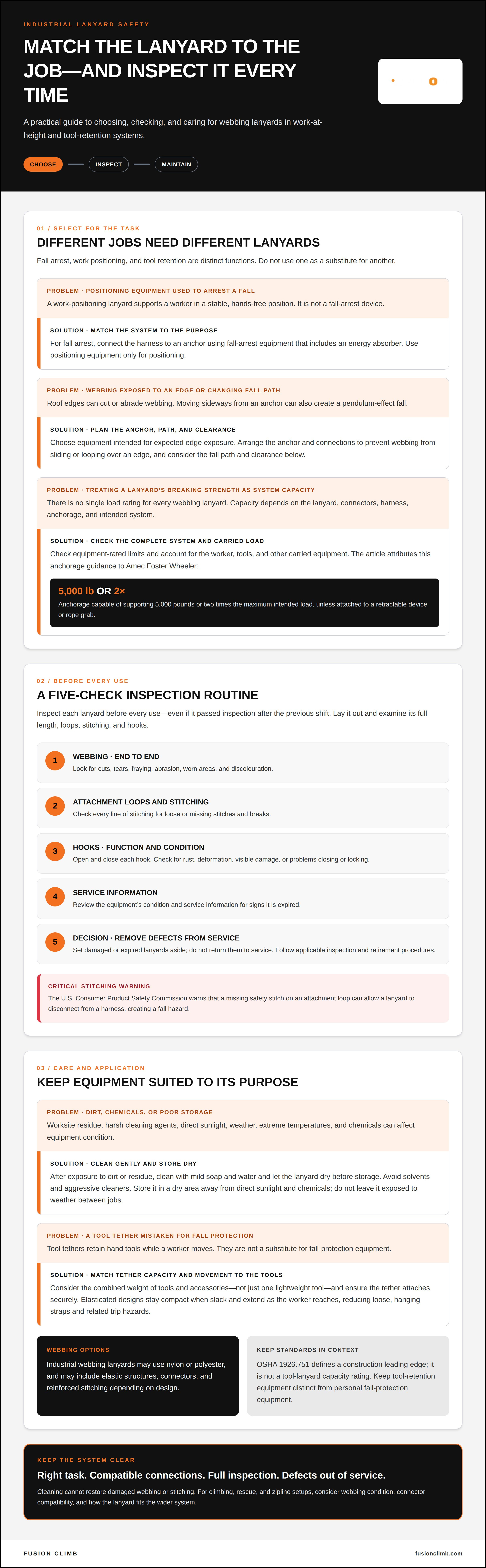
Choose fall-protection equipment to suit the task, anchor location, and potential fall path. For roofing or construction, distinguish fall arrest from work positioning before selecting a lanyard.
Fall Arrest and Energy Absorption
Fall-arrest lanyards connect a worker’s harness to an anchor and should include an energy absorber. During a fall, the absorber helps reduce the force transmitted through the system. When utilizing high-quality webbing lanyards for industrial use, always check the intended application, compatible connectors, and the clearance below the work area. A short-looking setup can still require careful planning because the worker’s movement and anchor position affect the fall path.
Sharp edges need special attention. Webbing can be cut or abraded as it moves across a roof edge, so select equipment intended for the expected edge exposure. Arrange the anchor and connections to prevent the webbing from sliding or looping over an edge as the worker moves.
Work Positioning and Fall Arrest
Work-positioning lanyards support a worker in a stable position, such as when working hands-free on a structure. They are not fall-arrest devices. If the task requires arresting a fall, use fall-arrest equipment with an energy absorber instead of treating a positioning lanyard as a substitute.
Before roofing work, determine whether the system is intended to prevent a fall, arrest one, or support positioning. Consider anchor placement and the risk of a pendulum-effect fall if the worker moves sideways from the anchor. Keep lifelines and anchor connections clear of sharp edges that could damage webbing.
Load Ratings and Incorrect Use Risks
There is no single load rating or breaking strength for every webbing lanyard. Usable capacity depends on the specific equipment and intended system, including the lanyard, connectors, harness, and anchorage. Check the equipment’s rated limits and account for the worker, tools, and other carried equipment. Breaking strength alone is not the system’s working capacity.
According to Amec Foster Wheeler, unless attached to a retractable device or rope grab, at least one lanyard must be tied off to an anchorage capable of supporting 5,000 pounds or two times the maximum intended load. Incorrect use, such as choosing positioning equipment for fall arrest or connecting to an unsuitable anchor, can leave the worker without the intended protection.
Pre-use inspection and maintenance
Inspect each safety lanyard before every use, even if it passed inspection after the previous shift. Follow a consistent sequence to spot damage before the equipment enters service. Lay the lanyard out to examine its full length, attachment loops, stitching, and hooks.
Examine the webbing closely in good light. Cuts, tears, fraying, abrasion, or discolouration can indicate damage; check for loose or missing stitches as well. The U.S. Consumer Product Safety Commission warns that a missing safety stitch on an attachment loop can allow the lanyard to disconnect from a harness, creating a fall hazard. Check hooks for rust, deformation, and problems closing or locking.
- Examine the webbing from end to end for cuts, tears, and worn areas.
- Inspect attachment loops and every line of stitching for looseness or breaks.
- Open and close each hook, then look for rust or visible damage.
- Review the equipment’s condition and service information for signs it is expired.
- Remove damaged or expired lanyards from use rather than returning them to service.
Clean the lanyard after exposure to dirt or worksite residue. Use mild soap and water, then let it dry before storage. Avoid harsh chemicals, solvents, and aggressive cleaning agents, which can affect webbing materials. Consider exposure to extreme temperatures, severe weather, and chemicals when assessing the equipment’s condition.
Store the lanyard in a dry area away from direct sunlight and chemicals. Don’t leave it exposed to weather between jobs. If a pre-use check reveals a defect, set the equipment aside and follow the applicable inspection and retirement procedures. Cleaning cannot restore damaged webbing or stitching.
For compatible equipment in a connected system, explore lanyard and tether options suited to your application.
Tool lanyards for industrial workers
Tool tethers help workers retain hand tools while moving through a task. Choose them for tool retention, not as a substitute for fall-protection equipment.
Industrial Lanyard Materials and Webbing Types
Webbing lanyards for industrial use may be made with nylon or polyester webbing and may include elastic structures, connectors, and reinforced stitching, depending on their design. For tool retention, consider how the tether moves: an elasticated design stays compact when slack and extends as the worker reaches.
That movement can reduce loose, hanging straps and related trip hazards. Match the tether’s capacity to the tools and accessories being carried, not just a single lightweight tool. For example, account for a drill and its attached accessories together.
Applicable United States Safety Standards
Applicable requirements depend on whether equipment retains tools or forms part of a fall-protection system. Keep these functions distinct, and select a tool tether for its intended use and rated capacity.
OSHA 1926.751 defines a leading edge in construction. That definition helps identify an edge-related work condition, but it isn’t a tool-lanyard capacity rating. Workers should distinguish tool-retention equipment from personal fall-protection equipment when planning site controls.
Manufacturers and Suppliers
Manufacturers and industrial safety suppliers sell tool lanyards in the United States. Compare options by intended use, capacity, material, attachment method, and product instructions. A suitable tether must connect securely to its assigned tool and allow for the movement expected during work.
A listed tool-lanyard set contains 12 lanyards, which can help outfit multiple workers. Assign each tether to a compatible tool and work method rather than treating all tethers as interchangeable.
Before work starts, identify which tools need retention and where each tether will attach. Webbing lanyards for industrial use should suit the tool load and expected movement, with connections kept clear of snag points. An elastic tether can extend during a reach and stay more compact when slack, but its capacity and attachment still need to match the task.
Webbing and lanyards for climbing, rescue, and zipline courses
For vertical activities, choose a lanyard to match its role, movement, and connection points. Its length, width, and connectors must work with the full equipment system.
Length and Width Selection
Start by mapping the route between the user, harness, and anchor, then consider how much movement the task requires. A lanyard that’s too long can create slack or snag points; one that’s too short can restrict movement between anchors. Choose webbing dimensions according to the equipment’s intended use and specifications, not appearance alone.
Connector fit matters too. Hooks must be compatible with the harness D-rings and anchor points, and close and seat correctly. Match the connector shape to the connection point and expected movement on the course. Confirm that the complete setup allows movement without twisting or improperly loading connections.
Lanyard Uses Across Activities
Webbing lanyards can provide backup protection in rock climbing, tree climbing, rescue, and zipline courses. The task determines how the equipment is arranged: a double-leg lanyard can support continuous attachment as the user moves between anchor points. That transition requires compatible connections and a setup suited to the course’s movement path.
Nylon or polyester webbing, reinforced stitching, connectors, and, in some designs, elastic structures or energy absorbers serve different roles. Strong webbing materials are selected to resist abrasion, UV exposure, and wear. Inspect the full assembly for these conditions, especially after contact with rough surfaces or extended outdoor use. A damaged component can compromise the connected system.
For course planning, map each connection and transition before use. Check that the lanyard’s reach suits the route, its connectors match the harness and anchors, and the system supports the intended activity. Rock climbing, rescue, and zipline work are not interchangeable applications just because each uses webbing. Their movement and connection requirements differ.
For course equipment planning, explore lanyard and tether options alongside compatible zipline components.
Fusion Climb: Lanyard and tether
Fusion Climb offers lanyards and tethers for setups that require a connection component suited to the activity. Consider these products for climbing, rescue, or zipline configurations, and assess how they fit with the harness, anchor points, and required movement. A lanyard is one part of the system, so select it according to compatibility and intended use.
For a broader zipline configuration, Fusion Climb also offers Full Body Harnesses, Superman Style Harnesses, and Zipline Pulleys. First identify the user’s movement and connection needs, then select equipment to suit the setup.
Contact Fusion Climb to discuss lanyards and tethers for your application.
Build a Consistent Equipment Plan
Start with a clear equipment plan for each task. Define the intended use, connection points, and required movement before selecting components. This gives your team a consistent basis for choosing webbing lanyards for industrial use and matching them to the work, rather than relying on appearance or habit.
Keep each component’s role clear in a connected setup. Fusion Climb offers Full Body Harnesses, Superman Style Harnesses, and Zipline Pulleys alongside lanyards and tethers. Consider how each product fits the activity and the equipment it must work with. A component should suit its intended application, not substitute for another.
Use that plan to guide your next equipment decision, whether you’re preparing for industrial work or developing a zipline setup. Contact Fusion Climb about lanyards and take the next step with purpose.
Frequently Asked Questions
What is an ELASTICATED WEBBING LANYARD?
An elasticated webbing lanyard uses flexible webbing that stays compact when slack and extends as the user moves. In fall-protection applications, it connects a worker’s harness to an anchor point. Its stretch can reduce excess hanging strap, but its intended purpose matters: tool retention, work positioning, and fall arrest each require equipment suited to that function.
What are industrial webbing lanyards used for?
Industrial webbing lanyards connect people or tools to compatible equipment for specific tasks. A fall-arrest lanyard connects a harness to an anchor, while a tool tether helps retain a hand tool during work. Webbing lanyards are also used as backup protection in climbing, rescue, and zipline settings. Match each lanyard to its intended application.
What is the difference between positioning, restraint, and fall-arrest lanyards?
Positioning lanyards support a worker in a chosen position, often allowing hands-free work; they are not designed to arrest a fall. Restraint systems limit a worker’s reach to prevent access to a fall edge. Fall-arrest lanyards are designed to stop a fall and should include an energy absorber. Choose based on the system’s function, not the lanyard’s appearance.
How do you inspect and maintain a webbing lanyard?
Inspect the lanyard before each use, examining the full webbing, attachment loops, stitching, and connectors. Look for cuts, tears, abrasion, loose stitches, or rusted hooks. Clean dirt with mild soap and water, avoid harsh chemicals, then dry and store the lanyard in a dry area away from direct sunlight. Consider whether weather, heat, or chemicals have affected its condition.
When should a webbing lanyard be removed from service or replaced?
Remove a lanyard from use if it has cuts, tears, damaged stitching, corroded hooks, or other visible damage. Don’t use expired equipment. Fusion Climb harnesses and lanyards must not be used if previously used, dropped, or subjected to a fall, as they are considered compromised. Keep questionable gear out of service rather than relying on cleaning or appearance to restore it.
How much do industrial webbing lanyards cost in the United States?
The cost of webbing lanyards for industrial use typically ranges from $20 to over $100. Simple positioning or basic restraint lanyards are usually more affordable, while advanced fall-arrest models featuring integrated energy absorbers or specialized elasticated webbing sit at a higher price point. Investing in reliable equipment ensures workplace safety and compliance.