



Sourcing Challenge Course Equipment for New Course Projects
The lowest quote is not the whole sourcing decision. Sourcing equipment for a new challenge course means mapping the full equipment scope, comparing supplier proposals, and weighing product requirements, ethical and compliance considerations, transport costs, and delivery timing together. A clear plan helps keep those factors visible before purchasing decisions are made.
Equipment selection matters, but sourcing decisions also affect project costs and schedules. This guide shows how to map expected spending, structure supplier requests, assess sourcing risks, and compare total costs rather than purchase prices alone. It also explains how to account for shipping and logistics when planning a course project, helping reduce surprises between equipment selection and installation preparation.
Key Takeaways
- Map equipment needs and related expenses together to spot sourcing opportunities and risks before committing to a supplier.
- Use RFI, RFP, and RFQ processes to clarify requirements and compare proposals on total cost, terms, and delivery, not price alone.
- Include ethical practices, environmental policies, applicable compliance considerations, and supply risks in supplier evaluations.
- Plan transport around shipping costs, timing, route conditions, and potential disruptions to keep procurement aligned with the project schedule.
Ethical, environmental, and compliance considerations
Build ethical and compliance checks into supplier selection. Assess suppliers’ labor practices, environmental policies, production transparency, and compliance with applicable regulations and standards. A written evaluation framework makes these criteria easy to compare alongside product requirements. For global supply chains, consider country-specific risks such as economic conditions, political stability, infrastructure, and local capabilities.
Choose low ropes, high ropes, or aerial adventure equipment based on the planned participant experience, course layout, and operating model. Low ropes focus on challenges close to the ground; high ropes and aerial courses use elevated elements. Match equipment categories to the design instead of selecting components before the course concept is clear.
Designers, installers, and inspectors need documented qualifications relevant to their assigned work and the standards applicable to the project. Assess their experience with the specific course type, technical scope, and inspection responsibilities. A job title alone does not establish qualifications for every task.
Site conditions and permit requirements depend on the course and its location. Before committing to a layout, assess access, terrain, trees or other support structures, drainage, and nearby activity areas. Identify permit requirements with the relevant local authorities, as they can vary by site and jurisdiction.
Insurance and liability needs depend on the course activities, site operations, and the organization’s risk profile. Describe the planned activities, participant use, and operating arrangements to an insurance professional. Review contractual responsibilities and coverage terms together rather than assuming one policy addresses every risk.
Equipment needs follow the course design and operating plan. They may include participant harnesses, connection systems, pulleys, and course-specific hardware. In procurement documents, specify each component’s intended use and compatibility. A general equipment list is not a substitute for a complete design.
Installation should follow the project design and the equipment manufacturer’s instructions, with qualified personnel responsible for their assigned work. Establish inspection and maintenance procedures before opening. Keep records of findings, corrective actions, and component condition to support consistent decisions about continued use or removal.
Keep negotiations transparent. Document agreed specifications, delivery expectations, responsibilities, and change procedures in supplier contracts. Have the company’s legal team review relevant legal and regulatory requirements and the organization’s interests. Maintain open communication with single-source suppliers, and coordinate procurement and engineering when component requirements change.
Using RFI, RFP, and RFQ processes
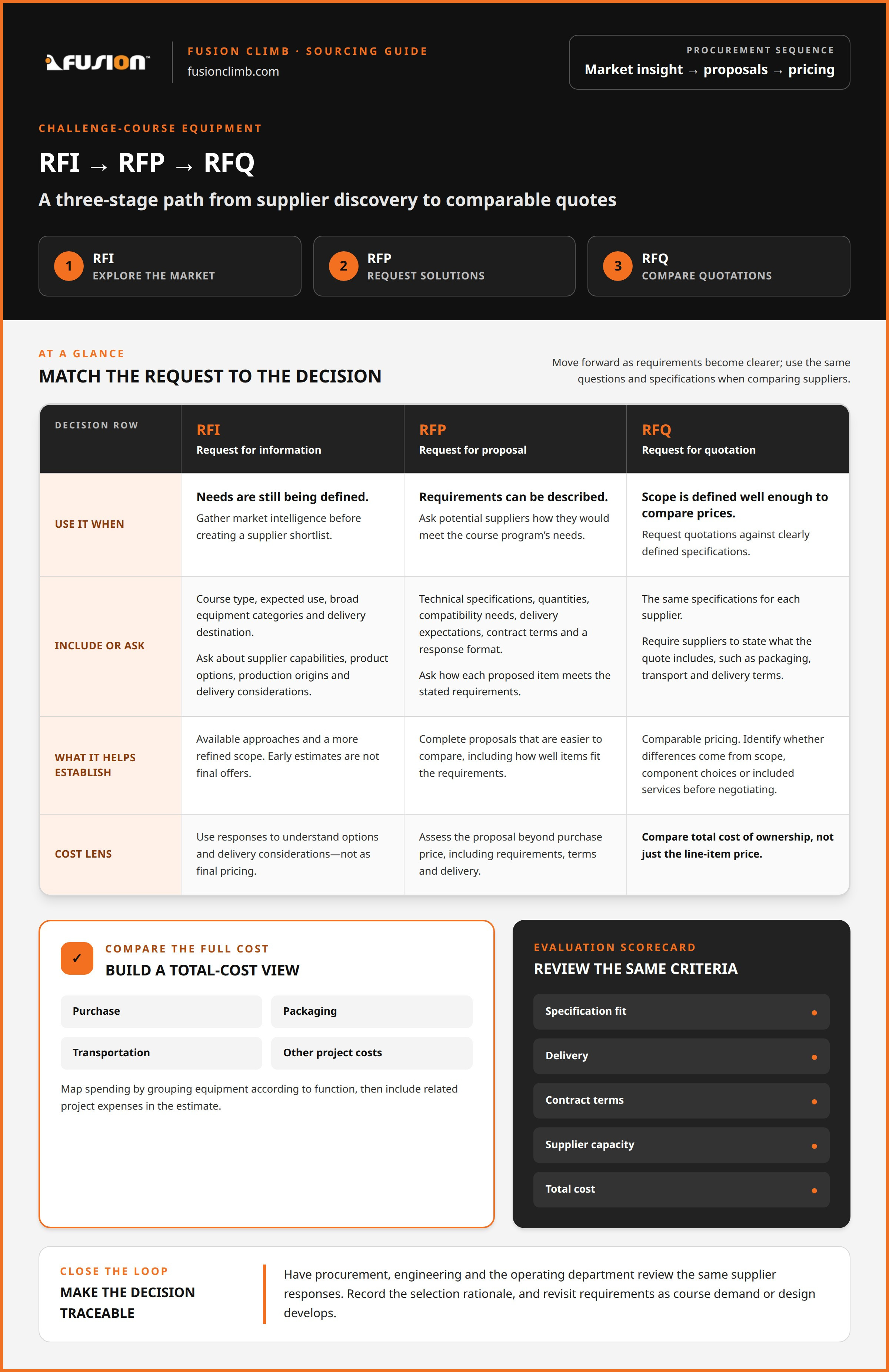
Use procurement requests in sequence, matching each document to a decision. A request for information (RFI) gathers market intelligence before the organization creates a shortlist. A request for proposal (RFP) asks potential suppliers how they would meet the course program’s requirements. A request for quotation (RFQ) requests pricing against clearly defined specifications. This sequence gives teams a practical framework for sourcing equipment for a new challenge course.
Start with an RFI when the department is still defining its needs. Describe the course type, expected use, broad equipment categories, and delivery destination. Ask suppliers about relevant capabilities, product options, production origins, and delivery considerations. Use the same questions for each respondent. Their replies can help procurement understand available approaches and refine the scope, without treating early estimates as final offers.
Issue an RFP when the organization can describe its requirements but needs complete proposals. Include technical specifications, quantities, compatibility needs, delivery expectations, contract terms, and a response format. Ask suppliers to explain how each proposed item meets the stated requirements. A structured RFP makes proposals easier to compare and helps supply chain teams assess more than purchase price.
Use an RFQ once the scope is defined well enough to compare quotations. Ask each supplier to price the same specifications and state what the quote includes, such as packaging, transport, and delivery terms. Compare total cost of ownership, not just the line-item price. If proposals differ, identify whether the gaps reflect scope, component choices, or included services before negotiating.
Keep the evaluation record practical. A scorecard can weigh specification fit, delivery, contract terms, supplier capacity, and total cost. Procurement, engineering, and the operating department should review the same responses, then record the selection rationale. For sourcing equipment for a new challenge course, this record also gives the team a clear reference when requirements change. Strategic sourcing is an ongoing process, so revisit the requirements as course demand or design develops. For a component-focused sourcing discussion, review equipment planning options.
Research potential suppliers and request proposals that specify costs, products, legal terms, and delivery. Assess market competitiveness and alternatives to current suppliers, while comparing total cost of ownership rather than choosing solely on the lowest purchase price.
Identifying sourcing opportunities and mapping spend
Map the required equipment, supplier options, and related expenses before purchasing. Strategic sourcing turns that overview into a repeatable process that connects project needs with costs, supply risks, and operational priorities.
Equipment Cost Considerations
Challenge course equipment costs depend on the design, quantities, specifications, and delivery requirements. There is no single useful price for every project. Map spending by grouping items according to function, then include purchase, packaging, transportation, and other project costs in your total-cost estimate.
Compare complete proposals for the same equipment scope, not isolated item prices. This shows whether a lower purchase price also changes transport costs or leaves requirements uncovered, giving you a clearer basis for budgeting and purchasing decisions.
Supplier Reputation Assessment
No single supplier suits every U.S. project. Assess suppliers using evidence tied to your requirements, including relevant product experience, clear specifications, responsive communication, and consistent records of delivery and support.
Use a structured scorecard to compare suppliers on these factors, as well as capacity and supply chain resilience. Reviewing the supplier portfolio can reveal reliance on one source or region. Consider alternatives for critical components, and decide whether a competitive, diversified approach fits the project’s risks and operational needs.
Next, map expected spending across the full equipment scope. Separate course components from freight, packaging, and project-specific handling. Group similar purchases to see where demand overlaps, where specifications differ, and which categories carry the greatest cost or supply risk.
Then review the supply market and current supplier portfolio for opportunities. Global supply disruptions can affect availability and transport, so identify dependencies on a single supplier, component, or region. Compare viable alternatives and assess their effects on continuity, quality, and total cost.
Keep the map current. Strategic sourcing is an ongoing process, not a one-time purchasing exercise. Revisit assumptions when course design, demand, or operations change, and document the reason for each adjustment. This record helps your organization track sourcing decisions, identify new competitive options, and respond deliberately when supplier conditions shift.
Logistics costs and transport time
Transport affects both delivered cost and the project schedule. Compare each supplier’s quote using the same component list, destination, packaging assumptions, and delivery terms. A lower equipment price may not mean a lower total cost if freight, handling, or separate shipments add expense. Include these factors in the project budget before comparing proposals.
Build a delivery schedule around the course’s actual milestones. Separate production, dispatch, transit, receiving, and on-site handling so every stage is visible. Ask suppliers to outline the expected sequence and identify which components will ship together. This makes delays easier to pinpoint and helps the project team coordinate deliveries with site readiness.
Transport options involve trade-offs. Consolidating components may simplify receiving, while separate shipments may suit items with different production schedules. Compare both approaches for timing, handling needs, and impact on the work plan. Record these assumptions in a logistics evaluation so revised quotes can be compared on consistent terms.
Compare equipment warranties, lead times, and installation services as separate parts of each proposal. Review warranty coverage and exclusions alongside component specifications, then compare lead-time stages and stated delivery assumptions. For installation, identify what the proposal includes, who performs each task, and how responsibilities fit the project schedule.
Account for disruptions in the transport plan. Weather can affect routes and delivery windows, while local laws and tariffs on imported goods can affect movement and costs. For global procurement, weigh logistics time and expense against product quality and price. Regional sourcing may offer a different balance of timing, cost, and supply continuity.
Use the completed review to identify opportunities for better coordination, such as aligning compatible deliveries or adjusting order timing. Project professionals can then develop a schedule with clear receiving responsibilities and contingency steps. To align equipment planning with delivery needs, review challenge course equipment options.
Total cost depends on the equipment selected and delivery arrangements, including freight, handling, and whether components ship separately. Compare supplier quotes using the same component list, destination, packaging assumptions, and delivery terms.
Fusion Climb
Fusion Climb supports challenge course equipment planning with specialized safety gear and hardware. Its offerings include full body harnesses, Superman style harnesses, zipline pulleys, lanyards, and tethers. These products can help project teams assess equipment needs alongside course design, specifications, and procurement plans.
Consider Fusion Climb when your equipment scope includes these components and you are aligning product requirements with supplier selection. A clear list of intended uses and project needs helps focus the discussion on relevant product categories and procurement considerations.
For equipment questions about your course project, contact Fusion Climb.
Move Your Course Project Forward
A sourcing plan is most useful when it stays connected to the course as the design develops. Keep the equipment scope and selection rationale together so future decisions can refer to the original requirements instead of relying on memory. This gives your team a clear starting point for refining procurement or aligning equipment choices with the intended course experience.
When sourcing equipment for a new challenge course, turn your project needs into a focused equipment discussion. Share the categories and requirements you have defined, then consider how they fit the course’s intended use. A clear brief keeps the conversation grounded in your project rather than generic assumptions.
Ready to discuss equipment for your project? Contact Fusion Climb about sourcing and take the next step toward a well-planned course.
Frequently Asked Questions
What safety standards and regulations apply to challenge course equipment in the United States?
Applicable requirements depend on equipment type, intended use, and jurisdiction, so assess each component rather than assuming one standard covers the entire course. For specific product references, Fusion Climb states that its TCH-109-3 harness meets ANSI Z359.11-2021 and CE EN 12277:2015, while its Tacoma carabiner meets ANSI Z359.12-2019 and CE EN 12275:2013. Product standards don’t replace a project-wide compliance review.
Which challenge course equipment manufacturers and suppliers are reputable in the United States?
When sourcing equipment for a new challenge course, operators should look for established manufacturers and suppliers certified by organizations like the Association for Challenge Course Technology (ACCT) or compliant with relevant ANSI and CE standards. Leading suppliers known for reliable hardware, harnesses, and safety systems include industry standards like Fusion Climb, Petzl, and ISC, all of which provide extensively tested gear designed specifically for professional aerial and challenge course environments.