


Superman Style Zipline Harness: The Professional Guide to Prone Flight Gear
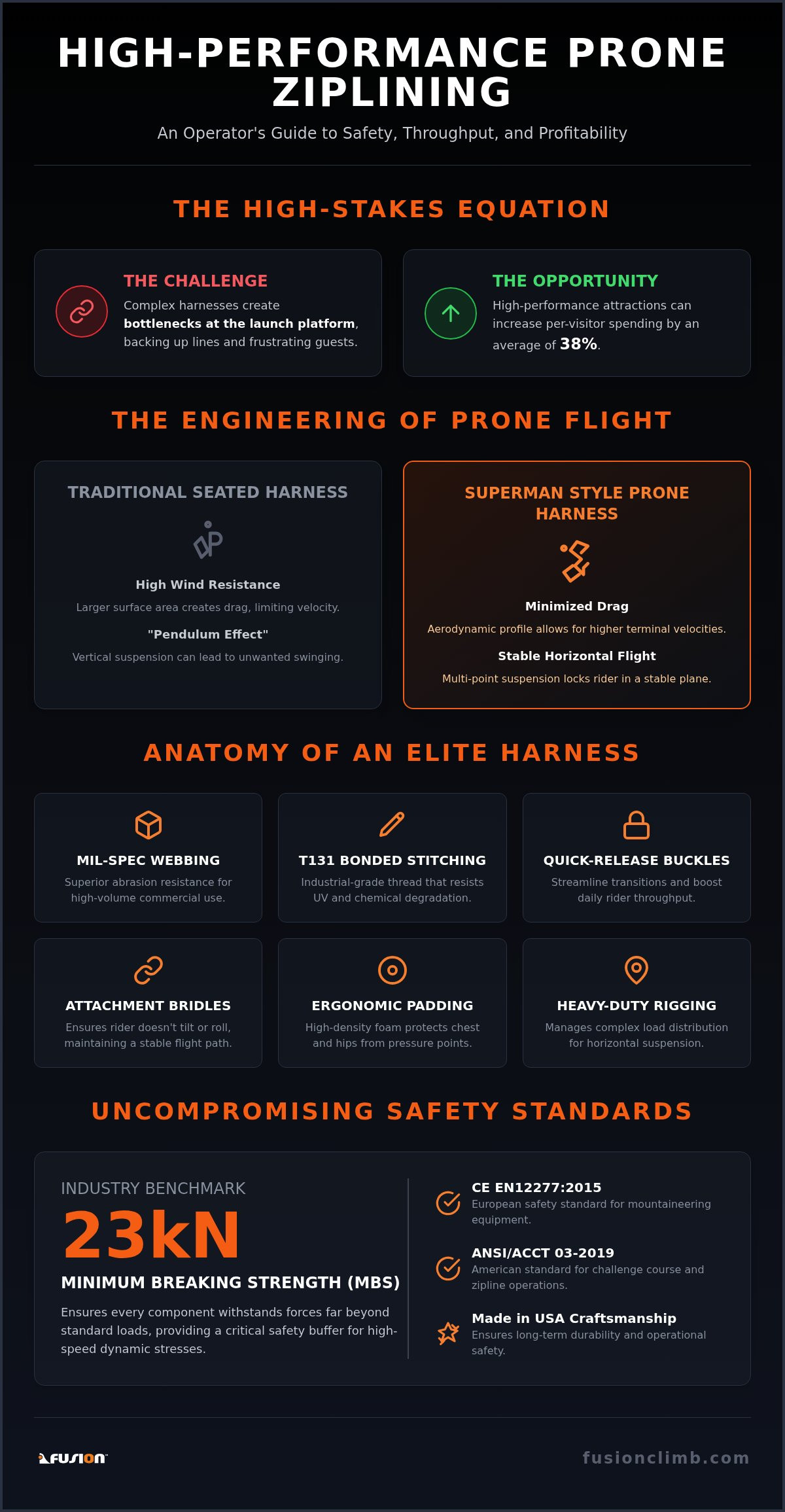
Integrating high-performance attractions like prone ziplining can increase per-visitor spending by an average of 38%, yet these gains often vanish when gear causes a bottleneck at the launch platform. You've likely seen the frustration of lines backing up because a Superman style zipline harness is too complex to adjust quickly, or riders feel unstable during high-speed horizontal flight. Maintaining a high-volume operation requires equipment that balances rapid throughput with the rugged, industrial reliability your park demands.
We understand that in a high-stakes vertical environment, safety isn't just a checkbox; it's the foundation of your business. This professional guide provides a deep dive into the technical specifications and safety standards, such as CE EN12277:2015 and ANSI/ACCT 03-2019, that define world-class prone flight gear. You'll discover how mil-spec webbing and quick-release hardware like Presto™ buckles can streamline your transitions and boost revenue. We'll also preview the operational advantages of using gear designed for industrial durability, ensuring your investment stands up to the rigors of a busy season.
Key Takeaways
- Understand the physics of horizontal flight and how precise body alignment reduces wind resistance to maximize rider velocity.
- Identify the engineering benchmarks for commercial gear, including the 23kN Minimum Breaking Strength and industrial T131 nylon bonded stitching.
- Learn how choosing a Superman style zipline harness with aluminum quick-release buckles can eliminate bottlenecks and increase daily rider throughput.
- Evaluate the differences between standalone harnesses and integrated combo kits to ensure your rigging meets the requirements for three-point connection systems.
- Discover the durability advantages of mil-spec webbing and "Made in USA" craftsmanship for maintaining long-term operational safety in high-volume parks.
Beyond the Thrill: The Engineering of Prone Zipline Flight
A prone zipline harness is a specialized piece of technical equipment designed to suspend a rider in a head-first, horizontal orientation. Often referred to as "superhero" flight, this posture fundamentally changes the physics of the experience. By aligning the rider's body parallel to the cable, the system minimizes surface area and drastically reduces wind resistance. This aerodynamic profile allows for higher terminal velocities and a more consistent glide path compared to traditional seated positions. For park managers looking at the 2026 season, these attractions represent a strategic move toward high-velocity, immersive experiences that command premium pricing.
Engineering a stable flight path at high speeds requires a meticulous focus on the rider's center of gravity. In a standard harness, the load is suspended vertically, which can lead to unwanted swinging. A Superman style zipline harness solves this by distributing the rider's weight across a broader frame, typically spanning the torso and upper thighs. This multi-point suspension prevents the "pendulum effect" during rapid acceleration or sudden braking maneuvers. It ensures that the rider remains locked in a stable, horizontal plane even when speeds exceed 60 miles per hour, providing a sense of security that is essential for guest satisfaction.
The Evolution of Aerial Adventure Posture
The transition from traditional seat harnesses to prone flight systems marks a significant shift in how guests interact with heights. While seated rides offer a passive, observation-based experience, prone positioning creates a visceral sense of movement. This posture intensifies the perception of speed because the landscape moves directly through the rider's primary field of vision. A look into zip-line history and mechanics shows that while early systems were built for utility, modern engineering has refined the Superman style zipline harness for specialized use in professional canopy tours and cinematic stunt work. It's a progression from simple transit to high-performance aerial maneuvers.
Key Components of a Prone Flight System
Professional-grade prone gear must provide a custom-fit feel while maintaining industrial-strength durability. Because every rider has a different physical build, a high-performance harness requires multiple adjustment points at the shoulders, waist, and legs. This level of customization is critical for maintaining the correct horizontal pitch during flight. Essential system components include:
- Attachment Bridles: These specialized tethers connect the harness to a three-point trolley, ensuring the rider doesn't tilt or roll during the ride.
- Heavy-Duty Rigging Plates: These manage the complex load distribution required to keep a human body suspended horizontally under tension.
- Ergonomic Padding: High-density foam inserts protect the chest and hips from pressure points during long-duration commercial rides.
Reliable gear doesn't just improve the rider's comfort; it builds the trust necessary for them to push their limits. When the equipment is over-engineered for safety, the focus remains entirely on the flight.
Safety Standards and Load Ratings: What Defines a High-Performance Harness
Operating a commercial adventure park requires a commitment to equipment that exceeds recreational limits. A Superman style zipline harness must withstand thousands of cycles while maintaining its structural integrity under high-velocity tension. The industry benchmark for these systems is a Minimum Breaking Strength (MBS) of 23kN. This rating ensures that every load-bearing component can handle forces far beyond the weight of a standard rider, providing a critical buffer for the dynamic stresses of high-speed braking and acceleration.
Industrial Webbing and Stitching Integrity
Durability begins with the raw materials. High-performance prone harnesses utilize mil-spec nylon webbing, which offers superior abrasion resistance compared to standard recreational materials. This webbing is secured using T131 nylon bonded stitching, an industrial-grade thread that resists UV degradation and chemical wear. Minimum Breaking Strength (MBS) is the ultimate load at which a component will fail, serving as the technical foundation for safety factors in professional rigging. In high-throughput environments, reinforced attachment points are essential to prevent the fraying that occurs during rapid guest transitions.
Hardware and Connector Reliability
Hardware failure isn't an option in professional flight systems. All aluminum and steel components, including buckles and D-rings, must be rated to at least 5,000 lbs to meet industrial safety requirements. Prone rigging presents a unique challenge because it requires a 3-point or 4-point connection system to maintain stability. Unlike traditional vertical harnesses that use a single attachment, a Superman style zipline harness uses multiple lanyards and rigging plates to distribute the load. This configuration prevents the rider from rolling or pitching during the ride, ensuring a smooth and controlled flight path.
Adherence to OSHA safety standards and international certifications like CE EN12277:2015 is vital for operational viability in 2026. These standards mandate rigorous testing for every buckle and strap. When selecting gear, verify that your equipment also complies with the ANSI/ACCT 03-2019 standards for canopy tours. You can explore our collection of commercial-grade hardware to find components that meet these high-performance benchmarks. Choosing equipment that is over-engineered for the task protects your guests and your park's reputation.
Maximizing Throughput: Operational Efficiency for Park Managers
Efficiency is the silent driver of profitability in commercial adventure parks. As the global zipline tour market continues its projected climb toward $12.4 billion by 2034, park managers must prioritize systems that move guests quickly without compromising safety. Seconds matter on the platform. When your staff struggles with complex rigging, the entire flow of the park grinds to a halt, directly impacting your bottom line. Investing in a high-quality Superman style zipline harness isn't just a safety choice; it's a strategic move to optimize your hourly rider count.
Bottlenecks at the launch tower are often the result of gear that is difficult to adjust or verify. Integrating multi-activity attractions has been shown to increase per-visitor spending by an average of 38%, but those gains are lost if guests spend more time waiting than flying. Modern prone harnesses address this through color-coded safety straps and intuitive hardware. These features allow staff to perform rapid visual inspections, ensuring every connection is secure before the rider leaves the deck. This clarity reduces the cognitive load on your team and keeps the line moving steadily.
Streamlining the Take-Off Deck
The technical advantage of the Super Ripper series lies in its use of Presto™ aluminum quick-release buckles. Unlike generic bridles that require manual threading, these buckles allow for near-instant attachment and release. This mechanism is engineered for rapid deployment, enabling staff to secure participants of varying sizes in a fraction of the time. Training your team on a 4-point adjustment system ensures universal sizing fits every guest perfectly on the first try. A smooth workflow from the staging area to the cable ensures that your peak hours remain productive and your guests stay engaged.
Longevity and Modular Gear Management
High-volume environments demand equipment that can withstand constant use. A Superman style zipline harness is a significant investment, and its lifespan shouldn't be dictated by the wear and tear of a single component. Modular gear management allows you to replace high-wear items, such as lanyards or tethers, without retiring the entire harness chassis. This modularity extends the service life of your gear and reduces long-term maintenance costs. To maintain peak operational status, your team should follow a rigorous daily inspection protocol:
- Webbing Check: Inspect mil-spec straps for any signs of fraying or heat glaze from friction.
- Hardware Function: Verify that all Presto™ buckles and auto-locking carabiners snap shut and lock without hesitation.
- Stitching Review: Examine the T131 nylon bonded stitching at all critical load-bearing junctions.
Reliable gear keeps your park running at full capacity. By choosing modular, professional-grade components, you ensure that your operation remains resilient against the demands of a busy season.
Buying Guide: Choosing Between Standalone Harnesses and Combo Kits
Selecting the right configuration for your fleet is a logistical decision that balances existing infrastructure against the need for a turnkey solution. A Superman style zipline harness is a specialized investment. You must determine if a standalone unit or a fully integrated kit serves your park's 2026 expansion goals. While the harness itself is the primary interface for the rider, the hardware that connects them to the cable determines the stability and safety of the entire flight system. Making the wrong choice can lead to compatibility issues that delay your season opening.
The 'Harness Only' Use Case
Standalone units are the logical choice for established operators who already possess a vetted inventory of rigging plates and lanyards. If your current setup utilizes high-strength connection points compatible with three-point prone rigging, a harness-only purchase allows you to focus your budget on the rider interface. This path is ideal when you need to replace worn textiles while retaining your durable metal hardware. It also allows for deeper customization if your specific zipline trolleys require non-standard tether lengths or specific carabiner orientations. You don't have to pay for redundant hardware if your current gear still meets inspection standards.
The Advantage of Integrated Combo Kits
For new installations or total fleet overhauls, integrated combo kits provide the highest level of safety assurance. These kits come factory-matched, ensuring that every carabiner, lanyard, and rigging plate works in perfect synchronization with the harness. Inventory management becomes significantly simpler when you aren't sourcing individual components from multiple vendors. A professional-grade combo kit, like those in the Super Ripper series, typically includes heavy-duty rigging plates, auto-locking carabiners rated to 5,000 lbs, and precision-length lanyards. This "out of the box" compatibility eliminates the risk of using mismatched components that could compromise rider stability.
Commercial parks must cater to a diverse range of riders to maximize revenue. While a universal M-XL size covers the majority of adult participants, providing specialized XS/S sizing is essential for including smaller riders and teenagers. Offering a full size range ensures that your park remains accessible and safe for everyone. Because these professional systems are often made to order with a manufacturing lead time of approximately 1-2 weeks, planning your bulk hardware solutions well before the peak season is an operational necessity. Investing in "Made in USA" quality ensures that your gear arrives with the documentation required for local safety inspections.
View our complete Superman style harness kits to find the right configuration for your rigging needs. Choosing the right bundle today prevents logistical headaches during your busiest months.
The Fusion Climb Super Ripper: Professional-Grade Aerial Adventure
The Super Ripper series represents the gold standard for high-velocity horizontal attractions. It is not just about the thrill of flight. It is about the industrial reliability required for sustained commercial success in 2026. National operators trust this Superman style zipline harness because it is manufactured in the USA, ensuring rigorous quality control and adherence to national safety benchmarks. Every unit reflects a commitment to meticulous manufacturing and real-world durability. When you invest in the Super Ripper, you are choosing gear that has been tested in the most demanding vertical environments.
Reliability is built into every stitch and buckle. Our design philosophy prioritizes substance over style, focusing on the technical requirements of high-volume parks. The Super Ripper is engineered to handle the dynamic loads of high-speed lines while providing a stable platform for the rider. This focus on engineering excellence ensures that your equipment remains a silent, dependable partner in your park's daily operations. Whether you are launching a new canopy tour or upgrading an existing high-speed line, this gear provides the technical assurance your guests deserve.
Technical Breakdown of the Super Ripper
The torso and chest support are engineered for balanced weight distribution, preventing the fatigue often associated with long-duration prone flight. This design ensures that the rider's center of gravity remains perfectly centered, which is crucial when integrating with high-speed magnetic braking trolleys. Fusion's T131 nylon bonded stitching provides industrial-grade durability that resists the fraying and UV degradation common in outdoor adventure environments. Key technical features include:
- Even Weight Distribution: Broad padding at the chest and hips eliminates pressure points during rapid deceleration.
- Presto™ Buckles: Aluminum quick-release hardware allows for rapid guest transitions without compromising the secure fit.
- Mil-Spec Webbing: High-strength nylon straps provide an MBS of 23kN for maximum safety margins.
Next Steps for Operators
Preparing for the 2026 season requires navigating updated safety standards and ensuring your equipment is compliant with ANSI Z359.11. Consulting with an authoritative manufacturer for bulk commercial orders ensures that your gear is not only safe but also delivered on schedule. Our typical lead times of 1 to 2 weeks allow for timely fleet updates before the peak season begins. We provide the documentation and technical support necessary to satisfy insurance requirements and local safety inspectors. Choosing the right Superman style zipline harness is the first step in securing your park's future.
Equip your park with Fusion Climb Super Ripper Harnesses to ensure your operation meets the highest standards of safety and efficiency. Our team is ready to help you customize your gear for the specific demands of your aerial adventure course.
Securing the Future of High-Speed Aerial Adventure
Success in the adventure industry depends on equipment that performs under pressure. You've seen how horizontal flight physics and rapid buckle systems directly influence both rider satisfaction and park revenue. By prioritizing gear with a 23kN Minimum Breaking Strength and industrial-grade construction, you protect your operation against the wear of high-volume seasons. Choosing a professional Superman style zipline harness ensures your park meets the rigorous ANSI and CE standards required for modern commercial rigging.
We remain committed to providing the technical assurance you need to push physical limits safely. Our Super Ripper series features Presto™ Quick-Release Buckles and has been Made in the USA since 1998 to meet the highest performance benchmarks. Don't let equipment bottlenecks limit your park's potential during the peak months ahead. Take the next step in optimizing your throughput and enhancing the guest experience today.
Shop the Fusion Climb Super Ripper Collection and equip your team with the gold standard in prone flight gear. Your next season of elite aerial adventure starts with the right foundation.
Frequently Asked Questions
What is the weight capacity of a Superman style zipline harness?
Most professional grade prone harnesses are rated for a maximum rider weight of 310 lbs. This limit aligns with industrial safety factors and ensures the mil-spec webbing maintains its integrity during dynamic loading. Always verify the specific load rating on the manufacturer's label to ensure compliance with your park's safety protocols.
Can prone harnesses be used on standard zipline trolleys?
No, a Superman style zipline harness cannot be used with a standard single-connection trolley. These harnesses require a specialized 3-point or 4-point connection trolley to maintain the rider's horizontal orientation and prevent rolling. Attempting to use a standard trolley creates an unstable flight path and significant safety risks for the participant.
How do I clean and maintain my commercial zipline harness?
Clean your gear using only mild soap and lukewarm water to remove salt, dirt, or sweat. Avoid harsh chemicals or machine washing, as these can degrade the nylon fibers and T131 stitching. Always air dry the harness away from direct sunlight to prevent UV damage to the load-bearing webbing and ensure long-term reliability.
What is the lifespan of a Superman style harness in a high-volume park?
The service life of a commercial harness typically ranges from two to five years depending on the frequency of use and environmental exposure. While some manufacturers allow for a ten-year maximum lifespan, high-volume parks often retire gear sooner due to mechanical abrasion. Perform daily tactile inspections to identify webbing glaze or hardware wear that necessitates immediate retirement.
Are prone harnesses safe for children or smaller riders?
Prone harnesses are safe for smaller riders provided they fit the manufacturer's minimum sizing requirements, such as specialized XS/S models. Proper fit is essential to ensure the participant's center of gravity remains correctly balanced within the torso support system. Never allow a rider to use a harness that is too large, as it compromises stability and safety during the flight.
What is the difference between a 3-point and 4-point connection system?
A 3-point system utilizes two shoulder connections and one leg connection, while a 4-point system adds a second leg attachment for increased lateral stability. Both configurations are designed to distribute the rider's weight horizontally across the rigging. The choice typically depends on your specific trolley design and the desired level of rider maneuverability during high-speed transitions.
Is a Superman style harness more comfortable than a traditional seat harness?
Comfort levels differ because a Superman style zipline harness distributes pressure across the chest, torso, and thighs rather than the waist and groin. Many riders find the prone position more ergonomic for long-distance lines because it eliminates the pressure points often felt in vertical seat harnesses. High-density padding is critical in these systems to support the rider's weight comfortably during horizontal suspension.
Do I need specific training to operate a prone zipline attraction?
Yes, staff require specialized training to manage the unique rigging and guest-loading procedures of a prone attraction. Operators must understand how to adjust multi-point suspension systems and verify the pitch of the rider before launch. This training ensures that throughput remains high while maintaining the strict safety protocols required for professional horizontal flight attractions.