



Horizontal Zipline Harnesses for Comfortable, Secure Fit
A secure zipline ride starts with a harness that fits comfortably and connects correctly. A horizontal zipline harness for aerial adventures should support the rider in the intended position without uncomfortable pressure. Check that the stitching is intact and that the harness connects to the line through the system’s designated attachment. Comfort, fit, and inspection all matter.
Knowing a harness should feel secure is one thing; assessing fit is another. Check where the support sits, how adjustments affect movement, and what to inspect before use. A poorly fitting harness can distract the rider, while careful fitting helps them focus on the ride.
This guide explains how harness construction supports a horizontal flight, how to approach fit and adjustment, and which visible signs call for inspection. It also covers made-to-order sizing and the role of purpose-built harnesses in aerial adventure setups, so you can make a more informed equipment decision before riders leave the platform.
Key Takeaways
- Assess how the harness supports the rider’s body during horizontal flight, not just whether it feels secure while standing.
- Use a consistent fitting and adjustment process so straps sit correctly and the rider can move without unnecessary pressure.
- Learn which visible signs of wear matter during inspection and why damaged stitching should not be overlooked.
- Explore made-to-order sizing and how a purpose-built harness can suit the needs of an aerial adventure setup.
Harness comfort and rider support
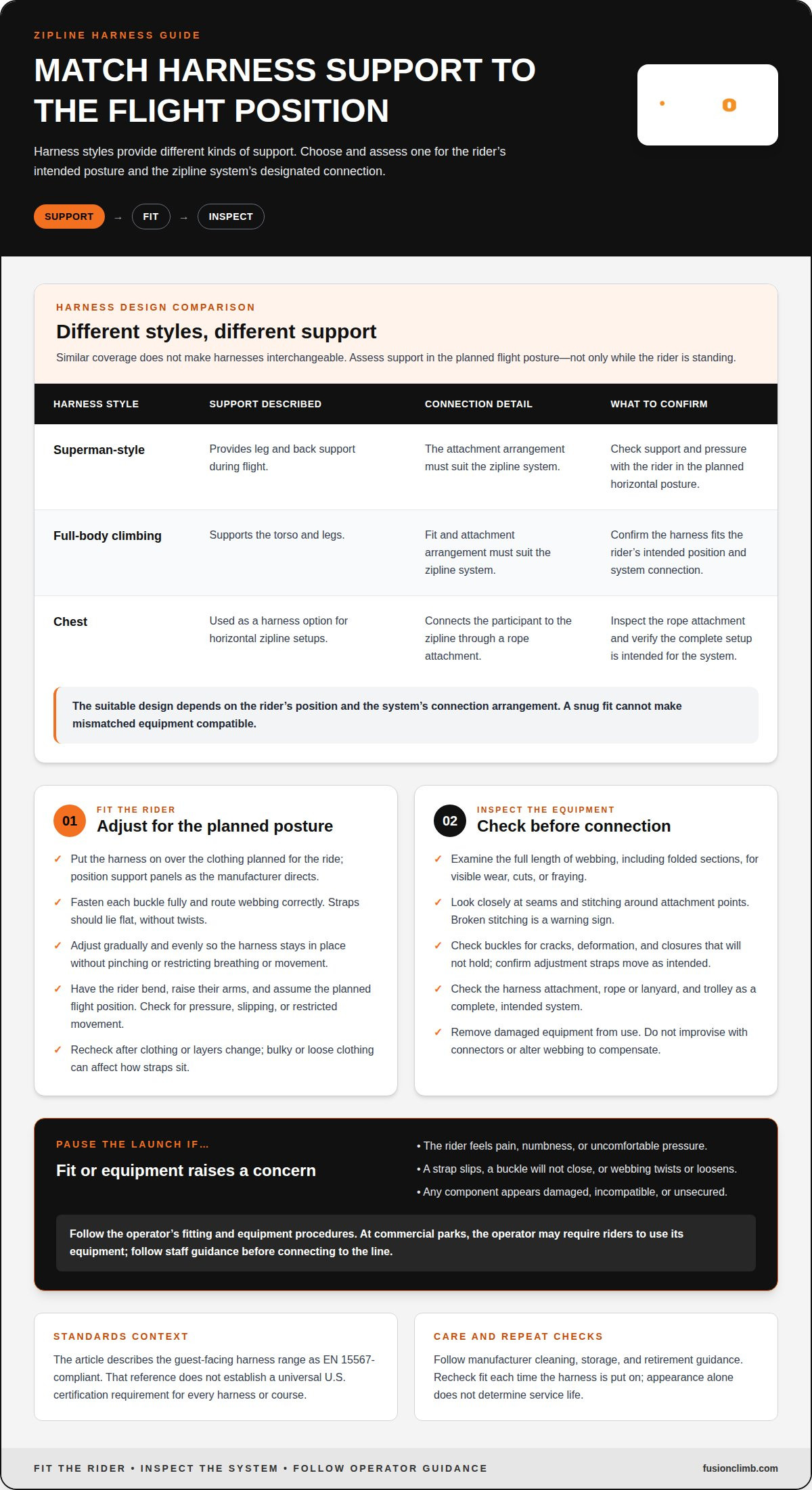
A horizontal zipline harness for aerial adventures should support the rider’s intended flight position. Horizontal setups may use full-body, chest, or Superman-style harnesses. A chest harness connects the participant to the zipline through a rope attachment. The suitable design depends on the rider’s position and the system’s connection arrangement.
Assess support in the intended flight posture, not just while standing on the launch platform. Superman-style harnesses provide leg and back support during flight. Full-body climbing harnesses support the torso and legs, but their fit and attachment arrangement must suit the zipline system. Similar coverage does not make different harnesses interchangeable.
Adjust the harness so it stays in place without pinching or restricting movement. With a horizontal zipline harness for aerial adventures, check strap placement while the rider assumes the planned posture. Webbing should lie smoothly, and broken stitching is a warning sign. Stop if the rider feels pressure or cannot move comfortably.
For guest-facing zipline operations, the described harness range is EN 15567-compliant. This standard reference does not establish a universal U.S. certification requirement for every harness or course. Review the equipment’s documentation and suitability for the actual system; a standard name alone doesn’t establish compatibility.
A commercial park may require riders to use its equipment rather than a personal harness. The operator decides which equipment is used on its course. Follow the operator’s instructions and course staff’s guidance before connecting to the line or starting the ride.
For care, follow the manufacturer’s cleaning and storage instructions. Inspect webbing and stitching before use, and remove damaged equipment from service. Use the manufacturer’s retirement guidance rather than judging service life by appearance alone. These steps help keep the harness suitable for its intended use and ready for careful inspection before a ride.
Harness fit and adjustment
Fit starts with the rider and the harness design, not the trolley. Put the harness on over the clothing planned for the ride. Position its support panels as the manufacturer directs, then fasten each buckle fully. Webbing should lie flat against clothing, without twists that create pressure points. A comfortable standing fit is only a starting point because the rider’s position can change once suspended.
Adjust gradually and tighten straps evenly so the harness stays in place without restricting breathing or movement. Check that buckles are closed and webbing is routed through them correctly. Ask the rider to bend, raise their arms, and assume the planned flight posture. In a Superman-style position, for example, pressure may shift toward the legs and back, so check support in that position.
- Remove twists from each visible strap before tightening.
- Keep adjustment hardware accessible for a final fit check.
- Confirm the rider can move into the required riding posture.
- Recheck the fit after clothing or layers change.
Clothing affects adjustment. A thick jacket can change how straps sit compared with a light shirt, while loose fabric can bunch beneath the harness. Secure loose items and smooth clothing under contact areas before fastening. For a child or a rider with limited mobility, allow extra time for positioning and follow the operator’s fitting procedure.
The connection matters too. The harness attachment, lanyard, and trolley must form a compatible system; a snug fit cannot correct mismatched equipment. Before departure, have the operator inspect the buckles, attachment point, and strap routing. If a strap slips, a buckle will not close, or the rider reports pain or numbness, stop and adjust before launch. Never tie, cut, or otherwise alter harness webbing to compensate.
A proper fit keeps the rider securely positioned while allowing comfortable movement. For repeated rides, recheck the harness each time it is put on instead of assuming the previous adjustment still works. Clothing, posture, and strap settings can change, so check these details before every launch.
Harness fit and inspection
The wrong harness can place support incorrectly or leave the rider poorly secured. Incorrect fit may also allow the harness to shift during flight, while damaged stitching can compromise it. Check fit and inspect the harness separately before connecting the rider to the zipline.
Start with the harness laid flat. Examine the webbing, seams, and load-bearing attachment areas for visible wear, cuts, fraying, or broken stitching. Check each buckle for damage and confirm that adjustment straps move as intended. If a component looks damaged or behaves unexpectedly, remove the harness from use rather than attempting a repair during a launch check.
- Inspect the full length of each strap, including folded sections.
- Look closely at stitching around attachment points and seams.
- Check buckles for cracks, deformation, or a closure that won’t hold.
- Confirm the harness has no unauthorized knots, cuts, or alterations.
Next, fit the harness to the rider and the intended position. Check that the webbing lies flat and support stays in place as the rider moves. Have them assume the planned posture, such as a horizontal Superman position, and watch for straps that twist, loosen, or press uncomfortably. Recheck the fit after clothing changes, since bulky layers can affect how the harness sits.
Finally, inspect the connection as a complete system. The rope attachment, harness connection, and trolley must align with the equipment’s intended setup. Do not improvise with an extra connector or change the attachment arrangement to compensate for poor fit. Follow the operator’s equipment procedure and pause if any component appears incompatible or unsecured.
A chest harness connects the participant to the zipline through a rope attachment, so inspect that connection as well as the harness. Follow a consistent inspection routine before each use, and record concerns according to the operation’s process. Visible damage, broken stitching, or a buckle that will not close means the harness should be removed from service. A careful check can identify problems before the rider reaches the launch point.
Harness sizing and made-to-order availability
Harness sizing starts with the rider’s measurements and the equipment’s size range. The Superman-style zipline harness is made to order in XS/S/M/L/XL sizes. This range gives operators options for fitting different riders, but each harness still needs to be checked for fit and adjustment on the individual.
The stated maximum weight range for the Superman Zipline Harness is 150 kg. That figure applies to the harness, not automatically to every aerial adventure course. A course may set its own rider limits based on its equipment and operating setup, so the harness limit alone doesn’t determine whether a rider can participate.
For a consistent sizing process, record the rider’s measurements and compare them with the harness sizing guidance. Then assess the fit over the clothing planned for the ride. A rider between size options needs particular attention to strap adjustment and support placement. Choosing by clothing label alone may not reflect how the harness fits the body.
- Identify the rider’s measurements before selecting a size.
- Use the listed XS/S/M/L/XL range as the starting point.
- Assess fit with the intended riding position and clothing.
- Keep the harness’s 150 kg maximum weight range distinct from course limits.
Made-to-order production also affects planning. The stated lead time for a new Superman Zipline Harness order is approximately 8 to 10 weeks after ordering. For an operation preparing equipment ahead of a season or planned course use, include that production period in the purchasing schedule.
Size selection and order timing solve different problems. The correct size supports an individual rider’s fit, while lead-time planning helps align equipment arrival with operational needs. A useful next step is to organize rider measurements and size requirements before placing an order, then allow approximately 8 to 10 weeks after ordering for production.
Fusion Climb: Full Body Harnesses
Fusion Climb offers Full Body Harnesses and Superman Style Harnesses for aerial adventure setups. Choose between them based on the rider’s intended position and the support the course requires. Zipline Pulleys and Lanyard and tether components can also be considered as parts of the equipment system.
Consider these products when selecting a harness or coordinating components for a zipline setup. The right choice depends on the configuration, rider fit, and compatibility of connected equipment. Keep these factors in view alongside the fitting and inspection practices described above.
For help with your equipment needs, contact Fusion Climb.
Plan the Next Ride with Confidence
When planning equipment, consider the whole course setup, not just the harness. The intended riding position, attachment arrangement, pulley, and operating procedures all affect how equipment works together. Select a horizontal zipline harness for aerial adventures as part of that system, guided by fit and intended use.
Fusion Climb offers Full Body Harnesses, Superman Style Harnesses, and Zipline Pulleys for aerial adventure equipment needs. Consider these components when planning your setup, without treating any single item as a substitute for proper fitting or inspection.
Whether you’re preparing a new course or reviewing equipment for upcoming rides, make the next step a clear discussion of your harness requirements and setup. Contact Fusion Climb about harnesses to continue planning, and move toward your next aerial adventure with care and purpose.
Frequently Asked Questions
What is a horizontal zipline harness and how does it work?
A horizontal zipline harness positions the rider for a face-forward or prone flight and connects them to the zipline system. As the trolley travels along the cable, the harness supports the rider in the intended posture. The attachment arrangement depends on the harness and course setup, so the operator determines how each component connects before the ride.
How should a zipline harness fit, and how do you inspect it before use?
A zipline harness should stay in position without restricting comfortable movement. Have the rider assume the planned posture, then check whether the harness shifts or creates pressure points. Before use, inspect the equipment in good light, including folds in the webbing and connection areas. If you see damage or cannot confirm a secure connection, stop and follow the operator’s equipment procedure.
What safety certifications and standards should a zipline harness meet in the United States?
The described harness range for guest-facing zipline operations is EN 15567-compliant, but this does not establish a universal U.S. certification requirement. Review the equipment documentation and confirm it suits the actual system.
How do you clean, store, and retire a zipline harness?
Follow the manufacturer’s cleaning, storage, and retirement guidance. Inspect webbing and stitching before use, and remove damaged equipment from service.