



Full Body Harness Styles for Fall Protection at Work
A fall-protection harness is only useful when its style fits the work and the way it connects to the protection system. A multi-purpose full body harness is wearable equipment designed to connect a worker to fall-protection equipment. In construction, OSHA required full-body harnesses to replace waist belts for fall arrest, effective in 1998, according to the Centers for Disease Control and Prevention.
Choosing a multi-purpose full body harness involves more than comfort or convenience. The work environment, attachment points, and intended use all matter. The right style supports the task; the wrong one can restrict movement or make connections unsuitable.
This guide explains what fall-protection harnesses do and how construction and roofing options differ. You’ll learn what D-ring positions are for, how harness styles compare, and what to consider when matching equipment to a job. Start with the task, then assess fit, function, and compatibility.
Key Takeaways
- Match harness design to the work environment and the tasks you need to perform, rather than choosing by appearance alone.
- Understand how dorsal, front, and side D-rings support different connection needs before selecting an attachment point.
- Compare harness styles by their intended use, movement requirements, and how they work with the rest of the fall-protection system.
- Use fit and compatibility as practical selection criteria so your equipment supports the job without restricting necessary movement.
What are Fall Protection Safety Harnesses?
A fall-protection harness connects a worker to a compatible protection system. Its design, fit, and adjustment affect how it feels and functions during work.
Comfort Padding and Back Support
Padding can reduce pressure where straps contact the shoulders, waist, or legs. Back support may also distribute contact across the torso. Compare padding placement with the work you do, such as reaching overhead or bending repeatedly. Bulky padding can interfere with layers or movement, so assess comfort in your usual work clothing. Check seams and straps for damage.
Comfortable Harness Fit
A well-fitted harness should stay secure without pinching or restricting ordinary movement. Adjust the shoulder, chest, and leg straps so they lie flat and remain in position. A loose leg strap can shift during movement, while an overtightened strap can cause discomfort. Try the harness with your work clothing, then reach, crouch, and walk. Recheck the adjustments before connecting equipment.
Applicable US Safety Standards
For construction fall arrest, OSHA required full-body harnesses to replace waist belts, effective in 1998, according to the Centers for Disease Control and Prevention. That requirement addresses construction fall arrest. The applicable workplace rules depend on the task and setting, so identify the work activity and its fall-protection system before selecting equipment. Match the harness to the system’s intended use.
Inspection, Donning, and Adjustment
Inspect the harness before each use. Check webbing, stitching, buckles, labels, and attachment points for wear, cuts, broken parts, or unreadable information. To put it on, hold the back attachment point, untangle the straps, and step into the leg loops. Fasten each buckle, then adjust the shoulder, chest, and leg straps. Confirm that buckles are secured and straps lie flat. Follow the manufacturer’s instructions and remove damaged equipment from use.
Harness options for construction and roofing
Construction and roofing tasks call for a harness suited to the work area, movement, and connected fall-protection system. Start by matching the design to the job.
Construction and Roofing Tasks
Construction work can involve moving between platforms, steel frames, and unfinished floors. Consider how the harness fits while climbing, reaching, and carrying tools. Roofing adds another consideration: workers may need to move across a sloped surface while connected to a suitable system. Choose equipment that allows the required movement and works with the planned connection. A harness alone is not a complete fall-protection system.
Match the Harness to the Work
Before comparing options, note the task, work position, and connection method. A roofer moving along a roof edge, for example, has different movement needs from a worker positioning steel on a frame. Consider clothing, tool access, and how the worker will connect and disconnect. Compare each harness’s intended use and attachment configuration with the plan. Choose for the actual tasks, not the job title alone.
Prices and Product Options
Harness prices vary with design, materials, padding, adjustment features, and intended application. Compare options by function, not price alone. A construction task involving frequent movement may call for different features from roofing work that requires a particular connection setup. Review product instructions, included components, fit range, and compatibility with the rest of the system. This clarifies what the price covers and whether the harness suits the work.
Weight Capacity
A harness’s weight capacity is the maximum load specified for that model. Follow the manufacturer’s label and instructions, accounting for the worker’s clothing, tools, and carried equipment. The permitted load depends on the specific harness and its intended system. Similar-looking harnesses may have different capacities. Check the exact model’s documentation and match its stated limits to the complete work setup.
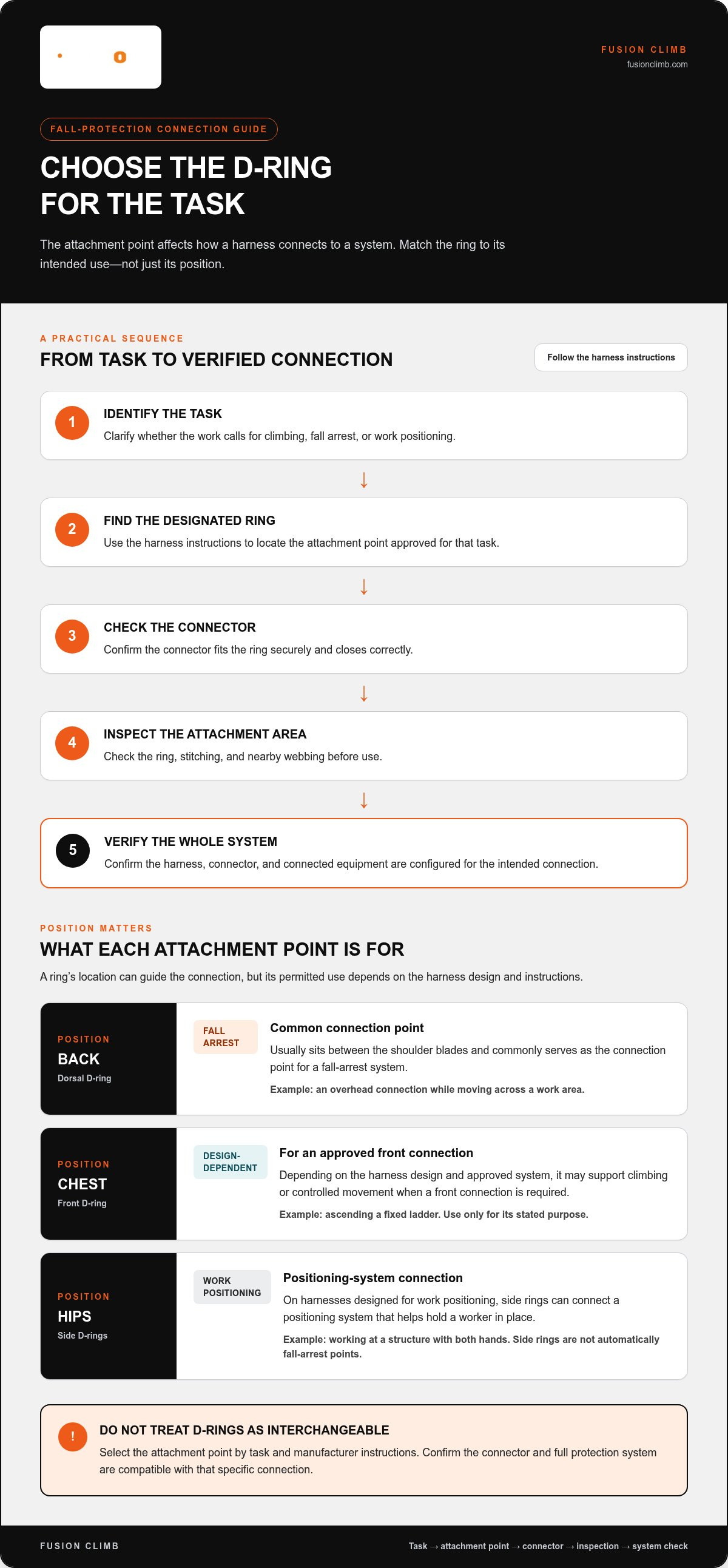
Dorsal, front, and side D-ring attachment points
A D-ring’s position affects how a harness connects to a system. Match each attachment point to its intended task and the harness manufacturer’s instructions.
Dorsal D-ring
The dorsal D-ring sits on the back, usually between the shoulder blades. It commonly serves as the connection point for a fall-arrest system. For example, a worker connected overhead may move across a work area with the connection behind the body. Check that the connector fits the ring and that the system’s instructions permit this connection. The dorsal position is not interchangeable with every other ring.
Front D-ring
A front attachment point sits on the chest. Depending on the harness design and approved system, it may support climbing or controlled movement when a front connection is required. For a worker ascending a fixed ladder, for instance, the connection location can affect movement and system operation. Use the front ring only for its stated purpose. Confirm that the connector, harness, and connected equipment are compatible.
Side D-rings
Side D-rings sit near the hips. On harnesses designed for work positioning, they can connect a positioning system that helps hold a worker in place during a task. One example is a worker using both hands while working at a structure. Side rings are not automatically fall-arrest points. Check the harness instructions for their permitted use and required connection setup.
Choose the attachment point by following these practical steps:
- Identify the task, such as climbing, fall arrest, or work positioning.
- Locate the ring designated for that task in the harness instructions.
- Check that the connector fits securely and closes correctly.
- Inspect the ring, stitching, and nearby webbing before use.
- Confirm the full system is configured for the intended connection.
Never choose a ring based on location alone. The harness instructions define its function, and the complete system must be used as designed.
Full-body safety harness styles
Harness styles differ by strap layout, attachment configuration, and intended work. Choose by task, not appearance.
A vest-style design uses shoulder, chest, and leg straps to secure the wearer. It can suit general work where the harness needs to stay positioned during movement. A cross-over design changes how the shoulder straps sit and connect, which may affect fit and movement. Compare the layout with work clothing and the motions required for the job.
Specialized designs suit particular activities. A climbing harness, for example, may have attachment features arranged for its intended climbing system. A work-positioning harness may include side attachment points for positioning equipment. These configurations are not automatically interchangeable. Check the manufacturer’s instructions for each attachment point and its permitted use before connecting a system.
A multi-purpose style suits more than one task only when its design and instructions support those uses. A harness suitable for fall arrest may not also be suitable for positioning or rescue. Each task requires compatible equipment, an approved connection, and a configuration designed for that purpose. For rescue planning, consider how the harness supports the planned connection and movement.
Maintain the harness according to the manufacturer’s care and inspection instructions. Before use, inspect webbing, stitching, buckles, labels, and attachment points. Remove damaged equipment from service, and replace it according to the manufacturer’s criteria. If the equipment has arrested a fall, follow the manufacturer’s instructions before using it again.
Use this selection sequence: identify the task, check the required attachment configuration, compare fit and movement, then review care instructions. This keeps the style decision tied to real work. To compare options by intended application, explore harness styles and consider how each design fits your work system.
Fusion Climb: Full Body Harnesses
Fusion Climb offers full body harnesses for readers comparing equipment by application and configuration. Its Superman Style Harnesses are another style to consider, while zipline pulleys, lanyards, and tethers are related equipment for compatible systems. Start with the work or activity, identify the required connection setup, and compare harness options with the manufacturer’s instructions. This helps narrow the choice without treating harness styles as interchangeable. Consider the equipment categories in relation to the task and the complete system.
To explore harness options and related equipment, visit Fusion Climb.
Choose the Right Setup for Your Next Job
Before selecting a multi-purpose full body harness, define the work it must support and the connections your system requires. This gives you a clear basis for comparing designs instead of choosing by appearance or convenience. Keep the intended task at the center of the decision.
Fusion Climb offers full body harnesses, Superman Style Harnesses, and zipline pulleys. These categories suit different equipment needs, so focus on the option that fits your application and consider the complete setup. A sound choice starts with a clear purpose and careful attention to compatibility.
Ready to take the next step? Contact Fusion Climb about harnesses to explore the available options. Make your selection with purpose, and move forward prepared for the work ahead.
Frequently Asked Questions
What is a multi-purpose full body harness used for?
A multi-purpose full body harness can support different tasks when its design and instructions allow those uses. Depending on its configuration, it may connect a worker to fall-arrest equipment or support work positioning. A technician working at height, for example, may need a different connection setup from someone using a harness for a recreation system. Check the specific model’s intended applications before use.
What types of multi-purpose full body harnesses are available?
Harness types include general-purpose vest designs and specialized models for particular activities. Designs can differ in strap layout, padding, adjustment features, and attachment locations. An aerial adventure harness, for example, may be designed for a different user position than a harness intended for industrial tasks. Compare intended use and instructions rather than assuming similar-looking harnesses support the same work.
How do I choose the right size and fit for a full body harness?
Choose a size using the manufacturer’s sizing chart and your body measurements, then check the fit over the clothing you wear on the job. Confirm that buckles close, straps stay flat, and adjustment points have usable range. If you regularly work in a winter jacket, try the harness over that layer. Include the movements your task requires in the fit check.
How much does a multi-purpose full body harness cost?
Price depends on the specific harness and its configuration, including options such as padding or buckle style. Compare the listed price for the exact model and configuration you need, not a general category estimate. Consider which components are included and whether your setup requires compatible equipment. This lets you compare like with like.
What are the risks of suspension trauma and how can harness users reduce them?
Suspension after a fall can become a medical emergency, especially if the person cannot move or be rescued promptly. Reduce risk by planning rescue before work begins, maintaining communication, and ensuring rescuers know the site and access route. Workers should understand the rescue procedure and use only compatible suspension-relief equipment as directed by its manufacturer.
Where can I buy an ANSI-compliant full body harness in the United States?
Fusion Climb offers full body harnesses in the United States and lists ANSI Z359.11-2021 among its harness standards. Review the specifications and compliance information for the exact model you’re considering, since a standard claim should match the product documentation. Select a harness for your intended task and compatible system, then use it according to its instructions.