


Prone Position Zipline Harness: The Professional Guide to Superman Flight Gear (2026)
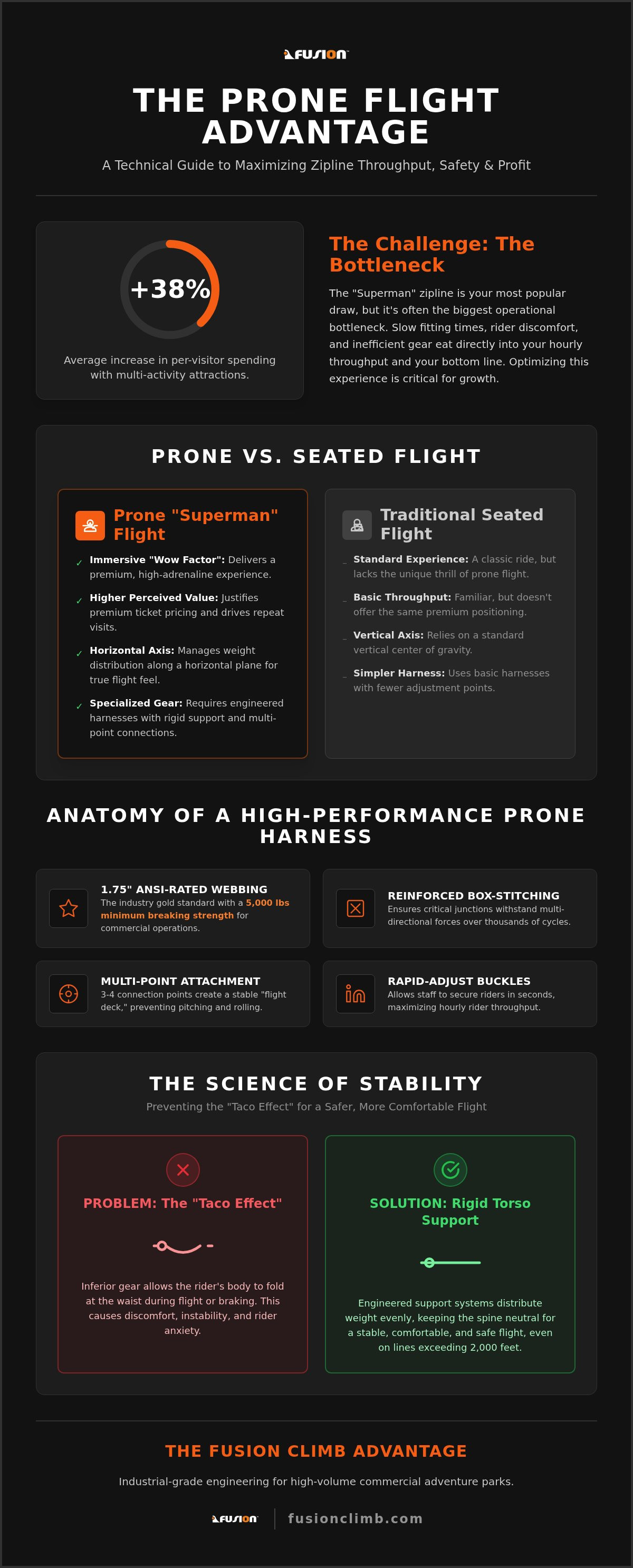
Integrating multi-activity attractions can increase per-visitor spending by an average of 38 percent, but the real profit driver in 2026 is how fast you can cycle those visitors through your flagship lines. You already know that the "Superman" flight is your park's most popular draw. It's often also the biggest bottleneck at the launch platform. Between slow fitting times and rider discomfort during long horizontal flights, an inefficient setup eats into your hourly throughput and your bottom line.
This guide helps you master the technical requirements of the modern prone position zipline harness to elevate both safety and operational speed. We'll explore how industrial-grade gear like the Super Ripper series utilizes heavy-duty ANSI webbing and modular components to reduce maintenance costs. You'll learn the specific hardware configurations needed for stable, high-speed flight and the ergonomic engineering that ensures rider comfort without sacrificing the rugged reliability your environment demands. By the end of this professional brief, you'll have a clear roadmap for upgrading your fleet to maximize durability and performance.
Key Takeaways
- Understand why 1.75-inch ANSI-rated webbing and reinforced stitching are the industry standards for maintaining structural integrity in horizontal flight.
- Learn how to select a prone position zipline harness that incorporates rapid-adjust buckle systems to maximize hourly rider throughput.
- Master the physics of center-of-gravity management to ensure rider stability and eliminate discomfort during extended Superman-style flights.
- Evaluate the logistical differences between prone and seated launches to optimize your platform space and staff fitting protocols.
- Discover how industrial-grade cycle-life engineering reduces long-term maintenance costs for high-volume commercial adventure parks.
Understanding Prone Flight: The Science of the Superman Position
A prone position zipline harness is more than a piece of gear; it's a specialized suspension system that rotates the rider’s axis by 90 degrees. While standard seated harnesses rely on a vertical center of gravity, prone flight requires gear that manages weight distribution along a horizontal plane. This "Superman" orientation allows riders to experience flight as a pilot would, but it places unique demands on the equipment. If the harness isn't engineered for this specific posture, the rider's body naturally wants to fold at the waist during braking. This is known as the "taco effect." High-quality commercial gear uses rigid torso support and specific multi-point attachments to keep the spine neutral and the flight path stable.
The psychological impact of this shift is significant. Riders perceive a much higher value in a head-first flight because it feels more immersive and daring. The adrenaline spike is measurably higher when facing the wind directly rather than sitting back. For park operators, this translates to a premium experience that justifies higher ticket prices and drives repeat visits. It's an investment in the "wow factor" that defines modern adventure parks.
The Biomechanics of Horizontal Suspension
Biomechanics play a vital role in long-distance lines. By distributing the rider's weight across the sternum and thighs, you eliminate the concentrated pressure points found in inferior designs. This isn't just about comfort; it's about stability. A rigid torso support prevents the rider from swaying or pitching, which reduces fatigue and ensures they arrive at the landing platform in the correct orientation for a safe disconnect. Proper alignment allows the rider to remain relaxed, even on lines exceeding 2,000 feet, where wind resistance can otherwise become a physical strain.
Safety Standards for Aerial Adventure Gear
In a commercial environment, the reliability of a Safety harness is measured by its adherence to rigorous testing. The ANSI Z359.11 standard serves as a benchmark for full-body systems, ensuring they can handle the dynamic forces of high-speed deceleration. Industrial-grade webbing, typically 1.75 inches wide with a 5,000-pound rating, is non-negotiable. Unlike recreational gear that might prioritize weight over longevity, a commercial prone position zipline harness is built for thousands of cycles. This durability separates professional operations from temporary setups. Every stitch pattern and buckle choice must reflect a commitment to industrial reliability, ensuring the gear performs consistently under the daily rigors of a high-volume park.
Engineering Safety: Key Features of Commercial Prone Harnesses
Commercial flight gear must withstand thousands of cycles while maintaining absolute structural integrity. The foundation of a high-performance prone position zipline harness is 1.75-inch heavy-duty ANSI-rated webbing. This material isn't chosen by accident. It provides a minimum breaking strength of 5,000 pounds, which is the industry gold standard for commercial operations. When you're suspending a rider horizontally, the load distribution differs significantly from traditional seated gear. Reinforced box-stitching patterns at every critical junction ensure that the harness can manage these multi-directional forces without fraying or stretching over time.
Stability in the air depends on a multi-point secure attachment system. While a seated harness often relies on a single tie-in point, a prone system typically uses three or four points of contact. This configuration prevents the rider from pitching forward or rolling during high-speed transit. Adhering to zipline harness safety standards means ensuring these points are integrated into the frame of the harness. It creates a rigid "flight deck" for the rider. This engineering choice eliminates the instability that leads to rider anxiety, allowing them to focus on the experience rather than their safety.
Hardware Integration: Buckles and Connectors
Operational speed is just as important as safety in a high-volume park. Aluminum quick-release buckles are superior to traditional pass-through buckles because they allow staff to secure riders in seconds. These components must be paired with auto-locking carabiners to prevent accidental gate openings during flight. For a deeper look at hardware reliability, consult our guide to professional climbing carabiners. Using the right connectors ensures that every flight is locked in before the rider leaves the platform.
The Super Ripper Design Philosophy
The Super Ripper series is engineered specifically for the rigors of commercial adventure parks. It features ergonomic padding zones in the chest and leg areas, which are essential for preventing pressure points during extended flights. The forward-facing posture engineering maximizes rider visibility, giving them an unobstructed view of the landscape below. Maintenance is simplified through modular lanyard systems. These allow you to replace high-wear components without retiring the entire harness. This modularity reduces your long-term equipment costs while keeping your fleet in peak condition. If you're looking to upgrade your park's gear, you can explore the full range of Superman style harnesses designed for industrial durability.
Performance Comparison: Prone vs. Seated Zipline Harnesses
Choosing between seated and prone systems is an operational decision that dictates your park's floor plan and revenue ceiling. Standard sit harnesses are versatile and quick to fit, making them ideal for high-volume family tours. However, a prone position zipline harness serves a different purpose. It's a premium attraction. While the fitting process for a horizontal system typically takes 30 to 45 seconds longer than a seated one, the perceived value allows operators to charge a significant margin. The trade-off is clear: you sacrifice a small amount of raw throughput for a higher per-rider profit.
Safety profiles also diverge significantly between the two styles. In a seated harness, the rider’s center of mass is below the pulley, which provides natural stability but allows for more "swing" during the ride. A prone system locks the rider into a fixed horizontal plane. This eliminates the risk of inversion and provides a more predictable flight path, especially on steep descents. Managing the rider's center of gravity is easier with a multi-point prone position zipline harness, as the weight is distributed across the entire length of the torso rather than concentrated in the hips.
Platform Operations and Launch Mechanics
Horizontal takeoff systems require more deck space than traditional step-off launches. Your platform must accommodate the length of the rider in a flying position, along with the necessary clearance for staff to perform a 360-degree safety check. Training is essential here. Staff must be proficient in securing multi-point attachments and managing rider anxiety. The head-first position can be intimidating for first-timers. A professional crew uses calm, assertive communication to reassure riders, ensuring the transition from the deck to the cable is seamless and controlled.
Durability and Maintenance Cycles
Industrial seat harnesses often show wear first in the belay loop and seat area. In contrast, prone gear experiences high friction on the sternum padding and leg loops. Because these harnesses are designed for high-speed, long-distance lines, they must be inspected daily for webbing abrasion and buckle tension. Integrating commercial zipline pulleys into your maintenance schedule is vital. The interaction between the harness tethers and the pulley housing is a high-wear zone. Replacing tethers at the first sign of glazing or fraying prevents larger equipment failures and maintains the integrity of your "Superman" flight experience.
Operational Efficiency: Throughput and Fitting for Adventure Parks
Efficiency in a commercial adventure park isn't just about speed. It's about precision. When you operate a high-volume line, every second at the launch platform counts toward your daily revenue. A professional prone position zipline harness equipped with rapid-adjust buckle systems allows your staff to fit riders of various sizes without fumbling with complex webbing. Instead of maintaining a massive inventory of small, medium, and large units, a universal sizing strategy streamlines your gear room and reduces the time riders spend waiting.
Standardizing the "Pre-Flight" check is the next step. Your team needs a repeatable protocol to verify every attachment point before the rider leaves the deck. This consistency doesn't just improve safety; it builds rider confidence. When people see a methodical, professional check, their anxiety drops. They're ready to fly. By minimizing the time spent on adjustments, you can increase your hourly throughput, which directly impacts your park's bottom line.
Optimizing the Launch Sequence
Integrated bridles are a game-changer for platform throughput. These systems allow for an instant trolley connection, eliminating the need for manual tether adjustments during the loading process. Staff positioning is equally critical. One guide should manage the rider's torso while the other secures the leg loops and checks the trolley. To maintain these high standards, your team should utilize a Zipline Safety Inspection Checklist for every shift. This ensures that gear wear is caught early and operational flow remains uninterrupted.
Commercial Longevity and ROI
Investing in specialty prone lines offers a high return, but only if your equipment lasts. Modular gear is the secret to long-term profitability. Instead of replacing an entire prone position zipline harness when a single tether shows wear, you can swap out interchangeable lanyard systems. This approach significantly reduces your annual capital expenditure. High-quality, ANSI-rated gear also signals a commitment to risk management that insurance providers value. While the initial investment in industrial-grade gear is higher, the reduction in maintenance downtime and potential insurance premiums makes it the smarter financial choice. If you're ready to optimize your park's performance, view our industrial-grade Superman harnesses today.
The Fusion Climb Advantage: Heavy-Duty Prone Flight Solutions
Fusion Climb is the industrial-grade alternative to recreational gear. We don't just manufacture equipment; we engineer solutions for high-volume environments where failure isn't an option. The Super Ripper series represents the pinnacle of this philosophy. It's built for commercial adventure parks that need a prone position zipline harness capable of handling thousands of cycles without compromising on rider safety. Every component is selected for its ability to withstand mechanical stress and outdoor exposure. We prioritize meticulous manufacturing over "extreme" marketing fluff. This ensures that every harness leaving our facility is a dependable guardian for your riders.
Super Ripper: The Industry Standard for Prone Flight
The Super Ripper's reputation rests on its uncompromising build quality and precision engineering. We utilize heavy-duty 1.75-inch ANSI-rated webbing that exceeds standard safety requirements. This provides a foundation of strength for the most demanding lines in the country. Aluminum quick-release buckles allow for rapid loading, which is essential for maintaining your park's momentum. These buckles provide a secure, tactile lock that both guides and riders can trust. Crucially, the Super Ripper features adjustable torso support and reinforced stitching patterns. It's also designed for compatibility with high-speed magnetic braking trolleys. This ensures that even at high velocities, the harness maintains the rider's orientation and absorbs deceleration forces smoothly.
Complete Rigging Solutions
Rigging a commercial line requires a synchronized system where every piece of hardware works in harmony. Our complete combo kits provide this synergy by bundling harnesses with compatible high-speed pulleys and Zipline Lanyards & Tethers. Purchasing a synchronized kit eliminates the guesswork of component compatibility and reduces your setup time. This is vital when you're customizing setups for specific tower heights or aggressive cable angles. These kits are engineered for horizontal and angled flight stability, giving you the flexibility to design more complex courses.
Fusion Climb offers professional support for large-scale facility upgrades and fleet replacements. Our experts provide guidance on selecting the right prone position zipline harness based on your specific course geometry and throughput goals. We understand that every park is unique. Whether you're installing a single flagship line or retrofitting an entire fleet, our team ensures your equipment meets the highest standards of industrial performance. We value substance over style. This makes us the silent partner in your park's success, providing the technical assurance you need to push your limits.
Elevate Your Park's Performance with Professional Flight Gear
Transitioning to a horizontal flight system is a strategic investment in both rider experience and operational throughput. By prioritizing a prone position zipline harness engineered with ANSI Z359.11 compliant webbing and commercial-grade aluminum quick-release hardware, you ensure that your equipment stands up to the daily rigors of high-volume use. This level of industrial precision reduces maintenance downtime while providing the essential stability needed for high-speed, head-first flight. You've seen how modular gear and standardized fitting protocols can transform your profit margins and platform efficiency.
Our gear is used by leading adventure parks nationwide to deliver the ultimate "Superman" experience safely and consistently. Don't settle for recreational-grade gear when your reputation and safety standards are on the line. Equip your park with Fusion Climb's industrial-grade prone harnesses today. Take the lead in aerial adventure innovation and give your visitors a flight they'll never forget.
Frequently Asked Questions
What is the weight capacity of a professional prone zipline harness?
Professional hardware in these systems is typically rated for 5,000 lbs of static load. However, the actual rider capacity depends on the specific harness model and its suspension system. Most commercial Superman-style harnesses support a maximum rider weight of 150 kg, which is approximately 330 lbs. It's vital to check the manufacturer's user weight range to ensure flight stability. Staying within the 150-lb to 330-lb range is common for many high-speed prone systems to maintain the correct center of mass.
Are Superman style harnesses safe for children or smaller riders?
Safety for smaller riders depends on the minimum weight and height requirements of the specific prone position zipline harness. Many high-speed systems require a minimum user weight of 150 lbs to ensure the rider stays balanced during flight. While universal sizing allows for torso adjustments, very small children may not meet the requirements for a secure fit. Operators must verify that the straps can be tightened sufficiently to prevent gaps in the leg or shoulder areas before launch.
How do prone harnesses handle high-speed braking and deceleration?
These harnesses utilize reinforced chest padding and rigid torso support to absorb impact forces. During high-speed deceleration, the harness prevents the "taco effect" by distributing pressure across the sternum and thighs rather than the waist. This multi-point suspension system ensures the rider remains in a stable, horizontal plane even during aggressive magnetic braking. Using industrial-grade webbing and heavy-duty stitching is vital for maintaining structural integrity under these dynamic loads during every cycle.
Can I use a standard zipline pulley with a prone flight harness?
Standard pulleys are generally not compatible with a prone position zipline harness. Prone flight requires a specialized trolley or pulley system with multiple attachment points to keep the rider horizontal. Using a single-point pulley would cause the rider to tilt or rotate, creating a significant safety hazard. You should always use the specific pulley or combo kit recommended by the manufacturer to ensure the tethers and hardware align correctly for stable and predictable flight.
What is the typical lifespan of a commercial prone harness in a high-volume park?
A commercial-grade prone position zipline harness typically lasts between two to five years depending on the frequency of use and the environment. In high-volume adventure parks, daily friction on the webbing and hardware accelerates wear. Operators should perform daily inspections based on ASTM F2959-24 standards. Modular designs allow you to replace high-wear components like lanyards or tethers independently. This extends the overall life of the main harness frame while keeping your long-term maintenance costs manageable.
Do prone harnesses require a different type of launch platform?
Prone systems require a longer launch deck to accommodate the horizontal orientation of the rider. Unlike seated launches where a rider can step off a small ledge, a Superman flight requires enough space for the rider to be suspended and checked before takeoff. Your staff needs room to access the multi-point attachments from both sides. Ensuring your platform geometry matches the length of the harness system is essential for maintaining a safe environment and high hourly throughput.
Are Fusion Climb harnesses ANSI Z359.11 compliant?
Fusion Climb designs its full-body and Superman-style harnesses to meet the ANSI Z359.11 benchmark. This standard ensures the gear has undergone rigorous testing for dynamic drops and static loads. We prioritize industrial-grade reliability by using 1.75-inch heavy-duty webbing and hardware rated for 5,000 lbs. This compliance signals to park operators that the gear is engineered for the high-stakes environment of commercial parks. Every prone position zipline harness we manufacture reflects this commitment to meticulous quality control.
How do I clean and maintain my prone zipline gear?
Clean your gear using mild soap and lukewarm water to remove sweat, salt, or dirt. Avoid harsh chemicals or bleach, as these can degrade the integrity of the ANSI-rated webbing. After washing, hang the harness to air dry in a well-ventilated area away from direct sunlight. Regularly inspect the aluminum quick-release buckles for debris. Lubricate moving hardware parts only with manufacturer-approved dry lubricants to ensure they continue to snap shut securely every time your staff fits a rider.