



Full Body Harness Inspection Checklist: The 2026 Professional Safety Guide
What if the most dangerous part of your next climb isn't the height, but a microscopic stress fracture in a D-ring that you missed while using your full body harness inspection checklist this morning? You understand that in high-stakes vertical environments, your equipment is your only true lifeline. It's natural to feel a sense of unease when staring at a complex web of webbing and hardware, wondering if you've overlooked a subtle failure point that could lead to a catastrophic accident. This uncertainty often stems from the shifting landscape of safety regulations and the fear of missing a critical detail during a routine scan.
This guide will help you master the rigorous inspection protocols required to ensure your fall protection equipment meets the highest 2026 safety standards. We'll provide a comprehensive diagnostic framework that bridges the gap between OSHA requirements and the latest ANSI Z359 updates. Master the technical expertise needed to identify elusive signs of wear, from chemical degradation to mechanical fatigue. We'll walk through a step-by-step analysis of every component, ensuring you have the confidence to either clear your gear for service or officially retire a harness before it becomes a liability.
Key Takeaways
- Master the latest 2026 ANSI and OSHA mandates to ensure your safety program remains legally compliant and fully operational.
- Learn how to implement a professional full body harness inspection checklist that utilizes tactile techniques to find hidden internal fiber damage.
- Identify critical hardware failures like D-ring pitting or buckle malfunctions before they compromise your fall arrest system's integrity.
- Understand the unique wear patterns inherent to Superman Style Harnesses and multi-point connection systems used in professional aerial adventure parks.
- Establish clear "immediate fail" triggers and modern logging practices to streamline equipment retirement and maintain a reliable gear inventory.
Regulatory Standards: Why Harness Inspection Intervals Matter
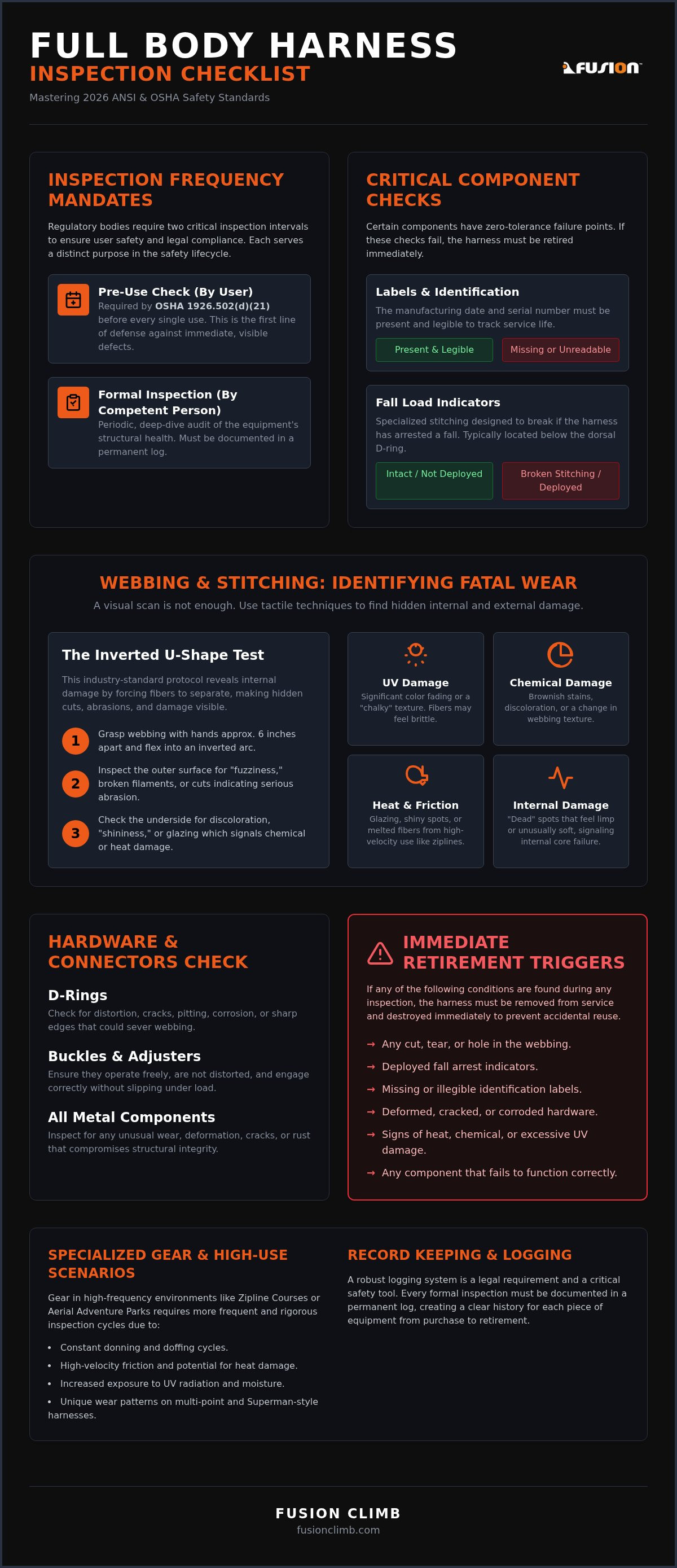
Safety isn't a suggestion; it's a mandate. For professionals working at height, a Safety harness is the final barrier between a routine shift and a tragedy. In 2026, regulatory bodies like OSHA and ANSI have tightened the protocols for equipment maintenance. OSHA 1926.502(d)(21) requires that personal fall arrest systems be inspected prior to each use. This daily check is your first line of defense. However, a comprehensive full body harness inspection checklist must also include periodic formal audits conducted by a designated Competent Person.
A Competent Person is more than just an experienced worker. Under current standards, this individual must be capable of identifying existing and predictable hazards. They also have the specific authorization to take prompt corrective measures. While a pre-use check focuses on immediate defects, the periodic audit is a deep-dive into the equipment's history and structural health. These formal inspections must be documented in a permanent log to maintain a legal chain of custody for every piece of gear in your inventory.
ANSI Z359.11 Compliance for Fall Arrest
Compliance starts with the label. Every harness must feature a legible serial number and manufacturing date to track its service life. If the label is missing or unreadable, the harness fails automatically. One of the most critical 2026 requirements involves the load indicators. These are typically located just below the dorsal D-ring. If the stitching on these indicators is broken or the warning tag is visible, it means the harness has already arrested a fall. You can't guess with load-bearing components. If the indicator is deployed, the harness is trash.
High-Frequency Use Scenarios
Industrial sites might get by with annual audits, but commercial zipline environments demand a higher cadence. These harnesses face constant cycles of donning, doffing, and high-velocity friction. Daily exposure to UV radiation and moisture accelerates the degradation of synthetic fibers. Operators must integrate their harness checks into a broader ropes course safety equipment audit. Establishing a rigorous logging system isn't just about avoiding fines. It's about maintaining the industrial-grade reliability that high-volume adventure parks require to protect their guests and their reputation.
Webbing and Stitching: Identifying Fatal Wear
A visual scan is only half the battle. To truly master a full body harness inspection checklist, you must develop a tactile sense for material integrity. Synthetic fibers like nylon and polyester are engineered for extreme strength, but their structural health often hides beneath the surface. When you run your hands along the webbing, you're searching for more than just surface dirt. You're feeling for "dead" spots where the material feels unusually limp or, conversely, areas that feel brittle and crunchy. These tactile changes often signal internal fiber failure that the naked eye might miss during a rushed morning check.
Under OSHA 1910.140, any equipment showing signs of deterioration must be removed from service immediately. Visual cues often signal these deeper issues. UV damage typically manifests as significant fading or a "chalky" appearance on the webbing surface. Chemical exposure may appear as brownish stains or a change in the texture of the weave. In high-velocity environments like ziplines, heat friction is a constant threat. Glazing is the melting of synthetic fibers due to high-speed friction.
The Inverted U-Shape Test Protocol
This test is the industry standard for revealing internal damage that a flat visual scan misses. It forces the fibers to separate, making cuts and abrasions visible. Unlike basic guides that just tell you to bend the webbing, you need to feel for the specific "crunch" of UV-damaged fibers or the "limpness" of internal core failure.
- Step 1: Grasp the webbing with your hands approximately 6 inches apart and flex the material into an inverted arc.
- Step 2: Closely inspect the outer surface of the bend for "fuzziness" or broken filaments that indicate serious abrasion.
- Step 3: Check the underside of the arc for discoloration or "shininess" which signals chemical or heat damage.
Integrity of Load-Bearing Stitching
Stitching is the glue of your fall protection system. Focus your attention on the bartack patterns at critical junctions, such as the leg loops and the dorsal D-ring attachment points. Pulled, cut, or missing stitches in these areas are non-negotiable failure points. While some cosmetic fraying might occur on non-load-bearing labels, any damage to the main structural junctions requires the harness to be retired. Structural integrity cannot be compromised. Never attempt a "do-it-yourself" repair on life-safety webbing; once the factory stitch pattern is altered, the harness's rated strength is no longer guaranteed. If your current gear shows signs of wear, it's time to invest in industrial-grade full body harnesses that meet the latest 2026 safety standards.
Hardware and Connectors: Ensuring Mechanical Reliability
Hardware components are the rigid anchors of your life-safety system. While webbing provides the flexibility needed for movement, the metal hardware must withstand the violent forces of a fall arrest. Your full body harness inspection checklist must prioritize the mechanical integrity of every connector to ensure they haven't been compromised by stress or environmental exposure. Under OSHA 1926.502, any component showing signs of wear, damage, or deterioration must be immediately removed from service. Metal doesn't always break; it deforms, and recognizing these subtle shifts is critical to your safety.
D-Ring and Attachment Point Audit
Start with a visual and tactile scan of the dorsal D-ring. Maintaining a rigorous full body harness inspection checklist means looking past surface aesthetics to find these mechanical flaws. Look for "necking," which is a noticeable thinning or stretching of the metal that indicates it has already survived a high-load event. If the D-ring is bent or if you find cracks and deep pitting, the harness is no longer safe. Pitting is more than surface rust; it's a structural "fail" where corrosion has eaten into the metal's core. Ensure the dorsal D-ring pad is secure and prevents the hardware from flipping or sliding out of position. Side and sternal D-rings should also be checked for alignment. If they appear asymmetrical or twisted, the harness frame may be warped.
Buckle Functionality and Engagement
Buckles are high-wear points because they're manipulated every time the harness is donned. For quick-connect buckles, you must verify the mechanical engagement. The internal springs should snap back with authority when released. If the release tabs are sluggish or require manual force to reset, the mechanism is fouled with debris or worn out.
Tongue buckles require a different focus. Inspect the metal grommets on the webbing for rounding, sharp edges, or tearing of the surrounding fabric. A distorted buckle frame prevents proper tensioning, which can lead to a harness slipping during a fall. The security of your system also depends on how these buckles interface with professional climbing carabiners and other connectors. Ensure no sharp edges on the harness hardware could score or damage your carabiners during use. If the hardware shows even slight deformation, don't gamble. Retire the equipment immediately.
Specialized Inspections: Zipline and Superman Style Gear
Standard industrial protocols often fall short when applied to specialized aerial adventure gear. A full body harness inspection checklist designed for a construction site won't account for the unique mechanical stresses found in a high-speed zipline canopy tour. Prone-position equipment requires a more nuanced approach to safety. Because the load is distributed differently than in a vertical fall arrest scenario, inspectors must look for wear in areas that standard guides often ignore. High-velocity environments demand a higher standard of vigilance.
Superman Style Harness Specifics
Prone flight shifts the load distribution from the thighs and shoulders to the torso and back. You must scrutinize the spreader bars and prone-position support straps for any signs of metal fatigue or seam separation. These components are under constant tension during flight. Inspect the high-friction areas where the harness webbing interacts with commercial zipline pulleys. The rapid acceleration and braking cycles can create localized heat that degrades synthetic fibers faster than standard fall arrest usage. Always verify the security of secondary safety backups in prone rigging. If a primary attachment point fails, the backup must be perfectly positioned to prevent a catastrophic inversion.
Adventure Park High-Cycle Fatigue
Commercial environments introduce environmental stressors that aren't found in a warehouse. High-cycle fatigue is a constant threat in adventure parks. The "sweat and salt" factor is real. Human perspiration contains salts and oils that can penetrate webbing fibers over hundreds of use cycles. This creates a chemical environment that can weaken the material over time. You also need to watch for "sand-in" damage. This occurs when fine grit or sand gets trapped inside the webbing weave. As the harness flexes, these microscopic particles act like a saw, cutting the internal fibers from the inside out.
Comfort padding is a necessity for guest satisfaction, but it's a liability for inspectors. Never assume the webbing beneath a comfort liner is healthy. You must pull back every pad to inspect the structural junctions for hidden abrasions or mold growth. Additionally, check integrated zipline lanyards and tethers for signs of sheath slippage or core damage. Frequent sizing adjustments for different guests also accelerate buckle wear. Check the frame of the buckle for thinning where the webbing slides through. For operators who demand equipment that survives these extreme cycles, choosing Fusion Climb Superman Style Harnesses ensures you're using gear engineered for industrial-grade reliability.
Record Keeping and Retirement: When to Replace Your Harness
The final stage of any full body harness inspection checklist is the definitive decision to retire. This isn't a suggestion; it's a critical safety determination that directly impacts lives. While many manufacturers suggest a five-year shelf life, the "hard use" reality of commercial ziplines or industrial rigging often reduces this to a single year of active service. If you encounter an "Immediate Fail" trigger, such as a deployed load indicator, a missing safety label, or a distorted D-ring, the harness must be pulled from the line instantly. There is no middle ground when dealing with life-safety equipment. One missed failure point can lead to a catastrophic accident.
A standardized full body harness inspection checklist is only as effective as the documentation that follows it. Establishing a 2026-compliant equipment log allows you to track the health of your inventory over time. You must distinguish between gear that is pristine and gear that is nearing its limit. This methodical approach ensures that your team stays ahead of equipment degradation rather than reacting to it after a failure occurs.
Documenting the Inspection
A professional equipment log serves as your legal and operational shield. Whether you utilize a digital database or a traditional paper ledger, your records must include the serial number, the date of manufacture, and the date of first use. Tracking the date of first use is vital because synthetic fibers begin their service life countdown the moment they're pulled from the box and exposed to UV light or moisture. When recording results, be specific. If you find minor cosmetic fraying that doesn't compromise structural integrity, record it as a "Pass with Observation." This alerts the next inspector to monitor that specific area for progression during the next cycle. These records should be stored securely for the life of the harness to ensure compliance with insurance providers and federal safety audits.
The Retirement Protocol
If a harness has been involved in a fall arrest event, it must be retired immediately. It doesn't matter if the webbing looks pristine or the hardware appears untouched; the internal fibers have absorbed energy and reached their design limit. The only way to ensure a retired harness never finds its way back into service is through total destruction. Don't just throw it in the trash. You must physically disable the gear to prevent reuse. Cut the webbing into small, unusable pieces and use bolt cutters to disable the buckles and D-rings. Once the gear is rendered useless, you can dispose of it with the confidence that no one will ever risk their life on it again. For those ready to refresh their inventory, upgrading to Fusion Climb full body harnesses provides the industrial-grade reliability and 2026 safety compliance required for high-performance vertical environments.
Elevate Your Safety Standards for 2026
You now possess the technical diagnostic skills to move beyond a simple visual scan. By implementing a rigorous full body harness inspection checklist, you've secured the integrity of your life-safety system against the hidden threats of UV degradation, chemical exposure, and mechanical fatigue. Compliance isn't just about avoiding OSHA fines; it's about the sober reality of protecting every person who steps into your gear. You understand that your equipment is a silent partner in every vertical journey.
When your current gear reaches its retirement threshold, don't settle for anything less than industrial-grade reliability. Fusion Climb has been trusted by commercial zipline operators since 1998 to provide rugged, high-performance equipment built for high-cycle environments. Our gear features ANSI Z359.11 compliant hardware and meticulous construction designed to withstand the most demanding conditions. Shop Professional Full Body Harnesses at Fusion Climb to ensure your inventory meets the uncompromising safety standards of 2026. Stay vigilant, stay compliant, and keep pushing the limits of your vertical world with total confidence.
Frequently Asked Questions
How often should a full body harness be inspected in a commercial zipline park?
In a commercial zipline park, you must perform a pre-use inspection before every single guest dons the equipment. High-volume environments subject gear to extreme wear cycles, so a formal audit by a competent person should occur at least quarterly. This exceeds the standard annual industrial requirement but accounts for the sweat, salt, and constant buckle adjustments common in adventure parks. Use your full body harness inspection checklist daily to maintain operational safety.
Can I use a harness if the "Year of Manufacture" tag is missing or illegible?
You cannot use a harness if the manufacture tag is missing or unreadable. OSHA and ANSI standards require that equipment age and origin be verifiable for tracking the product's service life. Without a legible serial number and date, you cannot prove the harness is within its safe operational window or identify it during a recall. If the label fails the legibility test, the harness fails the inspection and must be removed from service immediately.
What does it mean if the load indicator on my harness is partially visible?
A partially visible load indicator is a definitive signal to retire the harness immediately. These indicators are designed to deploy when the system has absorbed the forces of a fall arrest event. Even if the deployment is slight, the internal stitching has been compromised and the webbing's energy-absorbing capacity is exhausted. Don't gamble on partial deployment; once the warning tag or broken stitch pattern is visible, the harness is no longer rated for safety.
Is it safe to wash a climbing harness that has been exposed to salt or mud?
It is safe to wash a harness using mild soap and lukewarm water, provided you follow manufacturer guidelines. Salt and mud act as internal abrasives that saw through fibers from the inside out, so cleaning is a maintenance requirement. Hand-wash the webbing, rinse thoroughly, and hang it to air dry in a well-ventilated area away from direct sunlight. Never use bleach, harsh chemicals, or high-heat dryers, as these will permanently damage synthetic fibers.
How do I distinguish between normal "fuzzing" and dangerous webbing abrasion?
Distinguish between normal fuzzing and dangerous abrasion by looking for broken structural filaments. Normal wear often creates a light surface nap, but dangerous abrasion involves visible cuts or furry patches where the weave pattern is no longer distinct. Use the inverted U-shape test to separate the fibers. If you see broken threads or a significant reduction in webbing thickness, the abrasion is structural. When in doubt, let your full body harness inspection checklist guide you toward retirement.
When should a Superman style zipline harness be retired compared to a standard harness?
Superman style harnesses often require more frequent retirement due to the unique stresses of prone flight. These harnesses interact differently with zipline pulleys and spreader bars, leading to localized heat glazing and friction wear that standard harnesses don't experience. While a standard harness might last five years in a warehouse, a Superman style harness in a busy park might reach its limit in 12 to 24 months. Monitor the prone-position support straps for accelerated fatigue.
Can a harness be repaired if only one buckle is damaged?
You cannot repair a damaged buckle. Life-safety hardware is factory-installed using specialized rigging equipment and certified stitch patterns that cannot be replicated in the field. If a quick-connect buckle fails to engage or a tongue buckle frame is bent, the entire harness is compromised. Attempting a DIY repair voids the manufacturer's warranty and creates a failure point that won't hold during a fall. Retire the gear and replace it with new industrial-grade equipment.
Does a harness have a mandatory expiration date if it passes all visual inspections?
There is no fixed expiration date mandated by OSHA, but most manufacturers set a maximum service life of 5 to 10 years from the date of manufacture. Condition always trumps age. A harness can pass every visual inspection but still require retirement if it reaches the manufacturer's stated lifespan. Conversely, a one-month-old harness that has arrested a fall or suffered chemical exposure must be retired immediately. Always defer to the manufacturer's specific service life guidelines.