



Zipline Safety Tethers for Commercial Courses
A zipline safety tether connects a full-body harness to a zipline pulley. Some systems use dual tethers for redundancy, but the setup must match the equipment and operating needs. A secure, compatible connection keeps the rider attached to the system during travel.
Choosing a tether involves more than length. Adjustable lanyards and lobster-claw connectors suit different setups, so consider how the connection needs to fit and function on the course.
This guide explains what a tether does, how adjustable lanyards compare with lobster claws, and what affects product cost. It also covers practical selection criteria for commercial courses, including fit, connection points, and equipment condition, so you can compare options and understand their place in a zipline system.
Key Takeaways
- Understand how a tether links a full-body harness to a zipline pulley and what to inspect before use.
- Compare adjustable lanyards and lobster-claw connectors to see how their designs serve different course setups.
- Learn what affects tether product costs and how to compare options without relying on price alone.
- Explore how harnesses, pulleys, and tether components fit into planning equipment for a commercial course.
What is a Zip Line Tether?
A tether connects a full-body harness to a zipline pulley or trolley. Its configuration determines how the rider remains attached during travel, so a zipline safety tether must be compatible with the intended connection system.
Harness-to-Pulley Connection
The tether links the rider’s harness to the moving trolley. At the harness end, it attaches to a designated connection point; compatible hardware connects it to the pulley assembly at the trolley end. Every component must work together as a system.
For a commercial course, trace the connection from harness to tether to trolley before use. Confirm that attachment points align, connectors close correctly, and the tether has no wear, fraying, or damage. A mismatch at either end can compromise the connection.
Single, Dual, and Always-Connected Systems
A single-point setup uses one tether connection between the harness and trolley. Some zipline systems use two separate tether connections for redundancy. An always-connected lanyard system is designed to keep riders attached as they move between course elements; the transfer method depends on the equipment design.
For rules specific to a state or local area, consult the authorities responsible for the course location. Compare applicable requirements with the equipment manufacturer’s instructions and the course’s operating procedures.
Tether, Backup Line, and Lanyard Distinctions
A zipline tether links a full-body harness to the trolley. A backup line is a separate secondary connection that provides another attachment path. Lanyard is a broader term for a flexible connector that may serve as the primary tether or another connection in the system.
A component’s name alone doesn’t explain its function. Use the equipment instructions to identify each part, its attachment points, and its role in the course system. For example, don’t assume a backup line replaces the primary tether.
Materials, Ratings, and Load Limits
Materials, ratings, and load limits must match the intended equipment system. Check the product label and manufacturer documentation for the tether’s materials, applicable safety ratings, and stated limits. Standards such as ANSI or EN may be relevant, but a rating must suit the equipment’s intended use.
Before use, inspect each zipline safety tether for wear, fraying, or damage, and remove damaged equipment from service. Follow the manufacturer’s inspection and replacement criteria; don’t estimate service life from appearance alone. Visible fraying, damaged stitching, or a connector that fails to close properly are warning signs.
Adjustable zipline lanyards and lobster claws
Choose a lanyard based on how it connects, adjusts, and fits the course setup. Adjustable lanyards allow the connection length to change, while lobster-claw connectors use hooked ends to attach to compatible points. The right configuration depends on the trolley, harness connection, and operating procedure.
Two separate lanyards attached to the trolley are recommended for zipline riders. This arrangement provides two connections, but staff need to understand how each attaches and transfers through the course. Check that hooks engage properly and that the lanyards move without interfering with the trolley or rider.
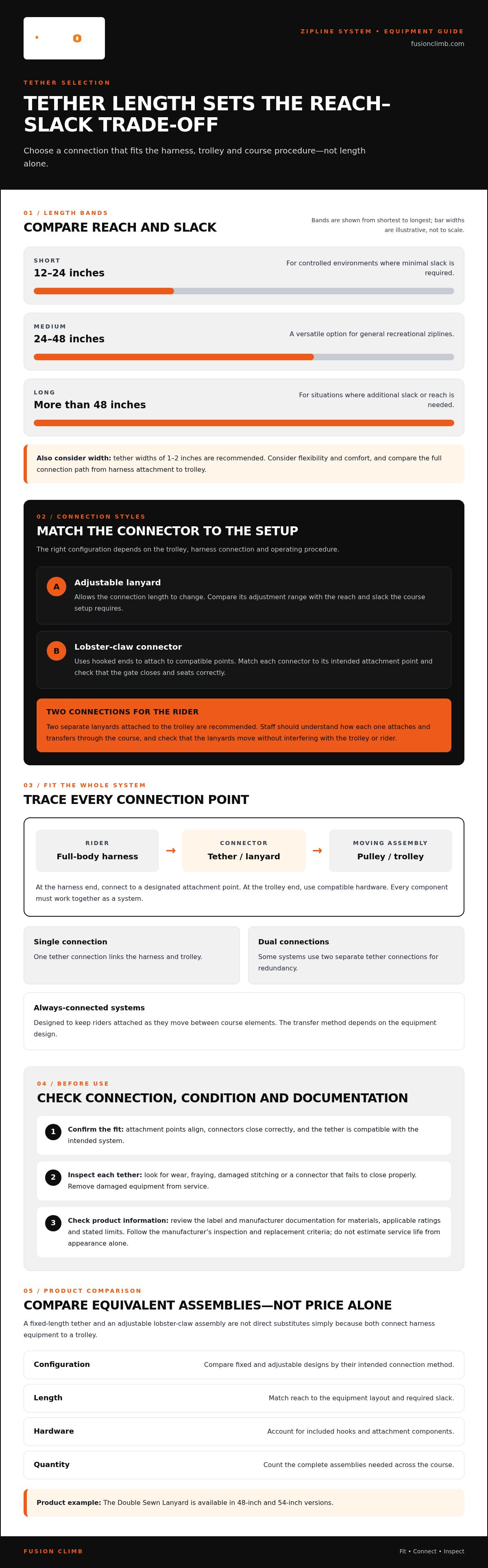
Length affects the reach and slack a setup allows. These ranges offer a practical starting point:
- Short tethers measure 12-24 inches and suit controlled environments where minimal slack is required.
- Medium tethers measure 24-48 inches and provide a versatile option for general recreational ziplines.
- Long tethers measure more than 48 inches and suit situations where additional slack or reach is needed.
Compare length with the full connection path, from harness attachment to trolley. Extra reach can affect how the tether hangs and moves, while a shorter connection reduces slack. Tether widths of 1-2 inches are recommended, with flexibility and comfort also considered.
Lobster-claw setups can use snap hooks and different attachment configurations, including tri-fold and girth hitch arrangements. Match each connector to its intended attachment point, and inspect the gate and closure before use. Don’t use a connector that fails to close or seat correctly.
For course planning, compare the required reach, connection method, and trolley compatibility before selecting a style. Explore zipline lanyard options when reviewing configurations for your system.
The Double Sewn Lanyard comes in 48-inch and 54-inch versions.
Prices of zipline safety tether products
In the United States, identify the standards and rules that apply to the course location and equipment. ANSI and EN ratings are examples to consider, but a rating alone doesn’t establish compliance with every local requirement.
Product cost depends on the component and configuration, so compare equivalent items. A tether, sewn lanyard, and adjustable lobster claws have related but distinct roles. Construction, connector arrangement, length, and intended use all affect what suits a course system. A lower price doesn’t make differently configured products equivalent.
Compare the complete setup, not just one component. Record the connection type, compatible trolley attachment, reach, and quantity needed for each course position. Then compare products with matching specifications and instructions. A fixed-length tether and an adjustable lobster-claw assembly aren’t direct substitutes simply because both connect harness equipment to a trolley.
- Configuration: Compare fixed and adjustable designs by their intended connection method.
- Length: Match reach to the equipment layout and required slack.
- Hardware: Account for included hooks and attachment components.
- Quantity: Calculate the number of complete assemblies needed across the course.
These checks help distinguish a component’s price from the cost of equipping a complete setup. A quote should specify what the product includes, its configuration, and whether connectors are part of the assembly. Keep those details with the product instructions for purchasing and inspection.
Review documentation alongside the purchase decision. Match stated ratings and load limits to the equipment system, then follow the manufacturer’s instructions. When budgeting, compare each zipline safety tether configuration with the course’s intended setup: equipment selection and regulatory compliance are related, but not interchangeable.
Are safety tethers required on ziplines in the United States?
Whether a tether is legally required depends on the rules that apply to the course’s location and operation. There isn’t one answer that safely covers every U.S. zipline, so determine the state and local requirements for the specific site before setting operating procedures.
Start with the course address. Identify the state and local authorities responsible for applicable amusement, recreation, building, or workplace requirements. Review the rules that cover the course and its equipment instead of assuming a general zipline practice is legally required. Commercial courses and private recreational lines may involve different considerations.
Separate legal requirements from equipment standards and operating procedures. ANSI or EN ratings may inform equipment selection, but a rating alone doesn’t establish that a setup meets every state or local rule. Read applicable provisions alongside the manufacturer’s instructions for the harness, tether, connectors, and trolley.
Use a documented review process for each course location:
- Record the site’s state and local jurisdiction.
- Identify rules that apply to the course’s activity and equipment.
- Compare equipment instructions and ratings with the requirements.
- Document the chosen connection system and inspection procedure.
Keep the results with the course’s operating records. If the course changes its trolley, harness, or tether configuration, review the equipment again because the revised connection may affect how the system meets its intended requirements. For example, adding a second tether changes the connection arrangement and should be reflected in relevant procedures.
Build compliance into equipment selection, not as an afterthought. Match each component to the intended system, preserve its instructions, and make inspection steps clear to staff. To review available zipline lanyard and tether options, compare their connection configurations with the course’s documented requirements.
Fusion Climb: Full Body Harnesses
Fusion Climb offers full-body harnesses, Superman Style Harnesses, zipline pulleys, and lanyards and tethers to help you match a harness with the tether and pulley system used on your course. Consider the connected components together rather than as isolated parts.
Use the details from your course review to guide selection. Compare the harness connection points with the tether and trolley configuration, then follow each product’s instructions for compatibility and use. A coordinated setup clarifies how components fit into the intended system; it doesn’t replace inspection or applicable operating procedures.
For commercial course equipment planning, explore Fusion Climb’s offerings and identify the components that suit your setup. Contact Fusion Climb to discuss your equipment needs.
Put Your Equipment Plan Into Action
Make tether selection part of course equipment planning, not an isolated purchase. A written process can connect component choices with operating procedures, inspection records, and site requirements. This gives staff a consistent reference when equipment changes or the course setup is reviewed.
At your next equipment review, document how each zipline safety tether fits the intended system and who is responsible for inspecting it. Keep product instructions accessible, record the selected configuration, and make the process clear to the people preparing the course for riders. These steps support consistent equipment decisions as your operation develops.
If you’re planning a purchase or reviewing tether configurations for a commercial course, explore lanyard and tether options from Fusion Climb. Build a clear equipment plan, then move forward with confidence.
Frequently Asked Questions
What does a zipline tether do?
A zipline safety tether connects a rider’s harness system to the moving trolley. Its function depends on its position and compatibility within the complete setup. For example, an operator reviewing equipment can trace the connection from the harness attachment through the connector to the trolley, then compare it with the product instructions before use.
How should a tether be attached and used?
Follow the manufacturer’s instructions for the specific harness, connector, and trolley combination. Attach each component only to its intended point, then confirm the connector closes and the assembly moves as designed. A zipline safety tether used with a different trolley configuration may require different setup steps, so keep the matching instructions available at the course station.
How much does a tether cost?
Cost varies by component type and configuration. A basic tether, adjustable lanyard, and assembly with connectors aren’t necessarily comparable products. Check what the product includes, its intended connection method, and whether hardware is part of the assembly. For commercial budgeting, compare equivalent configurations and quantities, then use the current product listing for the exact item’s price.
How often should zipline tethers be inspected and replaced?
Inspect every tether before use for wear, fraying, or damage, and remove damaged equipment from service. Follow the manufacturer’s inspection and replacement criteria; don’t estimate service life from appearance alone.