



Steel Rigging Carabiner Buying Guide: Choose the Right Connector
Choosing a steel rigging carabiner takes more than picking the strongest-looking option. Strength markings matter, but so do gate operation, connector shape, and how the carabiner fits with ropes, pulleys, and attachment points.
Ratings are a useful starting point, especially when product specifications are difficult to interpret. But a number alone can’t confirm that a connector suits your system or intended application. Compare screw-lock and auto-lock gates, check how the carabiner is designed to load, and verify its use against current manufacturer guidance.
This guide offers a repeatable checklist for comparing steel locking connectors by locking mechanism, shape, ratings, and system fit. It also uses two Ovatti steel carabiners, an auto-lock oval option and a screw-lock oval option, to show how gate operation can affect your choice. Before buying, you’ll know which specifications to check and how to assess whether a connector belongs in your setup.
Key Takeaways
- Start with the connector’s role in the full system, then confirm it suits the connected components and intended use.
- Read strength markings alongside the product documentation. A rating alone doesn’t establish safe working load or system suitability.
- Compare screw-lock and auto-lock operation based on how the gate works and what you can reliably verify before use.
- Use a consistent checklist to assess a steel rigging carabiner, including fit, shape, gate type, and manufacturer guidance.
- Explore the two Ovatti steel options listed in the aerial and bungee dance collection, while verifying each model’s specifications and compatibility for your setup.
What Makes a Steel Rigging Carabiner the Right Connector?
A carabiner joins compatible components; it doesn’t make an incompatible setup safe. A steel rigging carabiner is one part of a properly designed system. Its suitability depends on the application, the other equipment, and the manufacturer’s instructions. It isn’t a pulley, harness, tether, anchor, or complete fall-protection system. Each component has a distinct role and must be selected and used as directed.
Steel may be considered for demanding applications, but it isn’t automatically the right choice for every task. Compare the specific product documentation with the system’s requirements. Material alone doesn’t confirm a connector’s rating, compatibility, or suitability.
When should a buyer consider a steel carabiner?
Start with the actual operating conditions: the type of setup, the connected hardware, and how the connector is intended to load. Compare steel and aluminum only by reviewing verified specifications for the particular models under consideration. Weight, shape, corrosion protection, and handling may influence selection, but don’t judge them by material name or appearance alone. Check the manufacturer’s guidance before deciding.
What must the connector work with?
Map each connection before choosing hardware. Depending on the setup, this may include harness attachment points, ropes, pulleys, or rigging plates. Check that the carabiner’s opening and geometry accommodate each component as intended. Also confirm that connected parts won’t force the gate or body into an unintended position. Follow the instructions for every component. A connector that attaches physically may still be unsuitable for the system.
- Harness: Confirm the attachment point and connector orientation are permitted by the harness manufacturer.
- Rope or tether: Check that the connector shape and opening suit the connection method described in the equipment instructions.
- Pulley or rigging plate: Verify that the interface fits correctly and the connector can be loaded as specified.
Carabiners come in different shapes and types for varied uses. A Carabiner overview provides useful background, but product-specific instructions determine how a particular connector may be used. For another practical perspective on selecting connectors, see the professional climbing carabiner guide.
Choose by application and documented fit, not by a general assumption that steel is stronger or more suitable. Verify the connector and the complete system before use.
Steel Carabiner Ratings, Shapes, and Gate Types Explained
Read the markings, then confirm what they mean in the product documentation. A carabiner may show strength values in different units or for different loading directions. Don’t treat a marked value as a safe working load or proof that the connector suits your application. The manufacturer’s instructions explain the conditions behind the marking and any limits on use.
A strength marking only makes sense when you read it alongside its loading direction and the manufacturer’s instructions. The connector’s position and how it meets adjoining components affect whether it’s being used as specified.
Shape is a fit consideration, not a shortcut for judging performance. Oval carabiners may position components differently from other shapes, so check that the connected hardware sits properly and the connector can be loaded as directed. Don’t infer suitability from a familiar outline or headline rating. Verify the model’s documentation for its intended applications and limitations.
How do screw-lock and auto-lock gates differ?
A screw-lock gate is operated manually. Follow the manufacturer’s directions for closing and checking it before use. An auto-lock gate uses a mechanism that locks after the gate is operated, but that feature alone doesn’t confirm suitability for a particular system. Choose based on the required operation, your ability to verify closure, and the product instructions.
Requirements depend on the application. For workplace personal fall protection in the United States, consult the applicable OSHA standards for personal fall protection. Don’t assume those rules apply to every rigging or aerial use. Confirm which requirements govern your specific setup.
Which dimensions and markings should buyers check?
Check the gate opening and body clearance against the parts the connector must join. Review its shape, material, manufacturer identification, and strength markings, then match those details to the connected components’ instructions. If a dimension or marking isn’t clear, consult current product documentation rather than estimating fit or interpreting a number in isolation.
For a closer look at connector labels, use this carabiner markings and strength guide. Fusion Climb’s aerial and bungee dance collection lists auto-lock and screw-lock Ovatti steel carabiners. Browse the aerial and bungee dance carabiner options, then verify each model’s current specifications and suitability for your setup before selecting a steel rigging carabiner.
Steel Rigging Carabiner Comparison: Choose the Locking Style That Fits
Gate style affects how you operate and verify a connector, but it doesn’t determine the connector’s strength or suitability for a particular setup. Compare the mechanism with your operating procedures, then verify the model’s current specifications and compatibility in manufacturer documentation.
| Option | Confirmed details | What to verify | Workflow consideration |
|---|---|---|---|
| Ovatti Steel Screw Lock Carabiner | Alloy steel, symmetrical oval shape, manual screw-lock gate. A 0.5-inch gate-opening variant is listed. | Current availability, gate-opening dimension, strength markings, intended use, and system fit. | Consider whether manual gate operation and closure checks align with your procedures. |
| Ovatti Steel Auto Lock Carabiner | Forged steel, oval shape, pin nose, auto-lock gate. A 0.7-inch gate-opening variant is listed. | Current product details, gate-opening dimension, strength markings, intended use, and system fit. | Consider whether the automatic gate action suits your workflow and can be checked reliably. |
These details describe the listed options, not a guarantee of current availability or suitability. Confirm all specifications before ordering. Oval symmetry may help components sit in a particular arrangement, but it doesn’t guarantee compatibility or correct loading in every setup. Check how the connector fits the adjoining hardware and whether its orientation and loading match the manufacturer’s instructions.
When might a manual screw-lock carabiner fit your workflow?
The Ovatti Steel Screw Lock Carabiner is described as an alloy-steel, symmetrical oval option with a manual gate. Check its listed 0.5-inch gate-opening variant against the current product listing. Assess whether your procedures allow time to operate the screw gate and verify closure each time. Then confirm the connector is appropriate for the specific system.
When might an auto-lock carabiner fit your workflow?
The Ovatti Steel Auto Lock Carabiner is described as forged steel, oval, and fitted with a pin nose. A 0.7-inch gate-opening variant is listed, but confirm current specifications before relying on that dimension. Automatic gate action doesn’t replace inspection, compatibility checks, or the knowledge and training required for the application. Requirements can vary by use. Consult the OSHA 1910.140 regulation for personal fall protection requirements within its scope.
Choose a gate mechanism for how you operate, then verify strength and application suitability separately. For either steel rigging carabiner, confirm the current markings, intended use, and fit with every connected component before use.
Use This Steel Rigging Carabiner Buying Checklist Before Ordering
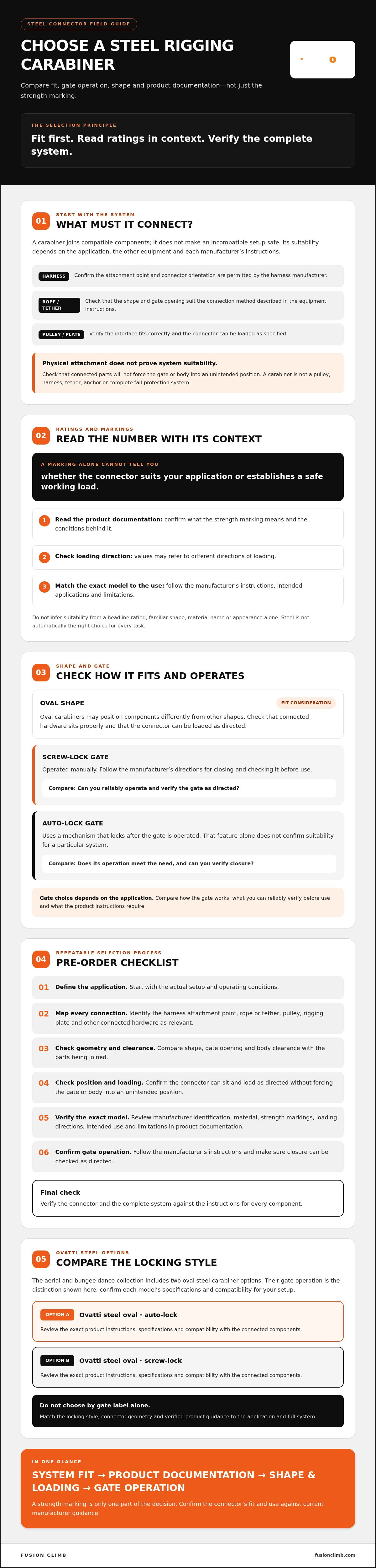
Before checkout, trace the connection from end to end. A steel rigging carabiner must match its intended application and every component it joins. Use this sequence to turn product details into a practical fit check:
- Define the use. Identify the activity and the connector’s role in the system. A broad label like “rigging” doesn’t establish suitability.
- Identify connected components. List the harness attachment points, ropes, pulleys, rigging plates, or other hardware the carabiner must connect.
- Check the fit. Compare the carabiner’s current dimensions and geometry with each connection point and its manufacturer’s instructions.
- Compare the gate. Decide whether manual screw-lock or auto-lock operation fits your procedures, then confirm how to check the gate as directed.
- Verify documentation. Review current product specifications, markings, intended use, and applicable requirements before selecting a model.
Color, shape, and a headline rating can help identify or compare products, but none proves the connector is right for your system. Don’t assume climbing and rigging carabiners are interchangeable, and don’t infer a working load or certification from a strength marking alone. If the application or compatibility remains unclear, stop and seek guidance from a qualified professional before buying or using the hardware.
What common carabiner buying mistakes should you avoid?
Avoid assumptions that bypass the product instructions. Common mistakes include choosing by appearance, treating a strength value as a complete measure of suitability, or applying one model’s specifications to another. Don’t use a connector that’s damaged, altered, or missing the documentation needed to establish its intended use. Follow the maker’s inspection and use instructions, and resolve uncertainty before the connector enters service.
How should you verify fit before checkout?
Compare the product’s current dimensions with every connection point, not just the largest opening. Confirm the intended application and applicable requirements using the manufacturer’s documentation or qualified professional guidance. Write down unresolved questions, such as an unclear marking or uncertain interface, and get them answered before choosing. For broader system context, consult this ropes course safety equipment guide.
Once you’ve defined your requirements, browse aerial and bungee dance connectors and verify each option’s current specifications and suitability for your setup.
Select a Fusion Climb Connector for an Aerial or Bungee Dance Setup
Fusion Climb’s aerial and bungee dance collection lists two Ovatti steel carabiners: an auto-lock option and a screw-lock option. Compare their gate operation, then check each model’s current product details against the requirements of your complete setup. A product’s placement in this collection doesn’t confirm that it’s suitable for every aerial or bungee dance application. Verify compatibility and follow the manufacturer’s instructions before selecting a connector.
Which collection items should shoppers compare?
Start with the two Ovatti options. The auto-lock and screw-lock mechanisms work differently, so consider which gate operation fits your established procedures and how you’ll check closure. Neither locking style proves strength or system suitability. Confirm those details separately in current documentation.
The collection may also show other connector types, but compare them only if their material and documented intended use match your requirements. For example, consider the Eureka aluminum carabiner only if its product specifications and application guidance support your setup. If a Presto swivel or a rigging plate is part of your configuration, confirm that the manufacturer permits the connection and explains the required fit and use. Don’t add components just because they appear alongside a connector.
What should you confirm before placing an order?
Check the product page carefully. Confirm the exact product name and configuration, review current dimensions and markings, and read the manufacturer’s instructions for intended use. Then compare those details with every attachment point and connected component in your system. A steel rigging carabiner is only one part of the setup; choosing it doesn’t establish that the complete system is suitable.
- Verify the listed product details and any specifications relevant to your intended connection.
- Check compatibility across the complete system, including any swivel or rigging plate involved.
- Review current order and return terms on the product page, including any made-to-order conditions for relevant soft goods. Don’t assume terms are the same across items.
- If application or compatibility remains uncertain, pause and seek guidance from the manufacturer or a qualified professional before ordering.
Use the checklist first, then browse the aerial and bungee dance collection to compare the listed options and verify their current details. Choose only after the product documentation and system requirements align.
Choose Your Connector With Confidence
Selecting the right steel rigging carabiner takes more than checking its material or strength marking. Start with the application, confirm how the connector fits and loads with the rest of the system, then verify current specifications and manufacturer instructions. Compare screw-lock and auto-lock operation based on the gate checks your setup requires.
Fusion Climb manufactures specialized climbing and aerial safety hardware. Its aerial and bungee dance collection lists two Ovatti steel options, an auto-lock model and a screw-lock model. Collection placement alone doesn’t establish suitability, so check the current product details and confirm compatibility with your complete setup before choosing.
Ready to compare the listed options? Browse Fusion Climb’s aerial and bungee dance equipment, then make your selection against the manufacturer’s guidance. Confirm that the connector and your system requirements align before ordering.
Frequently Asked Questions
What is a steel rigging carabiner?
A steel rigging carabiner is a load-bearing connector designed for specified applications and used to join compatible equipment components. Its material, shape, gate, dimensions, and markings must match the intended system. The term alone doesn’t establish that a particular model is appropriate for aerial dance, climbing, rescue, or another task. Check the product documentation and system requirements before use, and confirm how the connector is intended to be loaded.
Is a steel carabiner stronger than an aluminum carabiner?
Material alone doesn’t tell you which carabiner is stronger or more appropriate for your application. Compare the exact models’ markings, construction, dimensions, intended uses, and manufacturer instructions. Steel and aluminum carabiners may address different equipment needs, but neither should be selected by material name alone. Check that the connector suits the complete system, including every component it joins, and follow all relevant product guidance before use.
Can I use any steel carabiner for aerial or bungee dance?
No. Steel construction, or a product’s inclusion in an aerial equipment collection, doesn’t confirm that it’s suitable for every setup. Verify the connector’s intended application, dimensions, markings, and compatibility with the harness, tether, anchor, and other components. Follow manufacturer instructions and applicable requirements. If any part of the system remains unclear, pause and consult a qualified professional before use rather than assuming that a steel rigging carabiner will fit the task.
What is the difference between a screw-lock and auto-lock carabiner?
A screw-lock carabiner has a manually operated threaded sleeve, while an auto-lock model uses a gate mechanism designed to lock automatically after operation. Their handling and verification steps differ, so follow the instructions for the exact model and check the gate as directed. Neither locking style proves the connector is suitable for a particular task. You must still inspect its condition and verify that it fits the complete system and intended application.
How do I know what carabiner gate opening I need?
Start by identifying every component the carabiner must connect, then compare their dimensions with the exact model’s gate opening and body geometry. Check current manufacturer documentation instead of relying on a general rule or appearance. Fusion Climb’s listed Ovatti options include different gate-opening variants. Verify the current product configuration and dimensions before ordering, and confirm the connector fits the intended components without conflicting with their instructions or creating unintended loading.
Does a carabiner strength rating tell me its safe working load?
Not by itself. A strength marking is specific to the product and must be interpreted using its manufacturer documentation, loading direction, and applicable system requirements. Don’t treat a marked rating as a working-load limit or as proof of suitability unless the manufacturer explicitly defines it that way. Confirm you’re reading the correct value for the exact connector. If the rating or its meaning is unclear, pause and seek qualified guidance.
When should I replace a steel rigging carabiner?
Follow the manufacturer’s inspection, service-life, and retirement instructions for the specific model. Remove a connector from service if it’s damaged, altered, difficult to operate, or has an unclear history. Don’t make a final decision based on appearance alone, since inspection frequency and retirement criteria depend on the product and its use. If you’re uncertain about a connector’s condition or history, keep it out of service and ask a qualified professional.