



Locking Carabiners for Zipline: How to Choose the Right Connector
A triple-lock gate can still be the wrong connector for a zipline. When comparing locking carabiners for zipline use, it’s easy to focus on screw-lock versus multi-action operation and miss the bigger question: does the connector fit the system and its intended loading?
A gate that stays securely closed matters, but gate style is only one selection factor. Shape, material, clearance, how the carabiner sits against connected components, and the system’s requirements all matter too. A climbing carabiner’s markings or rating alone don’t establish that it’s suitable for a particular zipline system.
This guide explains how to compare locking mechanisms, shapes, and materials, and what to look for in product documentation. It also compares an oval steel screw-lock option with aluminum screw-gate and triple-action options. Use the details to assess fit and intended use, then base your selection on the requirements of the complete zipline system, not the gate alone.
Key Takeaways
- Start with the intended connection and the zipline system manufacturer’s requirements before comparing locking carabiners for zipline use.
- Compare screw-lock and triple-action gates by how they operate, then assess whether the connector’s shape fits the connection geometry.
- Use material and stated use to distinguish examples such as the alloy-steel Ovatti and aluminum Eureka options, without assuming they’re interchangeable.
- Review product documentation for connector ratings and application details. A product description alone doesn’t establish suitability for a specific system.
- Use a consistent checklist to evaluate fit, gate operation, material, and documented ratings against the system’s operating requirements.
Why locking carabiners for zipline use must fit the whole system
A locking gate does not establish that a carabiner is suitable for a complete zipline system. A locking carabiner is a connector with a gate that includes a locking mechanism. That mechanism helps keep the gate closed, but it doesn’t confirm that the connector matches the attachment points, stays correctly oriented, or meets the system’s documented requirements.
Start with the connection as a whole. Identify the components being joined, how their shapes meet, and the direction in which the connector will be loaded during intended use. Then compare those conditions with the system manufacturer’s instructions and the carabiner’s documentation. A familiar gate style or a climbing label alone can’t answer every compatibility question.
Carabiners are used in varied safety-related applications, and their design and use depend on context. The general overview in Carabiner (Wikipedia) can help explain common connector types. For a zipline decision, the controlling details are the actual system configuration and its documentation.
What does a locking carabiner do in a zipline setup?
A carabiner can connect compatible components in a setup, such as hardware associated with a pulley, lanyard, or harness. Its specific position and role depend on the system design, so don’t assume it serves as the primary attachment point in every configuration. The locking mechanism addresses gate closure; it doesn’t verify that the full connection is correctly assembled or appropriate for the application.
Keep this distinction in mind: a locking carabiner is a gated connector, not approval for a particular zipline system. A product description that names climbing or belaying as an intended use does not, by itself, establish suitability for a zipline. The system’s instructions and relevant manufacturer documentation must support the intended use.
Why does the complete connection matter more than the gate alone?
Attachment geometry affects how a carabiner sits between connected components. If the components crowd the connector, shift its position, or press against the gate, it may not remain in the intended orientation. Loading direction matters too: carabiners are designed to carry load in specified directions. Loading across the minor axis or against the gate can create a cross-loading condition. Follow the system-specific instructions for connection and orientation to avoid unintended loading.
Make the check practical. Trace the connection from one component to the next. Assess whether the carabiner fits each attachment point without interference, can remain aligned as intended, and allows the gate to close and lock as designed. Then confirm that the documentation covers the planned application. A visual fit or locking gate is not a substitute for these checks.
For background on connector construction and climbing-specific terminology, consult Fusion Climb’s Professional Climbing Carabiners guide alongside the zipline system documentation. General climbing guidance can build understanding, while the system’s requirements determine whether a connector is appropriate for that setup.
How locking mechanisms, shape, and material change carabiner selection
Gate type, profile, and construction influence how a connector operates and fits, but none should be selected in isolation. Compare each feature with the system’s specified connection geometry and operating requirements. For locking carabiners for zipline use, the right choice isn’t automatically the gate that sounds most secure or the material that seems strongest. It’s the connector whose documented properties suit the intended configuration.
Screw-lock or triple-action gate: what should buyers compare?
A manual screw-lock uses a sleeve that the user turns to secure or release the gate. That requires deliberate operation and familiarity with the manufacturer’s instructions. A triple-action gate uses a multi-action opening mechanism, but the exact operation varies by model. Learn the specific procedure rather than assuming all triple-action gates work the same way.
Neither mechanism is a universal winner. The CPSC Recall of Locking Carabiners is a reminder that a locking label alone can’t establish product reliability or suitability. Follow product instructions, inspect the connector as directed, and assess the complete application.
When do carabiner shape and material affect the decision?
Shape affects how a connector sits against the parts it joins. An oval profile may suit some connection geometries, while another profile may align differently or provide different clearance. Don’t infer strength from shape alone. Check how the connector fits the system components and whether its documentation supports the intended orientation and use.
The Ovatti is an alloy-steel oval screw-lock carabiner described for climbing, rigging, and pulley use. Eureka options provide examples in aluminum: a screw-gate model and a triple-action model, both described for climbing or belaying. These details help compare material, shape, and operation. Suitability still depends on the requirements of the specific zipline system.
Steel and aluminum are material categories, not a simple ranking. The relevant choice depends on the system’s requirements and the connector’s documented ratings and intended use. Compare those details alongside fit and handling, then follow the system manufacturer’s guidance. A gate mechanism cannot replace compatibility checks.
To compare available carabiners and zipline hardware, use the product details as a starting point and match them to the actual system requirements.
Compare zipline carabiner options without assuming every model is interchangeable
Product descriptions can help narrow a comparison, but they don’t replace a review of the complete system. The models below differ in material, gate type, profile information, and stated use. Treat those details as a starting point for assessing locking carabiners for zipline applications, not as proof that a specific model is suitable for a particular installation.
What do the listed Fusion Climb carabiners describe?
Compare the listed attributes first. Where a model’s shape isn’t specified, don’t infer it from the product name or gate type.
| Model | Material | Gate type | Shape | Stated use |
|---|---|---|---|---|
| Ovatti Steel Screw Lock | Alloy steel | Screw-lock | Oval | Climbing, rigging, and pulley use |
| Eureka Aluminum Screw Gate | Aluminum | Screw-gate | Not specified in product description | Climbing and belaying |
| Eureka XL Triple Lock | Aluminum | Triple-action | Not specified in product description | Climbing and belaying |
The Ovatti has a clearly described oval profile and alloy-steel construction, alongside a manual screw-lock gate. The Eureka Aluminum Screw Gate is a lightweight aluminum screw-gate model. Eureka XL combines aluminum construction with a triple-action gate. The Eureka models are described for climbing or belaying, so compare their documentation with the requirements of any proposed zipline application.
How should buyers interpret product descriptions and ratings?
Read each stated use literally. “For climbing” or “for pulley use” describes an intended application, but doesn’t automatically answer whether a carabiner suits a particular zipline configuration. Likewise, material and gate type don’t establish a load rating. Ratings, markings, and application claims should come from product documentation, and their relevance must match the system requirements.
Compare the connector with the parts it will join. A pulley connection, for example, depends on how the carabiner fits the pulley and other connected components. The Commercial Zipline Pulleys guide discusses pulley hardware as part of the broader equipment context. Evaluate any connector alongside the pulley’s instructions and the requirements for the complete setup.
Use product details to identify differences, then consult the manufacturer documentation and system instructions for the intended configuration. Don’t infer compatibility from a familiar gate, a particular material, or a stated climbing use. Those are useful selection details, not a substitute for confirming that documented connector properties match the system’s operating requirements.
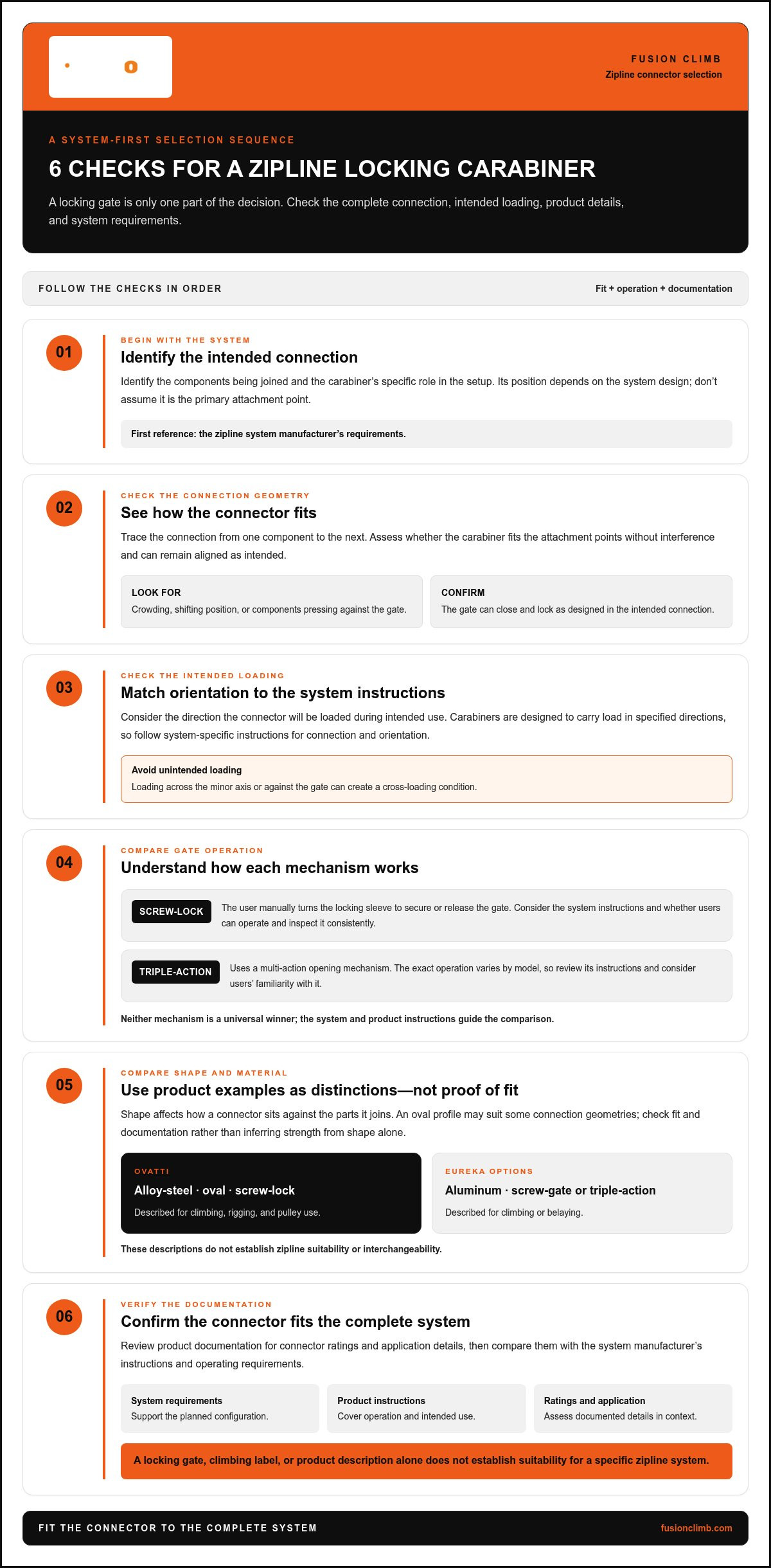
Use this checklist to evaluate locking carabiners for zipline systems
Use a consistent sequence before comparing models. Start with the system’s actual connection and written requirements, then check whether each candidate’s documented properties match. This keeps a familiar gate style, material, or product image from becoming a substitute for application-specific evidence.
Which checks should come before comparing product models?
Work from system documentation to connector details. Record the required connection geometry, loading direction, gate operation, material, ratings, and any applicable standards identified for that system. Then compare those requirements with the manufacturer’s documentation for the specific carabiner model.
- Identify the intended connection. Note which compatible components the carabiner will join and how their attachment points meet. Use the system documentation to understand the expected orientation and loading direction.
- Record the system requirements. Capture the connector characteristics, documented ratings, and any applicable standards specified by the system manufacturer. Don’t infer a requirement from another installation or a general climbing description.
- Check geometry and clearance. Compare the connector’s shape and dimensions with the actual interfaces. Confirm that components can sit as intended without obstructing the gate or forcing an unintended orientation.
- Review gate operation. Follow the model’s instructions and consider whether the specified operation fits the system’s procedure. Confirm that the locking mechanism can be operated and checked as directed.
- Match material and documented ratings. Treat steel or aluminum as descriptive attributes, not proof of capacity. Compare the carabiner’s documented ratings and markings against the system’s stated requirements.
- Pause if evidence is missing. If product documentation doesn’t establish the relevant rating or application details, don’t guess from appearance, category, or gate type. Set that option aside until you can evaluate the requirements using appropriate documentation.
What common selection mistakes can buyers prevent?
A checklist helps expose shortcuts that can undermine a careful comparison. Avoid choosing by gate style, colour, or material alone; none establishes that the connector matches the complete system. A carabiner described for climbing or belaying isn’t automatically suitable for every zipline arrangement. A generic image can show a product’s apparent shape, but it can’t establish certification, strength, or compatibility.
Keep a simple comparison record: list each system requirement beside the supporting product-documentation detail. If a requirement has no matching evidence, mark it unresolved rather than treating a similar-looking model as equivalent. This makes differences visible and helps prevent assumptions from slipping into selection.
Carabiners are only one part of a connected equipment setup. The Ropes Course Safety Equipment guide offers broader equipment context, while the zipline system’s own instructions remain the basis for evaluating its components. Select a connector only when its documented properties align with the intended connection and operating requirements.
Ready to compare hardware options? Explore carabiners and zipline equipment, then use this checklist to assess each model against your system documentation.
Choose the next step: match your carabiner decision to the equipment
A sound selection comes from matching a connector’s documented properties to the actual system and its operating requirements. Gate mechanism, material, shape, and stated use can help narrow options, but the final decision depends on whether product documentation supports the connection you intend to make. Keep that evidence beside the system instructions as you compare locking carabiners for zipline setups.
Which Fusion Climb carabiner examples are worth comparing?
Use the listed models to compare specific attributes, not as interchangeable recommendations for every zipline:
- Ovatti Steel Screw Lock: An oval alloy-steel carabiner with a screw-lock gate, described for climbing, rigging, and pulley use.
- Eureka Aluminum Screw Gate: A lightweight aluminum screw-gate model described for climbing and belaying.
- Eureka XL Triple Lock: An aluminum carabiner with a triple-action gate, described for climbing and belaying.
These descriptions identify differences in construction and operation. Compare each model’s manufacturer documentation with the system requirements, including connection geometry, loading direction, and documented ratings. If the application or a required rating isn’t established in the documentation, pause rather than infer suitability from the product name or a similar-looking connector.
How can buyers move from research to product browsing?
Before browsing, make a short record of the requirements specified in your system documentation. Include the parts being connected, how they must align, the required gate operation, and any applicable ratings or standards. Then compare product features against those requirements one by one. This keeps the search focused on relevant evidence rather than a preferred gate style or material alone.
Fusion Climb offers harnesses and associated equipment, including pulleys, lanyards, tethers, and carabiners. Each component has its own role and documentation. Viewing products together doesn’t establish bundle compatibility or show that a carabiner suits a particular setup. Assess each selection against the system’s instructions.
Browse the available equipment categories and product attributes, then compare the details with your system documentation. A product’s category or appearance is not evidence that it matches a specific zipline configuration.
Explore Fusion Climb harness and equipment, and use the product details alongside your system documentation to guide your assessment.
Make the next connector decision with confidence
Before choosing among locking carabiners for zipline use, turn the system requirements into a clear comparison standard. Keep the relevant documentation together, note any unresolved details, and don’t treat a familiar gate or product description as a substitute for evidence about the intended setup. If a requirement isn’t addressed, pause the selection until you can assess it properly.
That disciplined approach makes the next step more useful, whether you’re reviewing a current configuration or preparing to evaluate equipment. Browse with a specific purpose: compare product information to your documented needs and keep each piece of equipment in its proper context.
Browse Fusion Climb harness and equipment to compare available harnesses and hardware, including carabiners, pulleys, lanyards, and tethers. Use the product details alongside your system documentation to guide your equipment review.
Frequently Asked Questions
Are locking carabiners suitable for every zipline setup?
No. A locking gate alone doesn’t establish suitability for a particular zipline. The connection must fit the system design, attachment geometry, expected loading, and documented requirements. For example, a connector that closes correctly may still sit poorly against a pulley or another component. Compare the carabiner’s documented properties with the system instructions, and don’t treat a general product description as universal approval.
Can I use a climbing carabiner on a zipline?
Not based on its climbing label alone. That label describes a stated activity, but it doesn’t prove the connector is compatible with a specific zipline configuration. Review the zipline system documentation alongside the carabiner manufacturer’s instructions, including the intended connection and loading direction. If those materials don’t establish that the connector’s properties match the application, don’t assume it’s suitable simply because it’s used for climbing.
How do you check whether a carabiner gate is locked?
Follow the specific manufacturer’s operating instructions to close and engage the locking mechanism, then check that the gate and lock function as designed. Don’t rely on a generic technique, since operation can differ between models. A visual check is only one part of the process; it doesn’t replace required inspection procedures or checks of the complete system. If the mechanism doesn’t operate as instructed, follow the manufacturer’s guidance before use.
What is cross-loading on a carabiner?
Cross-loading is force applied across a carabiner in an unintended direction rather than along its intended loading axis. It can occur if connected components shift the connector out of its intended orientation. Loading direction matters, so follow the carabiner instructions and system guidance for positioning and connection. Don’t assume every shape responds identically or that a closed gate alone means the connector is loaded as intended.
Is a triple-lock carabiner safer than a screw-lock carabiner?
Not by label alone. Triple-action and screw-lock mechanisms have different operating characteristics, but neither type is universally safer or automatically suitable for every application. Consider the intended procedure, user familiarity, and documented system requirements. For example, Eureka options include screw-gate and triple-action models, but those gate types don’t establish comparative safety performance. Follow each model’s instructions and assess its documented properties for the specific connection.
When should a carabiner be removed from service?
Follow the manufacturer’s inspection, maintenance, and retirement instructions, along with applicable equipment-program procedures. Visible damage, a gate or locking mechanism that doesn’t function as instructed, or an uncertain history should be handled under those procedures, not judged against a generic online rule. Don’t return a connector to use based on appearance alone. If its status is unclear, use the applicable instructions to determine the next step.
Do steel carabiners always work better than aluminum carabiners for ziplines?
No. Material alone doesn’t establish suitability or superiority. Compare the connector’s geometry, intended application, documented ratings, and system instructions instead of assuming one material is always preferable. Ovatti is an alloy-steel example, while Eureka options are aluminum examples; those descriptions identify construction, not a performance advantage for a particular zipline. The relevant choice is the one whose documented properties match the system requirements.