



High-Visibility Safety Harness: How to Choose the Right Setup
The brightest harness on the rack may still be the wrong one for the job. A high visibility safety harness can help workers stand out, but visibility features don’t establish whether a harness suits the fall-protection task. Fluorescent colors and reflective elements support visibility in different conditions; harness fit, construction, connection points, and compatible equipment address separate needs.
It’s reasonable to want one setup that’s simple to wear and covers every requirement. But an integrated vest-style design doesn’t automatically replace separate high-visibility apparel, and added layers can affect fit and access. This guide explains how visibility features work, compares integrated and separate configurations, and outlines what to consider when pairing a full-body harness with lanyards, tethers, and other equipment. Use these checks to choose a task-appropriate setup that addresses visibility and fall protection as distinct requirements.
Key Takeaways
- Visibility features help others notice a wearer, but they don’t determine whether a harness is suitable for fall protection.
- Compare integrated vest-style designs with separate apparel by considering clothing layers, buckle access, visibility coverage, and equipment compatibility.
- Use five practical checks to narrow your options: work task, visibility conditions, harness fit, system compatibility, and applicable requirements.
- Choose a High visibility safety harness setup as part of a coordinated system, considering the harness, connectors, lanyard, and anchorage together.
- Fusion Climb offers full-body harnesses, lanyards, tethers, and carabiners for climbing and zipline applications.
What Does a High-Visibility Safety Harness Actually Do?
A high-visibility safety harness is a harness configuration intended to make the wearer easier to notice in a work area. It may combine a harness with conspicuous colors or reflective material, but those features address visibility, not fall arrest. That distinction matters in construction, maintenance, and aerial work, where a worker may need both to be seen and to use equipment suited to the task.
Visibility features help others see the wearer; the harness and compatible fall-protection system serve a different protective role. Treat these as separate requirements when comparing equipment. A bright color or reflective strip doesn’t establish harness fit, attachment suitability, or whether the setup matches the work.
Visibility Features: Color, Contrast, and Reflective Material
High-visibility colors can stand out against some backgrounds in daylight. Reflective elements return light toward its source and can aid recognition in low-light conditions when illuminated. These are different tools, not interchangeable guarantees. For a broader overview of high-visibility clothing standards and uses, consider how garment design supports visibility in particular settings.
Conspicuity depends on the scene. A color that contrasts with a building interior may blend into a similar outdoor background, while reflective material may be less useful without a light source directed toward it. Consider ambient light, background colors, obstructions, and the worker’s position. Dust, weather, and clothing layers can also reduce how much of a visibility feature remains exposed.
A High-Visibility Harness Is Still Task-Specific Safety Equipment
Start with the work, not the color. A harness used for maintenance at height may need a different fit or attachment configuration from one used in aerial work. Consider the harness alongside the connected equipment and work method. Visibility doesn’t indicate whether the harness fits the wearer or suits the intended fall-protection application.
Before comparing configurations, identify how the harness will be worn, what clothing layers are involved, where connections will be made, and what equipment will connect to it. Check that buckles and attachment points remain accessible and that added apparel doesn’t interfere with wearing or using the harness as intended. For aerial-park context, the professional ropes course safety equipment guide explains how equipment choices relate to the broader system.
Keep the functions distinct as you assess options: visibility supports recognition by others, while the harness configuration must suit the task and its equipment system. A High visibility safety harness is not a one-size-fits-all solution. Evaluate the actual conditions and setup together instead of relying on appearance or a product label alone.
How Visibility Features Fit Into a Fall-Protection System
Think in systems, not single components. A fall-protection setup may include a full-body harness, connectors, a lanyard, and a compatible anchorage. Each part has a defined role, and the components must work together for the intended application. High-visibility apparel is a separate consideration: it supports worker visibility, while fall-protection equipment is selected for the task and used according to its instructions.
Visibility features don’t establish whether a harness or connected system is suitable for fall protection. A bright appearance or apparel label can’t tell you whether attachment points, connectors, or the overall setup match the work. Keep those questions distinct when comparing product descriptions.
Check the Intended Use and Applicable Requirements
Begin with the work task, exposure conditions, and employer or site requirements. Consider where the worker will move, what hazards are present, and whether the setup is intended for fall arrest, restraint, or another purpose. Then identify the equipment and apparel requirements for that application. Don’t infer suitability from color, a product name, or a single marking.
Standards address different functions. ANSI/ASSP Z359.11 relates to full-body harnesses, while ANSI/ISEA 107 addresses high-visibility safety apparel. OSHA requirements depend on the work and setting; its OSHA fall protection requirements provide a starting point for understanding fall-protection topics. Confirm the current edition and applicability of any standard or rule before relying on it. One label doesn’t automatically satisfy every jobsite requirement.
Consider Compatibility Across the Equipment System
Next, look at how each component connects. Identify the harness attachment point specified for the intended use, then compare the connecting equipment and anchorage with the manufacturers’ instructions. A carabiner or lanyard isn’t interchangeable simply because it can be attached; its intended use and compatibility with the other components matter. Follow the instructions for connecting, adjusting, and using the equipment, and don’t modify the setup based on appearance alone.
For example, a worker may need a visibility garment over or alongside a harness, but added material shouldn’t obstruct required attachment points or interfere with how the equipment is worn. Check the complete arrangement with clothing layers and connections in place. Connector selection deserves the same care as harness selection; a professional climbing carabiners guide can help explain the role of connectors in an equipment connection.
A High visibility safety harness should therefore be evaluated as one part of a task-specific setup, not as a substitute for assessing the full system. Fusion Climb manufactures specialized climbing and zipline equipment, including full-body harnesses, lanyards, tethers, and carabiners. Explore Fusion Climb safety equipment as you consider how harnesses and connecting equipment fit into your application.
Integrated Vest Harness or Separate High-Visibility Apparel?
An integrated vest-style harness combines visibility apparel and harness elements in one configuration. A separate setup pairs a harness with high-visibility clothing worn over or underneath it. The integrated format may reduce the number of separate pieces to manage; separate apparel can make it easier to adapt clothing as layers or work conditions change. Neither format is automatically right for every job.
Compare the complete arrangement, including how it fits over the clothing worn for the task and how it works with equipment connections. A garment that looks visible in a product photo may provide different coverage when worn, so assess the setup in realistic working positions.
| Consideration | Integrated vest-style harness | Harness with separate apparel |
|---|---|---|
| Layering | Combines components, but the fit still needs assessment over the clothing used at work. | Allows apparel layers to be changed separately; added clothing must not interfere with harness fit or use. |
| Buckle access | Check that the vest design leaves adjustment points and buckles accessible. | Check that the apparel doesn’t cover adjustment points or obstruct access. |
| Visibility coverage | Coverage depends on the garment’s design and how it sits on the wearer. | Coverage depends on the separate garment, its fit, and how it’s worn with the harness. |
| Equipment compatibility | Make sure the configuration works with the task-specific harness connections and equipment. | Make sure extra material doesn’t interfere with connections, movement, or harness use. |
When an Integrated Vest-Style Configuration May Help
A combined configuration can simplify dressing and reduce the number of separate pieces a worker must arrange before starting. That convenience matters only if the harness fits correctly over the expected clothing layers and remains adjustable. Try the setup through the movements the task requires, such as reaching, bending, or turning. Confirm that buckles and connection points remain accessible. Integration alone doesn’t make a configuration suitable for every worksite.
When Separate Apparel May Be the Better Fit
Separate apparel can offer flexibility when workers change outer layers or move between tasks and conditions. But assess every added layer with the harness on: material shouldn’t restrict fit, cover adjustments, or obstruct equipment access. Follow applicable workplace requirements to determine whether separate high-visibility apparel is needed. A vest-style configuration replaces separate apparel only when its design and the site’s requirements support that use.
Keep the functions distinct as you compare options. Reflective elements can contribute to visibility, but they don’t establish compliance with apparel requirements or fall-protection performance. Likewise, combining apparel and harness components doesn’t prove that the harness fits the wearer or suits the task. Review product labeling for the specific claims it makes, then evaluate fit, visibility coverage, access, and compatibility as a complete worn setup. The right High visibility safety harness configuration meets the job’s visibility needs without compromising harness fit or equipment use.
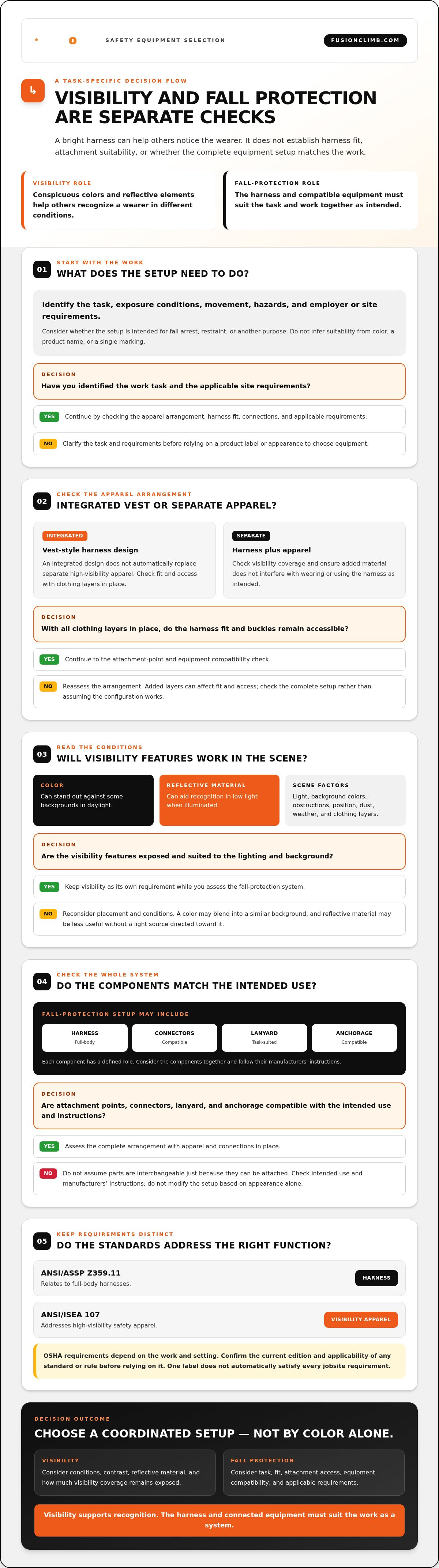
Choose a High-Visibility Safety Harness in Five Practical Checks
Compare equipment against the job, not just a product photo or search filter. Before reviewing options, gather the task details, expected clothing layers, visibility conditions, connection requirements, and workplace procedures. Then use the same five checks for each configuration. This makes differences easier to spot and separates apparel features from harness and system requirements.
- Define the work task. Record the worker’s position, movements, exposure conditions, and required fall-protection application. A setup for moving around an elevated work area may differ from one used for a fixed task. Specify what the worker needs to do, where, and with which equipment.
- Describe the visibility conditions. Note the lighting, background, potential obstructions, and whether conditions change during the shift. Identify the site’s apparel requirements separately from harness needs. Compare a High visibility safety harness by its visible coverage in the intended setting, not color alone.
- Assess fit over work clothing. Gather the layers the worker will wear and follow the harness manufacturer’s instructions for fit and adjustment. Check whether buckles and adjustment points remain accessible, and whether the harness stays correctly positioned through the movements the task requires. Use the product’s fit guidance rather than relying on a general sizing assumption.
- Check system compatibility. List the harness attachment configuration, connecting equipment, and anchorage for the intended system. Compare them with the manufacturers’ instructions and workplace procedures. A connector that appears to fit may not suit every connection or application, so assess components as a coordinated setup.
- Review applicable requirements. Separate high-visibility apparel requirements from fall-protection equipment requirements. Record relevant employer or site rules, and verify the current applicability of any cited standard or regulation before relying on it. If interpretations affect the selection, follow qualified workplace safety procedures rather than treating a label as universal approval.
Use this compact checklist for each option:
- Does it match the task and work position?
- Is visibility coverage appropriate for the actual conditions?
- Can the harness be adjusted as instructed over the work clothing?
- Are attachment points and connected equipment compatible with the intended system?
- Have the separate apparel and fall-protection requirements been reviewed?
Keep product instructions and qualified workplace procedures at the center of the decision. If a configuration fails a fit or compatibility check, don’t let a visibility feature make up for it. Explore Fusion Climb full-body harnesses and connecting equipment as you compare equipment categories for climbing and zipline applications.
Connect Harness Selection to Fusion Climb Safety Equipment
Harness selection is one part of planning a complete setup. Fusion Climb manufactures specialized climbing and zipline safety equipment, including full-body harnesses, lanyards, tethers, and carabiners. Founded in 1998, the company focuses on equipment for climbing and zipline applications. The right categories to consider depend on the task and how each component is intended to work within the equipment system.
Keep visibility and fall-protection suitability as separate questions. The term High visibility safety harness describes a visibility-oriented configuration, but it doesn’t establish that a particular harness has high-visibility features or suits a specific fall-protection application. Assess product information and intended use rather than assuming a feature based on the category name.
Match Equipment Categories to the Application
Climbing and zipline work can call for a harness and compatible connection equipment considered together. A full-body harness, lanyard or tether, and carabiner each have a different role in the setup. Their presence in the same system doesn’t, by itself, establish compatibility. Review the manufacturer’s instructions for each component and the intended combination before use, and follow procedures applicable to the work.
For example, begin a planning review by identifying the harness configuration needed for the task, then record which connection components the system requires. Compare those details with the equipment instructions, including how components are meant to connect and be used. Keep apparel considerations separate: visibility needs inform what the worker wears, while equipment instructions and workplace procedures guide system selection.
This category-level approach helps avoid a common mistake: treating a product description or appearance as evidence of a complete solution. Compare stated uses and instructions, not assumptions. Don’t attribute a specific visibility feature, certification, or application to a product unless its approved product information supports that claim.
Move From Comparison to a Clear Next Step
Turn your research into a short decision record before selecting equipment. Capture the task, working conditions, visibility needs, clothing layers, connection requirements, and applicable workplace procedures. Then compare equipment categories against the manufacturer’s instructions and the intended setup. If requirements or interpretations are unclear, follow qualified workplace safety procedures.
Keep the two core questions in view: does the apparel support the required visibility for the work, and is the harness and connected equipment appropriate for the intended application? A positive answer to one doesn’t answer the other. This distinction prevents a bright appearance from being mistaken for fall-protection suitability and keeps equipment selection grounded in the job, not just a label.
For climbing and zipline applications, explore Fusion Climb safety equipment, including full-body harnesses, lanyards, tethers, and carabiners. Use the product information and manufacturer instructions to understand how each category relates to your equipment planning.
Make Your Next Setup Decision With Confidence
Before work begins, create a clear reference for the crew: record the task, visibility needs, intended equipment connections, and instructions that govern use. Revisit it when the work, clothing layers, or conditions change. Assess a High visibility safety harness setup for its specific application rather than carrying it forward automatically from one task to another.
Keep visibility and fall-protection suitability as distinct checks, and use equipment manufacturers’ instructions alongside workplace procedures to guide decisions. This gives teams a practical basis for comparing options and adapting when the job changes.
For climbing and zipline applications, explore Fusion Climb full-body harnesses, lanyards, tethers, and carabiners as you plan the equipment system. Select deliberately and follow applicable instructions when choosing equipment for its intended use.
Frequently Asked Questions
Is a high-visibility safety harness required on every jobsite?
Not necessarily. Requirements depend on the work, site rules, and regulations that apply to the task. A worker near moving vehicles may face different visibility requirements from someone working in a controlled indoor area. Follow your employer’s safety procedures and verify current requirements for the job. A brightly colored harness alone doesn’t establish compliance, so assess apparel requirements separately from the harness’s intended use.
Can a high-visibility harness replace a separate safety vest?
Sometimes an integrated design may combine a harness with visibility apparel, but whether it can replace a separate vest depends on its design and workplace requirements. Check whether the integrated garment provides the coverage required for the work, including when the worker bends or reaches. Follow the product instructions and site rules. Reflective details alone don’t show that every apparel requirement is met.
What is the difference between a high-visibility harness and a reflective safety vest?
A reflective safety vest is visibility apparel; a harness is safety equipment selected for an intended application and system connections. Some designs combine both, but the terms aren’t interchangeable. Wearing a vest over a harness doesn’t change the harness’s intended use, and a reflective vest isn’t a substitute for a harness. Check each item’s instructions and the requirements for the work before assembling a setup.
Can I wear a high-visibility harness over a jacket?
It depends on the harness, jacket, and work conditions. A thick or bulky layer can affect adjustment, fit, or access to buckles and attachment points. Follow the harness manufacturer’s fitting instructions and workplace procedures rather than assuming an outer layer is suitable. Assess the harness with the actual jacket and other work clothing in place, and make sure the arrangement doesn’t interfere with required adjustments or connections.
Are reflective strips enough for nighttime work?
No reflective strip guarantees that a worker will be seen. Reflective material can help when illuminated, but visibility also depends on lighting, background, obstructions, and the site’s overall visibility plan. Review the product information and applicable workplace requirements, especially if lighting or work locations change during a shift. Treat reflective elements as a visibility aid, not as evidence that the harness provides fall protection or meets every job requirement.
How often should a high-visibility safety harness be inspected?
Follow the manufacturer’s inspection instructions and your employer’s equipment procedures; don’t rely on a guessed interval. Include the harness and its components in required checks, paying attention to visible wear, damage, or compromised parts. If you notice a concern, handle the equipment according to its instructions and workplace procedures rather than deciding on the spot that it remains usable. Keep inspection records if your workplace process requires them.
Can the same high-visibility harness be used for climbing and fall arrest?
Only if the specific equipment is intended for the application and suitable for the compatible system. A visibility feature doesn’t establish that a harness is appropriate for climbing or fall arrest. Don’t transfer equipment from an aerial activity to a different work task just because it looks similar. Follow the product instructions and applicable workplace procedures for each use, including specified connections and system components.