



Superman Zipline Harness: A Buyer’s Guide
The harness that looks most like a Superman suit may not be the right choice for your zipline system. A Zipline flight harness for superman experience positions the rider differently from an upright or seated harness, so appearance alone can’t confirm that it fits the operation or connects correctly to existing equipment.
If you’re comparing options, it’s reasonable to have questions. How does a prone-flight harness differ in use? Will its connection points work with your pulley, lanyard, tether, and carabiners? And what should you ask a supplier before narrowing your shortlist? Treat the harness as one part of a verified system, not a standalone novelty.
This guide explains practical evaluation criteria, outlines compatibility details that require confirmation by qualified professionals, and helps you prepare focused questions for a supplier. You’ll learn how to compare equipment based on its intended application and system requirements, rather than choosing by looks alone. Fusion Climb, a specialized safety gear manufacturer founded in 1998, is one manufacturer to consider as you assess Superman-style harnesses and related zipline hardware.
Key Takeaways
- Define the intended rider position and operation before comparing harness options.
- Use the Zipline flight harness for superman experience only when its intended use and connection interfaces are confirmed for your system.
- Compare adjustment range, rider fit, and attachment points against documented operational requirements.
- Ask suppliers for current specifications, use limitations, sizing guidance, and inspection instructions.
- Shortlist Superman-style harnesses and related hardware only after reviewing the details with the appropriate qualified professionals.
What a Superman Zipline Harness Needs to Do
A Superman-style zipline harness is a body-support system designed to secure a rider in a prone, forward-facing position for travel along a zipline. Unlike an upright harness, it must be evaluated for how it supports that intended body orientation and connects with the operation’s other equipment.
The Zipline flight harness for superman experience isn’t suitable simply because it resembles gear used for flight. Its intended application, fit, attachment points, and connection interfaces must align with the operator’s system. A harness on its own also can’t establish that a complete zipline setup is safe. The pulley, lanyard or tether, carabiners, course design, and operating procedures all matter. Treat them as a connected system and have operation-specific decisions reviewed by qualified professionals and the equipment manufacturer.
How prone flight differs from an upright zipline ride
In prone flight, the rider faces forward with the body oriented more horizontally; upright riding keeps the torso more vertical. That change affects how the harness fits and supports the rider, and how its attachment points relate to the rest of the system. A general overview of climbing harness design can explain basic harness construction, but it doesn’t establish suitability for a particular zipline application.
Riders also need clear, operation-specific guidance on entering the harness, positioning their body, and exiting after the ride. Those steps should come from the operator’s established procedures. Don’t assume that instructions for an upright ride apply to prone flight.
Who should evaluate this type of harness
Operators planning a Superman-style experience, and professionals sourcing equipment for it, should lead the evaluation. Their questions are technical: Is the harness intended for this application? Do its interfaces match the existing system? What documentation, fit guidance, and use limitations apply?
Individual participants have a different role. Before booking, they can ask the operator whether the experience uses a prone or upright position, what to expect during entry and exit, and whether any participation requirements apply. Equipment selection and system compatibility remain decisions for the operator and qualified professionals, with confirmation from the manufacturer.
Start with the actual use case, not the silhouette. That distinction helps separate a purpose-selected flight harness from equipment that may look similar but lacks confirmed suitability for the operation.
Which flight harness features matter when you compare options?
Compare a harness against the actual flight position and operating setup, not against a photo or a single headline feature. For a Zipline flight harness for superman experience, ask for current product documentation that states its intended application, adjustment range, sizing guidance, attachment points, and use limitations. A feature may be relevant, but no single feature proves the harness is suitable for your operation.
Fit, adjustability, and rider experience
A suitable fit helps the rider maintain the position the system is designed for. Ask the manufacturer how to select a size and adjust the harness, then compare that guidance with the operator’s participant screening and operating requirements. Don’t assume an adjustment feature accommodates every rider. The ropes course safety equipment guide can help frame broader equipment questions, but the harness manufacturer’s current instructions should guide product-specific decisions.
Connections and system compatibility
Assess the harness interface alongside the lanyard or tether, pulley, and connector. Confirm that the parts are intended to work together in the specific system, including how they attach and move through the planned setup. The zipline lanyards and tethers guidance offers another reference for evaluating connected components. Have the system designer or a qualified professional verify compatibility. Don’t infer capacity or suitability from appearance, material, or a connector that seems to fit.
Use this comparison table to turn a product conversation into a documented review. For U.S. workplace applications, consult the OSHA personal fall protection standards where applicable; don’t assume a workplace rule alone determines suitability for a zipline operation.
| Criterion | Question to ask | Detail to confirm |
|---|---|---|
| Intended position | Is this harness designed for prone flight in this application? | Documented intended use and limitations |
| Fit and adjustment | How is the harness sized and adjusted for riders? | Manufacturer sizing guidance and operator-defined fit requirements |
| Attachment interface | How does the harness connect to the system? | Connection points and approved configuration, verified by a qualified professional |
| Supporting components | Which lanyard or tether, pulley, and connectors are specified? | Compatibility with the complete system design |
Bring these questions to a qualified professional and the manufacturer before shortlisting equipment. Fusion Climb manufactures Superman-style harnesses and related zipline hardware; review its Superman-style harnesses and zipline equipment against your documented requirements.
Harness comparisons: avoid judging Superman flight gear by appearance alone
A prone-flight harness and an upright-oriented harness may share visible features, but that doesn’t establish that they serve the same purpose. A general climbing or fall-protection harness also shouldn’t be presumed suitable for zipline flight. Equipment suitability depends on documented use and compatibility with the complete system.
That distinction matters because zipline-related injury research, including coverage by Nationwide Children’s Hospital, underscores why equipment selection and operating decisions call for care. Evaluate the product’s intended application and documentation, not just its shape, padding, or resemblance to gear used in another activity.
Prone-flight harness versus upright harness
A prone-flight design is intended to support a forward-facing, more horizontal body position. An upright harness is oriented around a more vertical riding position. The appropriate support and adjustment considerations therefore depend on the intended application and the operation’s requirements. Neither category is automatically the better choice.
Ask the manufacturer which riding position the harness is designed for, how it should be adjusted, and what sizing guidance applies. Then compare those details with the operator’s participant-fit requirements. Comfort preferences can inform a comparison, but they don’t replace confirmed intended use, compatibility, inspection, or operational checks. Don’t select a Zipline flight harness for superman experience based on appearance or a general claim that it is adjustable.
Harness versus complete flight system
The harness is one part of a connected setup. Its interface must work with the specified lanyard or tether, connector, and trolley or pulley, as well as with the system’s design and operating procedures. A component that physically attaches is not necessarily approved for that configuration. Request current documentation, then have a qualified professional and the equipment manufacturer review the proposed combination before use.
During connector evaluation, check documented intended use and how the connector is meant to interface with adjoining components. The professional climbing carabiner guide can help frame questions, but it doesn’t approve a particular zipline setup.
- Separate comfort from suitability: Note fit preferences, then independently verify intended use and adjustment guidance.
- Review the connection chain: Identify each interface from harness to trolley or pulley and confirm it against the system design.
- Document the decision: Keep product specifications, use limitations, and inspection instructions with the equipment records.
Choose only after the application is clear and compatibility has been reviewed. A familiar silhouette is no substitute for documented suitability.
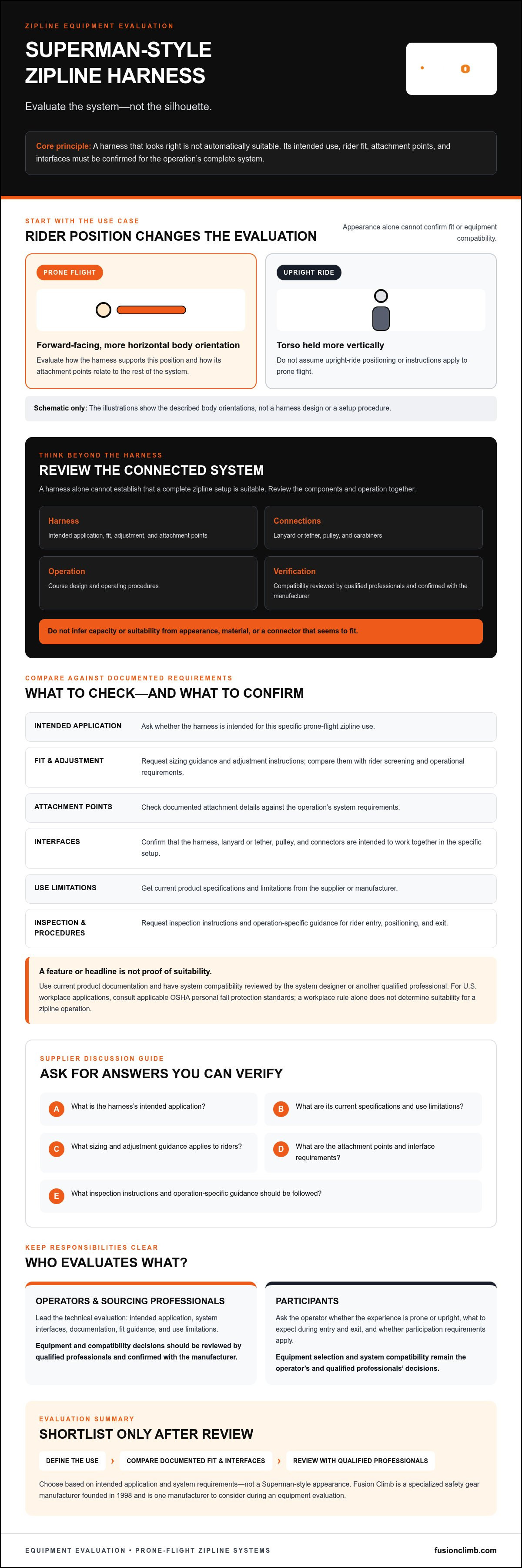
A buyer’s checklist for selecting a Superman-style zipline harness
Use a documented process before selecting a harness. The goal is to connect the intended experience, participant needs, equipment interfaces, and operating procedures, then have the proposed setup reviewed by the right people. A Zipline flight harness for superman experience should be shortlisted only after its intended application and system fit are established.
Follow these five steps
- 1. Define the application. Record the intended body position, operation type, participant profile, and any relevant operating requirements. Don’t rely on a broad product label alone.
- 2. Gather system details. Document the existing or proposed pulley, lanyard or tether, connectors, attachment interfaces, and system design. Identify who will review compatibility.
- 3. Compare current documentation. Request the specific harness’s specifications, documented applications, use limitations, and any applicable standards information. Have qualified professionals confirm which standards or requirements apply to your operation.
- 4. Confirm fit and care needs. Request manufacturer sizing and adjustment guidance. Compare it with participant screening and operating procedures, then obtain care and inspection instructions.
- 5. Review support and records. Clarify who can answer product-specific questions and how documentation, maintenance, and replacement needs will be managed. Confirm any product policies directly rather than assuming them.
Questions to ask before ordering
Ask the manufacturer which applications the specific harness is documented to support, what its interfaces require, and whether the proposed system configuration has been reviewed for compatibility. Request sizing guidance, use limitations, care instructions, and inspection guidance in current written form. Keep the answers with your equipment records.
Before placing an order, document the expected frequency of use, participant profile, and relevant operating procedures. Name the qualified professional responsible for reviewing compatibility and approving equipment for operation. Confirm how the operation will address maintenance, replacement, and recordkeeping without presuming the manufacturer’s policies.
Saveable selection checklist
- Application and intended flight position defined
- System components and interfaces documented
- Specifications, limitations, and applicable requirements reviewed
- Sizing, care, and inspection guidance obtained
- Compatibility reviewer and approval responsibility identified
- Maintenance, replacement, and records process considered
Once your requirements are documented, review Fusion Climb’s Superman-style harnesses and related zipline hardware against the checklist, then verify current product details with the manufacturer.
Evaluate Fusion Climb Superman-style harnesses and plan your next step
Fusion Climb manufactures Superman-style harnesses and related zipline hardware. Its product categories may be relevant to operators and equipment buyers evaluating prone-flight gear, but the right choice depends on the documented application and the specific system. Start with your requirements, then check current product information with the manufacturer. A product category alone doesn’t confirm a particular harness’s compatibility or suitability.
When Fusion Climb may fit your equipment search
Review Fusion Climb’s Superman-style harnesses against the requirements you’ve already recorded: intended flight position, participant sizing needs, system interfaces, operating procedures, and documentation criteria. The company also offers zipline pulleys, lanyards, tethers, and carabiners as separate equipment categories. Don’t assume those components are included with a harness or compatible with your system without confirming the details.
Fusion Climb sells equipment. It doesn’t provide guided zipline tours or on-site safety training. Operators remain responsible for operation-specific decisions, including arranging qualified review of system compatibility and equipment approval.
Prepare for a product inquiry
Make the conversation specific. Gather details about the planned application and body position, existing or proposed system interfaces, participant sizing requirements, and the documentation your operation needs. Ask about the exact product under consideration, not just the general harness category.
- Which applications is this specific harness designed and documented to support?
- What are its current specifications, use limitations, and sizing guidance?
- How does its interface connect to the proposed lanyard or tether, pulley, and carabiners?
- What care and inspection instructions apply, and what documentation is available?
- Which compatibility questions should be reviewed by the system designer or another qualified professional?
Request current written information and compare it with your checklist. If a specification, intended use, or interface detail remains unclear, pause the decision and seek clarification from the manufacturer and the qualified professional reviewing your system. This is especially important before treating any Zipline flight harness for superman experience as a fit for an existing setup.
Once your application and technical questions are organized, explore Fusion Climb’s zipline and climbing equipment and review the relevant product information with those requirements in hand.
Make Your Harness Search a Systematic One
The right Superman-style harness is selected by intended use and verified compatibility, not by appearance alone. Compare documented flight position, fit guidance, attachment interfaces, and inspection instructions, then have qualified professionals review how the harness works with the full zipline system.
A Zipline flight harness for superman experience should meet the needs of the actual operation. Keep product specifications and use limitations in view, and confirm any unanswered questions with the manufacturer before moving forward.
Fusion Climb manufactures specialized zipline and climbing safety gear, including Superman-style harnesses and related hardware. Once you’ve defined your application and gathered your technical questions, explore Fusion Climb’s zipline and climbing equipment and compare the relevant categories against your requirements.
Take the time to verify each connection and document your decision. A careful, informed selection helps you move toward a Superman-style setup with greater clarity and confidence.
Frequently Asked Questions
What is a Superman-style zipline flight harness?
A Superman-style zipline flight harness is designed to secure a rider in a prone, forward-facing position during zipline travel. Unlike an upright-oriented harness, it supports a different body position and uses interfaces intended for its documented application. A Zipline flight harness for superman experience must be evaluated as part of the full equipment setup, including its connections to the lanyard or tether and pulley. Confirm the intended use with the manufacturer.
How is a Superman zipline harness different from a regular climbing harness?
A Superman-style zipline harness is intended for prone, forward-facing flight, while climbing harnesses are designed for applications stated in their product documentation. Their shapes or components may look similar, but that doesn’t confirm they serve the same purpose. Check the intended use, adjustment guidance, attachment interfaces, and limitations for the specific harness. Don’t assume that a general climbing harness is appropriate for zipline flight without manufacturer and qualified-professional review.
Can any full-body harness be used for a Superman zipline experience?
No. A full-body design or similar appearance doesn’t establish suitability for a Superman-style zipline application. The harness must be documented for the intended use, fit the participant requirements, and connect appropriately with the operation’s equipment. Review its current specifications and limitations, then have the system compatibility evaluated by qualified professionals. Fusion Climb offers both full-body and Superman-style harness categories, but buyers should verify each specific harness’s intended application with the manufacturer.
How do I know whether a flight harness fits a zipline pulley system?
Confirm compatibility across the complete connection chain, not just whether a connector can attach. Gather details about the harness interface, lanyard or tether, carabiners, pulley, and system configuration. Ask the harness and component manufacturers for current documentation, then have the system designer or another qualified professional review the proposed setup. Physical fit alone doesn’t prove that the components are approved or appropriate for use together.
What should an operator check before buying a Superman-style harness?
Define the intended application and participant profile first. Then request the harness’s current specifications, documented use limitations, sizing guidance, connection details, care instructions, and inspection guidance. Compare these with the operation’s system design and procedures. Identify who will review compatibility and confirm any standards or requirements that apply. Keep the manufacturer’s documentation with equipment records, and resolve open questions before ordering rather than relying on appearance or a general product description.
Does a Superman zipline harness include a pulley or lanyard?
Not necessarily. A harness, pulley, lanyard or tether, and carabiners may be separate equipment categories, and inclusion depends on the exact product or package. Don’t assume a component is included based on photos or a general listing. Confirm the contents and current configuration with the seller or manufacturer, then check whether each component is appropriate for the proposed system. Fusion Climb offers Superman-style harnesses and related hardware, but verify what applies to the specific item under consideration.
Which standards apply to a commercial zipline flight harness?
Applicable standards depend on the operation, equipment, and jurisdiction, so confirm them with the course designer or another qualified professional. ASTM F2959 and ANSI/ACCT standards are references in the aerial adventure and challenge-course context, but don’t assume a particular edition or requirement applies to every setup. Request current standards and compliance documentation for the exact harness and components, and verify that the references match the intended application before making a purchasing decision.