


Zipline Cable Wear: How Friction and Fatigue Cause Damage
Cable wear rarely begins with a dramatic failure. It usually builds through repeated stress and friction. What causes premature zipline cable wear includes fatigue from repeated loading, corrosion from weather exposure, and rubbing from incompatible trolleys, rope diameters, or pulleys. Cable construction, tension, alignment, and connected hardware all affect how these forces wear the line.
It’s easy to focus on the cable alone, but wear often reflects how the entire system works together. This article explains how cable material, repeated stress, tension, weather, and mismatched equipment can contribute to damage. You’ll also learn what to look for during inspections, why wear near anchors and hardware matters, and how suitable zipline pulleys and related equipment fit into a system designed for reliable operation.
Key Takeaways
- Look beyond visible cable damage: wear in connected hardware and signs of fatigue can point to a developing problem.
- Match trolley, pulley, and rope compatibility to reduce unnecessary friction along the line.
- Understand how cable material and construction affect the way repeated loads and environmental exposure contribute to wear.
- Consider tension, sag, and alignment together, since changes in one can affect the cable’s load and the rider’s path.
Cable and hardware inspection for fatigue and wear
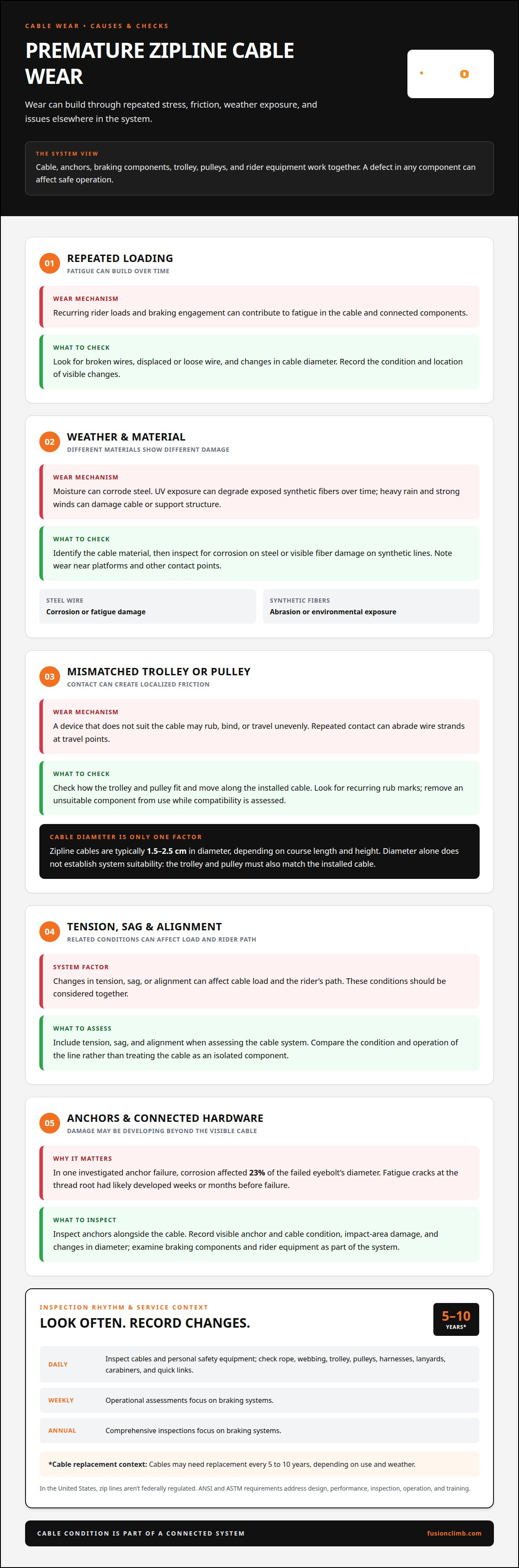
In the United States, zip lines aren’t federally regulated. ANSI and ASTM requirements address design, performance, inspection, operation, and training; cables may need replacement every 5 to 10 years, depending on use and weather.
Inspect the cable, anchors, braking components, and rider equipment as one connected system. A defect in any component can affect safe operation.
Rope, Webbing, Trolley, and Pulley Checks
Inspect rope, webbing, the trolley, and pulleys for wear, damage, debris, or movement that interferes with smooth operation. Check the full length of textiles, including brake lines and webbing, not just the main cable. Examine the trolley and pulleys for damage or debris, and confirm that carabiners and quick links are closed and properly oriented. These checks can reveal problems before equipment failure affects riders.
Daily Inspections and Routine Maintenance
Operators should inspect zipline cables and personal safety equipment daily and perform routine maintenance. Visual checks can reveal damage; weekly operational assessments and comprehensive annual inspections focus on braking systems. Inspect braking devices, trolleys, and pulleys, and torque wire-rope clips to their specifications. Before launching another rider, confirm that the previous rider has disembarked, the brake has reset, and the impact area is clear of debris or tangled lines. Include emergency braking equipment and maximum operating conditions in inspections.
Anchor and Cable Inspection Evidence
Record visible cable and anchor conditions, including broken wires, displaced or loose wire, impact-area damage, and reduced cable diameter. These signs help identify changes that a general visual pass could miss. In an investigated anchor failure, corrosion affected 23% of the failed eyebolt’s diameter, and fatigue cracks at the thread root had likely developed weeks or months before failure. This example shows why anchor condition matters alongside cable wear.
Include rider safety equipment in daily inspections. Examine each harness and lanyard or tether for visible wear, and check carabiners and quick links for closure and orientation. Consistent inspection records help operators track recurring damage and changes across the cable system.
Friction from unsuitable trolleys, rope diameters, or pulleys
On a zipline, mismatched equipment can create friction where the trolley and pulley contact the cable. The added resistance can abrade wire strands as riders travel the course.
Trolley and Pulley Compatibility
A trolley or pulley that doesn’t suit the cable can rub, bind, or travel unevenly instead of rolling smoothly. This creates localized friction that can wear the cable at repeated travel points. Check how the device fits and moves along the line, and look for recurring rub marks. Remove an unsuitable component from use to prevent further abrasion while its compatibility is assessed.
Cable Diameter and Tensile Strength
Cable diameter and tensile strength are related, but diameter alone doesn’t establish whether a line suits a zipline system. Zipline cables are typically between 1.5 and 2.5 centimeters in diameter, depending on course length and height, and are designed to support several times a rider’s weight. The trolley and pulley must also match the installed cable. Engineering decisions should account for the complete system, rather than choosing a device by appearance or diameter alone.
Cable Diameter Reduction
A reduction in cable diameter is a measurable change that may indicate wear and should be assessed alongside other visible damage. Repeated trolley or pulley contact can abrade material at a contact point, while corrosion can affect the wire. Compare the area with nearby cable sections and note where the change occurs. A localized reduction near a travel or impact area can reveal a wear pattern, but it does not establish the cable’s remaining capacity on its own.
For a compatible trolley-and-cable setup, zipline pulleys are one equipment category to consider. Matching the pulley to the cable and system helps keep friction in focus, rather than treating cable wear as an isolated problem.
Zipline cable materials and construction
Zipline cables use high-strength steel wire or synthetic fibers, with construction suited to the course’s forces and environment. Both types are designed to support several times a rider’s weight, but that capacity does not prevent wear from repeated loading. Steel wire can develop corrosion or fatigue damage; synthetic fibers can be affected by abrasion and environmental exposure. Material is only one part of the cable system.
Corrosion, weather, and ultraviolet exposure affect materials differently. Moisture can corrode steel, while heavy rain and strong winds can damage a cable or its support structure. UV exposure can degrade exposed synthetic fibers over time. Inspect the cable and surrounding components for related changes, including corrosion, visible fiber damage, or wear near a platform and other contact points.
Cable construction matters because the line experiences recurring loads as riders travel and braking systems engage. Repeated stress can contribute to fatigue, while rubbing can wear strands or fibers at contact points. The main cable, anchor connections, and braking components work as a system; damage in one area can affect overall performance. Routine inspections help identify changes before they spread or become harder to assess.
For a practical inspection, note the cable material, visible condition, and location of any damage. Compare a suspected wear area with nearby sections, then record whether it is near a trolley path, anchor, or braking contact point. A steel line with corrosion needs a different assessment from synthetic fibers with surface abrasion. This distinction helps operators identify potential causes and determine what needs closer review to keep riders safe and reduce injury risk. Material alone does not determine service life; construction, loading, weather, and maintenance all matter.
How do improper tension, sag, and alignment accelerate zipline cable wear?
Tension affects both cable loading and rider movement. Higher tension increases the strain a rider’s weight places on anchors, while lower tension can let the line start faster and lose speed toward the end. These differences affect the forces carried through the cable and its support points. If tension is poorly matched to the course, repeated loading can contribute to fatigue in the cable and anchors.
Sag also shapes the rider’s path. A zipline cable should hang below the ending anchor by about 2% of the line’s length while being ridden. Excessive sag can make arrival speeds difficult to balance: heavier riders may arrive too fast, while lighter riders may fall short. That changing travel pattern can place repeated stress on different parts of the line and braking system. The impact area and anchors remain part of the same load path.
Alignment matters because the cable and anchors need to work together along the intended route. A change in anchor height can raise or lower the rider’s path; tightening raises the path, while adding slack lowers it. When the cable path shifts, trolley travel and braking contact may also change. This can cause uneven loading or repeated contact in specific areas, rather than wear distributed consistently along the cable.
For most ziplines 100 feet or longer, achieving proper cable tension by hand can be challenging; a tensioning kit or similar winch is recommended. Tension should be considered alongside rider speed, sag, anchor loading, and alignment, not as an isolated adjustment. A change made to improve travel can alter anchor forces or arrival behavior, so assess the whole setup after adjustment. That system-level view helps connect wear patterns with their possible causes.
Fusion Climb
Fusion Climb offers zipline equipment to support choices about compatible rider gear and system components. Its range includes Full Body Harnesses, Superman Style Harnesses, Zipline Pulleys, and lanyards and tethers. Each component serves a different role, so consider it in the context of the course setup and the wear factors discussed above. A pulley is part of the cable-contact system, while a harness and tether connect to rider equipment. Choosing equipment suited to its intended role helps keep the whole setup in view, but does not replace cable inspection or maintenance. For questions about Fusion Climb’s zipline equipment, contact Fusion Climb.
Build wear awareness into the next operating cycle
Knowing what causes premature zipline cable wear is useful when it informs decisions beyond a single inspection. Treat observations as operational information that can guide maintenance planning, equipment reviews, and discussions about course use. The goal is to learn from changes rather than simply react to them.
Use the next planning cycle to connect equipment choices with the conditions they face. Consistent records can help teams distinguish an isolated mark from a recurring pattern and focus follow-up accordingly. Keep cable condition, system use, and maintenance decisions connected so emerging concerns have context and can be addressed deliberately.
If wear raises questions about equipment that fits your setup, contact Fusion Climb to discuss your needs. Send Fusion Climb your equipment questions and take the next step with a clearer basis for your decisions. Careful attention today helps support more dependable operations and keeps the focus on safe, confident rides ahead.
Frequently Asked Questions
What are the most common causes of premature zipline cable wear?
Repeated loading, corrosion, and friction at equipment contact points are common causes. Active braking can add abrasion when a glove or pad presses directly against the cable. These factors can compound: moisture affects cable condition over time, while repeated rubbing concentrates damage at a travel or braking point. Assess visible marks alongside operating history and the condition of nearby components.
How do cable diameter, construction, and material affect zipline cable wear?
Diameter, material, and construction influence how a cable carries loads and responds to contact, but none alone determines its condition. Zipline lines may use high-strength steel wire or synthetic fibers, and diameter varies with course length and height. Matching the trolley to the installed cable matters as much as choosing a suitable diameter. Assess equipment compatibility separately from visible cable damage.
How do trolley wheels, brakes, and other components damage zipline cables?
Trolley wheels can cause localized abrasion when their fit or travel is poor; debris or binding may interrupt smooth movement. Braking can also wear the cable through direct contact: active braking with a glove or pad pressed against the line creates friction. Repeated contact may concentrate wear in one area, so compare the cable path with trolley travel and braking contact points.
How do installation errors and poor cable terminations cause premature wear?
Installation and termination problems can concentrate force at an anchor rather than distribute it along the intended load path. For example, an eyebolt installed out of line can experience bending at its threaded section. An investigation of a zipline anchor failure identified this orientation as the probable primary cause. Wire-rope clips also need correct installation, so their specified torque matters to system condition.
How do zipline use frequency, rider weight, and operating speed affect cable lifespan?
Use frequency affects how often a cable experiences loading, so heavier use means more repeated load cycles to assess. Rider weight influences forces on the cable and anchors, while operating speed affects how the braking system engages. Repeated fast arrivals at the same point, for example, may concentrate contact wear. Cable lifespan depends on operating conditions and weather, not use frequency alone.
What inspection methods detect wear, broken wires, corrosion, and deformation in zipline cables?
Visual inspections can reveal broken wires, loose or displaced strands, corrosion, impact-area damage, and reduced cable diameter. Examine the full line, including anchor and braking areas, and record the location and appearance of each defect. Comparing records over time can show whether damage is progressing. Inspect connected hardware and textiles too, since wear can occur beyond the cable itself.