



Superman Style Zipline Harness: The Professional 2026 Guide to Prone Flight Gear
What should operators look for in a Superman style zipline harness? For commercial parks, prone flight changes how guests are fitted, connected, inspected, and sent down the line. Slow adjustments can hold up turnover, while gear that is difficult to maintain can complicate operations. Look for equipment designed for a repeatable fit, secure positioning, and the intended setup.
Safety and consistent fitting come first. A high-volume operation needs rider support and a suiting process staff can carry out reliably, with every component suited to the application. This guide covers prone harness design, model-specific documentation operators should verify, and features such as Presto™ quick-release buckles and modular lanyard systems. It also looks at Fusion Climb’s Super Ripper, including its professional-use design, hardware rated to at least 5,000 pounds (23 kN), and Made in the USA manufacturing. Use these criteria to compare equipment, plan checks, and consider maintenance needs.
Key Takeaways
- Understand how a Superman style zipline harness positions riders for head-first prone flight, and how that affects fit and connections.
- Learn what a 23 kN (5,000 lb) minimum breaking strength rating means when assessing load-bearing components.
- Compare a standalone harness with a combo kit, and identify the rigging components to verify before choosing a setup.
- Assess how modular lanyard systems can support component replacement and maintenance.
- Check model-specific compliance details and equipment compatibility before putting a prone-flight system into operation.
What is a Superman Style Zipline Harness?
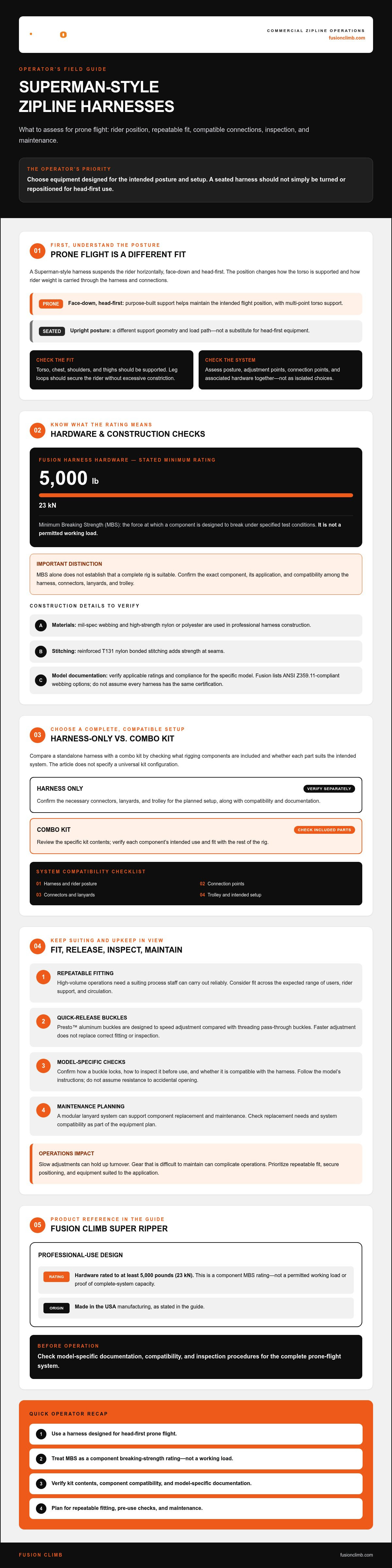
A Superman style zipline harness is a specialized prone-flight system that suspends a rider horizontally, face-down and head-first, as they travel along a zipline. Unlike a seated setup, where the rider’s torso remains upright beneath the connection point, prone gear supports the body in a flight posture. That changes how the rider’s weight is carried and how the harness must support the torso throughout the ride.
The distinction matters when choosing and operating equipment. A harness designed for seated travel should not simply be turned or repositioned for head-first use. Its support geometry, adjustment points, and connections need to suit the intended posture. The basic mechanics of ziplining are outlined in this Zip-line overview, while prone flight adds specific equipment and positioning requirements.
These systems are used in commercial adventure parks, canopy tours, and stunt rigging where the experience calls for a controlled horizontal position. The equipment must be designed for the application, compatible with the rest of the system, and supported by inspection and operating practices suited to its use.
Prone Flight vs. Traditional Seat Harnesses
Seated riders travel upright, while prone riders face the direction of travel in a horizontal position. That changes how the body is supported. A prone system needs multi-point torso support to help maintain the intended position. A traditional seat harness is designed around a different posture and load path, so it should not be adapted for head-first use.
The Evolution of Aerial Adventure Posture
Early recreational zipline experiences often centered on seated travel. Purpose-built flight systems add a prone position, which can support higher-speed ride designs when the full course and equipment are engineered for them. The harness is only one part of the setup. Connections must work together, and professional climbing carabiners must be selected and used as part of a compatible rigging system.
For operators, posture is a design decision, not just a visual detail. Evaluate the rider position, harness support, connection points, and associated hardware as one system. A distinctive flight experience depends on equipment designed for the task and consistent checks and procedures.
Engineering and Safety Standards of Prone Flight Gear
Prone flight gear must support the rider and connect reliably with the rest of the zipline system. Start by checking materials, stitching, hardware ratings, fit, and documentation for the specific model. Mil-spec webbing and high-strength nylon or polyester are used in professional harness construction. Reinforced T131 nylon bonded stitching adds strength at seams, where repeated loading and movement make construction quality important.
A component’s Minimum Breaking Strength (MBS) is the force at which it is designed to break under specified test conditions. It is not a permitted working load. Fusion harness hardware is stated to have a rating of at least 5,000 pounds (23 kN). Check product documentation for the exact component and its application. MBS alone does not establish that a complete rig is suitable. The harness, connectors, lanyards, and trolley must be compatible as a system.
Verify the standards and claims that apply to each model rather than assuming every harness carries the same certification. Fusion lists ANSI Z359.11-compliant webbing options, but operators should confirm model-specific compliance details. For broader industry guidance, consult the ACCT safety standards and review the documentation relevant to your operation.
Ergonomic Torso and Chest Support
Fit matters throughout the ride. Wide, well-positioned padding can help reduce pressure points or “harness bite,” while support across the chest, shoulders, and thighs helps limit concentrated loading. Leg loops should hold the rider securely without excessive constriction. Check fit and circulation considerations across the expected range of users. A secure, comfortable position supports rider confidence and helps maintain posture.
Quick-Release Hardware and Presto™ Buckles
Presto™ aluminum quick-release buckles are designed to speed harness adjustment compared with threading pass-through buckles. Faster adjustment can support a smoother suiting process, but it does not replace correct fitting or inspection. Confirm how each buckle locks, how to check it before use, and whether it is compatible with the harness design. Do not assume a closure is resistant to accidental opening without model-specific instructions.
For Fusion harnesses, the stated MBS rating for aluminum hardware is at least 5,000 pounds (23 kN), the force at which the component is rated to break under specified test conditions. Treat this as a component specification, not a working-load limit or proof of system capacity. Review Fusion Climb’s Superman style harness information alongside the manufacturer’s instructions for model-specific details.
Harness Only vs. Combo Kits: Choosing Your Rigging
Choose between a standalone prone harness and a combo kit by checking what your current system already includes. A harness-only purchase may suit an operation replacing a compatible harness while retaining inspected, approved rigging. A combo kit may be practical when assembling a setup because it can include a harness, rigging plate, lanyards, and carabiners. Check the product description for the exact contents instead of assuming every kit is identical.
Compatibility is critical. Match the harness and connection hardware to the pulley, tether length, rider position, and system design. A commercial zipline pulley must be paired with a tether of the correct length for the approved configuration. An improvised combination can affect clearance and rider posture. Follow manufacturer instructions and have the complete setup evaluated for its intended use.
The Role of the Rigging Plate in Prone Flight
A rigging plate organizes connection points between the harness and the rest of the system. In a prone configuration, the arrangement can help distribute support and keep the rider aligned when the system is designed for that purpose. Some systems use two attachment points, while others use four. Neither count is automatically safer. Use the arrangement specified for the harness and system. A plate may also help organize lanyards, but it does not guarantee they will not twist during a descent.
Interchangeable Lanyard and Tether Systems
Modular zipline lanyards and tethers can allow a worn component to be replaced without replacing an entire compatible assembly. Adjustable tethers may allow operators to tune the flight angle, but only within the system’s designed configuration and manufacturer guidance. Do not change tether length to alter posture without verifying the effects on clearance and compatibility.
Include tether checks in the park’s inspection process. Before use, examine:
- Webbing for cuts, fraying, abrasion, discoloration, or other visible damage.
- Stitching for broken, pulled, or worn threads.
- Connectors and attachment points for damage, deformation, or insecure closure.
- Adjustment hardware for proper function and secure retention.
- Identification and inspection records, following the manufacturer’s criteria for removal from service.
Choose a harness-only option when existing components are confirmed compatible and serviceable. Consider a combo kit when you need associated rigging, then verify every included part against your system requirements before operation.
Commercial ROI: Throughput and Maintenance for Operators
A Superman style zipline harness can affect more than the ride itself. Quick-adjust features such as Fusion’s Presto™ buckles can help staff fit guests efficiently, while a distinctive prone-flight experience may support premium positioning. Neither faster loading nor higher revenue is automatic. Results depend on the harness, staff procedures, course setup, and guest demand. Measure suiting time and identify bottlenecks at your launch area before projecting an operational return.
Standardized procedures can help teams work consistently. If a harness uses four adjustment points, train staff to follow the manufacturer’s sequence, secure each adjustment, check rider positioning, and complete the required final connection check. Use a pre-suiting area to organize guests and equipment before they reach the launch point. Color-coded straps or labels may help staff identify adjustment zones when approved for the harness, but they never replace hands-on checks.
Operational Efficiency and Staff Training
Build training around demonstration, supervised practice, and a repeatable fit check. Staff should know the correct adjustment range, how to recognize poor fit, and when to stop and seek a qualified supervisor. Do not assume a “one-size-fits-most” design will fit every guest or eliminate size-inventory needs. Confirm the manufacturer’s size range, then stock harnesses to suit the park’s users and operating procedures.
Modular Maintenance and Gear Longevity
With modular gear, a worn lanyard may be replaced without retiring the entire harness if the manufacturer permits it and the replacement is compatible. This can help operators manage maintenance resources, but it does not justify keeping damaged equipment in service. Set inspection and recordkeeping procedures based on manufacturer instructions, including a visual check before use and documented inspections at the intervals required for your operation.
Inspect webbing for cuts, fraying, abrasion, contamination, or other damage. Check stitching, buckles, and connection points for wear or faulty operation. Remove questionable gear from use until it is assessed. There is no single reliable service-life figure for mil-spec nylon webbing across outdoor environments, so follow the manufacturer’s retirement criteria and account for exposure, use, and inspection findings.
Compare harness designs, adjustment features, and replaceable components against your park’s loading and maintenance needs by reviewing Fusion Climb’s Superman style harnesses.
Evaluating Fusion Climb’s Superman Gear
Commercial prone-flight equipment needs to balance rider support, efficient adjustment, and components suited to repeated operational use. Fusion Climb manufactures specialized Superman style harnesses for head-first flight, including the Super Ripper. Its design features include mil-spec webbing, Presto™ aluminum quick-release buckles, and modular lanyard systems. These are concrete details operators can compare when assessing equipment.
Fusion Climb identifies its manufacturing as Made in the USA and offers webbing options compliant with ANSI Z359.11. Compliance details can vary by model and component, so verify current documentation for the exact harness configuration under consideration. The company states that its hardware is rated to at least 5,000 pounds (23 kN). Check the rating and intended application of each load-bearing component, and confirm that the complete setup is compatible.
The Super Ripper Advantage
The Super Ripper is built for commercial head-first prone flight. Its mil-spec webbing supports a purpose-designed harness structure, Presto™ buckles are intended to speed adjustment, and a modular lanyard system can support component replacement where approved. Fusion emphasizes ergonomic design, but fit and comfort still need to be assessed against your riders, operating procedures, and manufacturer instructions. A particular shape or buckle feature alone does not guarantee stability or security.
Ask for model-specific information on fit, adjustment, hardware ratings, compatible connections, and applicable compliance documentation. This gives your team a practical basis for evaluating the Super Ripper alongside other Superman style zipline harness options.
Partnering with a Manufacturer
Buying from a manufacturer can help operators identify the source of product specifications and request documentation for the equipment under consideration. Fusion Climb manufactures Superman style harnesses and related categories, including lanyards and tethers, zipline pulleys, and carabiners. Confirm purchasing terms, lead times, inspection guidance, and any model-specific testing records directly. Do not infer these details from a country-of-origin statement or general product description.
Before selecting gear, compare its documented features with your course configuration and maintenance needs. Explore Fusion Climb Superman Style Harnesses to review the available harness information and determine what details to verify for your operation.
Equip Your Park for Prone Flight
A Superman style zipline harness is more than a new rider position. The setup needs to support prone-flight fit, compatible connections, and efficient checks while providing a distinctive aerial experience. As you compare options, review model-specific documentation, confirm that the harness and rigging work together, and consider how modular components may support maintenance.
Fusion Climb’s Superman style harnesses include the Super Ripper, with hardware rated to at least 23 kN (5,000 lb), mil-spec webbing, and Presto™ quick-release buckles. Fusion Climb also highlights its Made in the USA manufacturing and use by commercial zipline operators. Verify specifications and compliance details for the specific model and configuration you are considering.
Ready to assess prone-flight gear for your operation? Explore Fusion Climb’s Super Ripper and Superman Style Harness Collection, and compare the available equipment with your system requirements.
Frequently Asked Questions
Is a Superman style zipline harness safe for beginners?
It can be appropriate for beginners when the harness is designed for the course, fitted correctly, and used within the operator’s procedures. A Superman style zipline harness holds the rider in a prone position, so it needs purpose-designed support and compatible connections, not a makeshift adaptation of seated gear. Riders should follow staff instructions, and operators should check the equipment, fit, and system configuration before each ride.
What is the weight capacity for a professional prone zipline harness?
Weight capacity varies by harness model, so check the manufacturer’s specifications for the exact model and size. Do not mistake a component’s Minimum Breaking Strength for a rider weight limit. Fusion Climb states its hardware is rated to at least 5,000 pounds (23 kN), but that figure is not a working load or harness capacity. Confirm the allowed user weight and full-system limits before selecting equipment.
How do I adjust a Superman harness for different body types?
Adjust the harness according to its manufacturer instructions and the model’s intended size range. Set each strap and support point so the rider is secure and properly positioned, without loose webbing or excessive constriction. Check the fit with the rider in the intended prone posture, and confirm that buckles and connections are correctly secured. If the harness cannot be fitted as directed, do not use it for that rider.
Do I need a special pulley for prone, head-first ziplining?
Use a pulley and connection arrangement compatible with the harness and course design. Prone systems may use a distinct connection configuration to support rider position, so do not assume a pulley suitable for a seated setup is compatible. Verify the pulley, tether length, attachment points, and manufacturer guidance as a complete system. Do not modify the setup or substitute components without confirming compatibility.
Can Superman harnesses be used for traditional seated ziplines?
Only if the manufacturer explicitly identifies the specific harness as suitable for seated use and the complete system is configured for that application. Prone and seated harnesses support riders in different positions, so they are not automatically interchangeable. Check the model’s instructions, size range, attachment method, and compatible equipment. If seated use is not documented, select a harness designed for that posture instead of adapting prone gear.
What safety certifications should I look for in a prone harness?
Review the documentation for the exact harness model, not just general claims about a product category. Fusion Climb offers webbing options compliant with ANSI Z359.11; that does not mean every model or component has the same compliance status. Confirm which parts the documentation covers, along with compatible connections and use instructions. Ask the manufacturer to clarify any standard or certification claim that is not clearly stated.
How often should a commercial Superman harness be inspected?
Inspect commercial harnesses before use and follow the manufacturer’s inspection schedule and retirement criteria. For high-throughput operations, include a documented daily check as part of the opening routine, and remove equipment from service if damage or uncertain condition is found. Examine webbing, stitching, buckles, and connection points for wear or faults. Inspection records help staff track findings, maintenance, and decisions to retire gear.
What is included in a Superman zipline harness combo kit?
Contents vary by kit, so check the specific product description before purchasing. A combo kit may include the harness, lanyards or tethers, a rigging plate, and carabiners. Confirm each component is present, suitable for the intended configuration, and compatible with your pulley and course system. If you already have approved, serviceable rigging, compare the kit contents with what you need rather than assuming every kit includes identical parts.