


Equipment Options That Speed Up Rider Harnessing and Cut Labor Costs
The fastest rider changeovers start with a consistent setup, not rushed fitting. Equipment that speeds up the rider harnessing process should suit the activity, work with its other components, and be arranged so each fitting step follows the same clear sequence. This can reduce unnecessary handling while helping staff stay focused on fit and connection checks.
When harnessing takes too long, equipment is a practical place to look: extra adjustments or misplaced components can slow the next rider. But speed alone does not make a setup better. Equipment must suit the activity and support a repeatable process, while thoughtful selection can also help manage labor and material costs.
This guide explains how to assess equipment and setup choices, including fit, compatibility, staging, and the demands of your operation. You’ll also see where harnesses and connection components fit into an efficient rider system, and how to weigh faster changeovers against dependable use. The goal is a practical setup that helps your team work with control, consistency, and confidence.
Key Takeaways
- Match equipment to the ride’s harnessing steps, operating volume, and required connections before choosing an automated or manual setup.
- Assess equipment costs through the work it performs, the labor it may replace, and the materials required to keep the process running.
- Measure boarding time across the full rider sequence to identify where restraint or harnessing steps slow loading.
- Compare manual and automated systems by workload and process needs, then consider harnesses and connection components that fit the operation.
1. Equipment selection considerations
Map each rider-facing step, from collecting equipment to completing the fit and connection. Note where staff pause, repeat adjustments, or move between components. If every rider needs the same harness configuration, for example, staging compatible components in sequence can reduce unnecessary handling. Choose equipment around the ride, rider fit, operating process, and staff workflow, not automation alone.
Keep electrical wire-harness production separate from rider harnessing. Software for wire-harness design, formboard planning, cutting, and machine integration supports electrical assembly; it does not replace suitable rider equipment or a consistent fitting procedure. For rider operations, assess how harness design, connection components, and staff instructions work together. A repeatable setup helps staff spot poor fit or an incomplete connection before the ride proceeds.
Before use, inspect each harness and restraint for visible damage, wear, contamination, and parts that do not work as intended. Follow the manufacturer’s care and retirement instructions, and remove questionable equipment from use until it has been assessed under your operation’s procedures.
Automated rider restraint systems can introduce risks if a component malfunctions, a rider is positioned incorrectly, or staff rely on an indicator without confirming fit. Include a clear response to faults in the operating process, and keep staff oversight of rider position and restraint engagement.
For riders with mobility limitations or disabilities, speak directly and respectfully with the rider about fitting, then follow the ride’s established accessibility and operating procedures. Staff should assess whether the available harness and restraint can be fitted correctly, without assuming one adjustment suits every rider.
Before selecting equipment that speeds up the rider harnessing process, compare the full sequence: component access, fitting steps, connection checks, and reset between riders. A machine or automated feature helps only if it fits that sequence without adding steps elsewhere. Trial the proposed setup in the loading area, observe where staff reach for and reposition equipment, then adjust the layout to keep essential components within easy reach.
3. What is the cost of automated harnessing and restraint equipment?
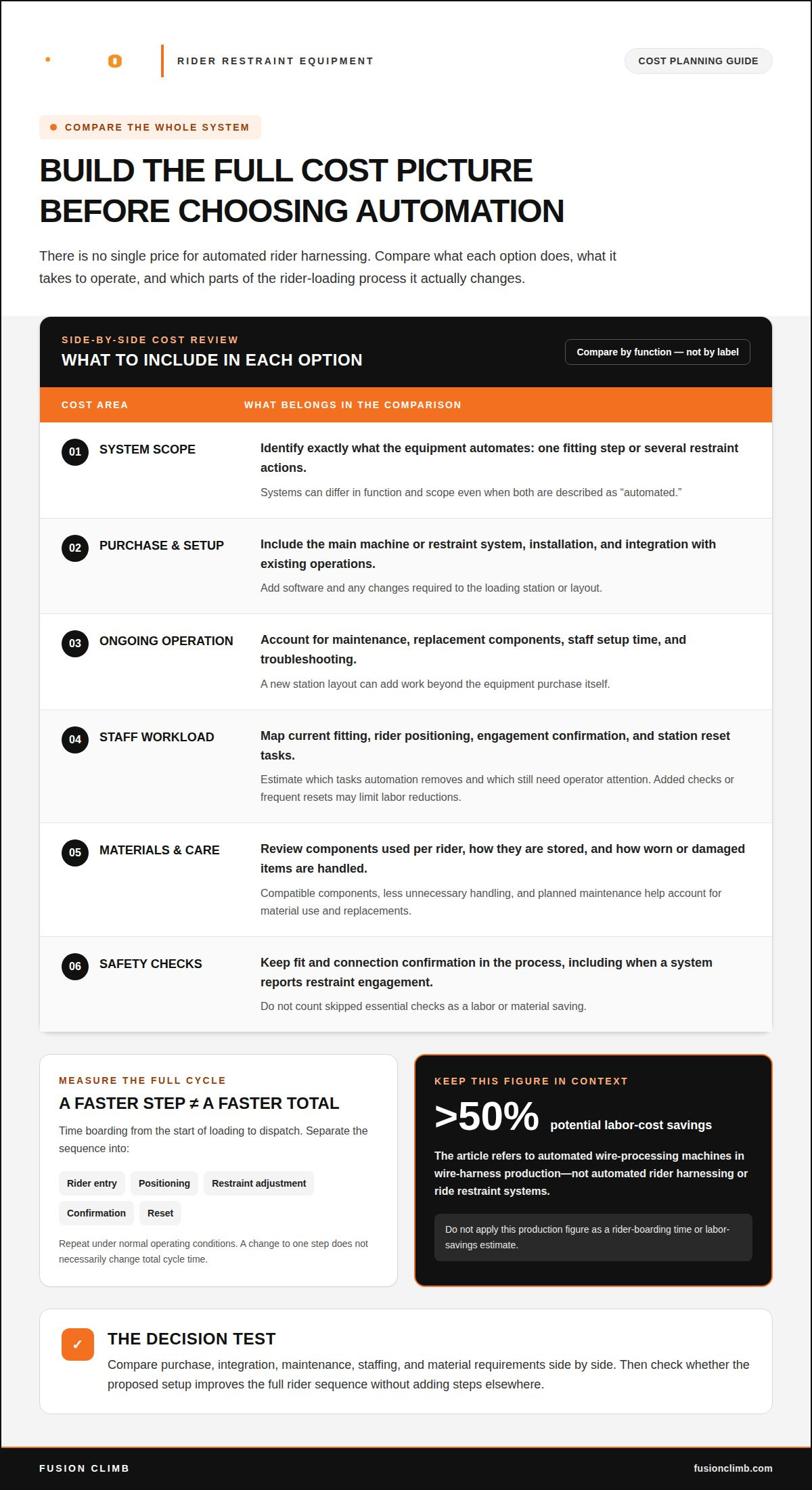
There is no single price for automated rider harnessing equipment. The investment depends on what the system automates, how it integrates with the loading area, and what supporting work it requires. A device that assists with one fitting step differs in scope from a system that handles several restraint actions. Compare systems by function, not simply by whether they are called “automated.”
Build a complete cost picture before choosing equipment. Include the main machine or restraint system, installation, integration with existing operations, software, and changes to the loading station. Account for ongoing maintenance, replacement components, and staff time for setup or troubleshooting. A system that requires a new layout, for example, can involve more than the equipment purchase.
Then compare the investment with the work the equipment is expected to change. Record how staff currently fit riders, position restraints, confirm engagement, and reset the station. Identify repeated movements or delays, then estimate which tasks automation would remove and which still need operator attention. A faster fitting step may not reduce total labor if staff must add checks or manage frequent resets.
Material costs matter, too. Review the components used for each rider, how they are stored, and how the process handles worn or damaged items. Compatible components and less unnecessary handling can support more controlled material use, while maintenance planning helps account for replacements. Keep safety checks in the comparison: labor or material savings should never come from skipping essential steps.
Use a side-by-side worksheet to compare purchase, integration, maintenance, staffing, and material requirements for each option. For operations evaluating rider gear alongside automation, harnessing equipment options can help frame the equipment side of that decision.
Cost comparisons can include upstream production tools as well as installed equipment. Automated capabilities in electrical and wiring harness engineering solutions can accelerate the creation of bills of materials and production designs. Wiring harness engineering tools can automate drawings, calculations, work instructions, and other engineering documents and outputs. Automated work-instruction generation can remove work instructions from the critical path when introducing new or changed harness designs. Automated formboard layout and bill-of-process generation can help wiring harness manufacturers start production faster and with fewer errors.
Wire harness processing equipment is used in automotive, home appliance, new energy, industrial automation, and electronic communication manufacturing. Automated wire processing machines have the potential to save more than 50% of labor costs in wire harness production.
4. How much can ride restraint systems reduce boarding time?
Boarding-time savings depend on which steps a restraint system changes. A faster buckle or adjustment may shorten one part of loading, while rider positioning, fit checks, and dispatch still take time. Measure the full boarding cycle before estimating a reduction. A change to one step does not necessarily change total cycle time.
Use a simple timed comparison. Record the time from the start of rider loading to dispatch, then divide it into rider entry, positioning, restraint adjustment, confirmation, and reset. Repeat the observation under normal operating conditions. After changing the restraint, time the same steps again. Compare like with like, using the same ride, loading sequence, and confirmation process.
If staff spend most of the loading interval adjusting restraints, for example, a design that simplifies adjustment may address the main delay. If rider entry or positioning takes longer, changing the restraint alone may have little effect on the full cycle. Note where queues form and which steps staff repeat. These observations help show whether equipment or workflow offers the better opportunity.
Include safety checks in the timing. A restraint that seems quick to secure still needs correct positioning and confirmation before dispatch. Track incomplete engagement, readjustments, and interruptions alongside elapsed time. This shows whether a faster motion actually improves loading or shifts work to later checks.
Use the results to assess equipment that speeds up the rider harnessing process in your operation. Compare the full cycle, not just the moment a restraint closes, and include reset time before the next rider. Review the timing after operational changes, such as a revised loading sequence or restraint configuration. This gives managers a practical basis for comparing options without relying on an assumed percentage that may not reflect their ride or riders.
4. How do manual and automated rider harnessing systems compare?
Manual harnessing relies on staff to position, adjust, and secure each rider’s equipment. It gives operators direct control over each fitting and lets them respond to differences in clothing, body shape, or rider movement. The process also depends on clear procedures and consistent staff practice. A well-organized manual station can work effectively when rider flow is manageable and each fitting step is easy to follow.
Automated systems perform or assist with defined actions, such as adjusting or engaging a restraint. Their main advantage is repeatability: the same operation can follow the same sequence each time. This can reduce repetitive handling, but automation does not replace staff oversight. Operators still need to observe rider position, respond to interruptions, and confirm the process has reached its intended end state.
Compare both methods across the complete loading task. With a manual setup, note where staff pause to adjust straps or retrieve components. With an automated setup, include activation, rider positioning, fault response, and reset. Then assess which method suits the ride’s layout, range of riders, and staff’s ability to manage the equipment. A system that shortens one action may add another task elsewhere.
Consider how each method handles unusual situations, too. A manual process may let staff adapt their sequence, while an automated process depends on its design and operating instructions. In either case, staff need a defined way to stop loading, address a poor fit, and resume only when the rider is positioned correctly. Compare process consistency and operator workload, not speed alone.
For a practical comparison, document the steps, handoffs, and reset routine for each option, then observe them during normal operations. If your setup uses harness-based rider equipment, explore harnessing gear options as part of your equipment review.
Fusion Climb: Full Body Harnesses
Fusion Climb offers Full Body Harnesses for operations choosing rider equipment as part of a consistent harnessing process. Consider how the harness, connection components, and staff procedures work together. The harness should suit the activity and fit the operation’s established equipment and checks.
The product range also includes Superman Style Harnesses, Zipline Pulleys, and lanyards and tethers. These products serve different equipment needs, so identify the rider setup and connection requirements before comparing options. A clear selection process helps align equipment with the loading workflow, while staff procedures remain central to fitting and inspection.
For details on Fusion Climb’s harness and connection equipment, visit fusionclimb.com.
Put Your Harnessing Plan Into Practice
Turn your equipment review into a working plan by documenting the rider’s journey from arrival to dispatch. Assign responsibility for each fitting and inspection step, then record where staff encounter delays or repeat tasks. This gives your team a practical baseline for evaluating changes and refining the process as operating needs evolve.
Selecting equipment that speeds up the rider harnessing process is only one part of an effective operation. Clear procedures, thoughtful equipment placement, and consistent staff attention help turn a suitable setup into smoother daily work. Focus on a process that supports operational flow and responsible rider handling.
For a next step, discuss how harnessing equipment can fit your operation’s needs. Contact Fusion Climb to start the conversation and move your equipment planning forward with confidence.
Frequently Asked Questions
What equipment speeds up harnessing riders at amusement parks?
For harness-based attractions, arrange rider harnesses and compatible connection components in the order staff need them. A clearly organized fitting station can reduce time spent retrieving or sorting gear between riders. For attractions with built-in restraints, the ride’s restraint system and operating procedure determine the loading sequence. Prioritize correct fit and engagement, not speed alone.
What equipment helps speed up harnessing on zip lines, ropes courses, and adventure rides?
Zipline and ropes-course operations can use rider harnesses, lanyards or tethers, carabiners, and zipline pulleys suited to their equipment setup. For example, placing the harness and required connection components together at the staging point can streamline preparation. For those managing mountain and outdoor activities, specialist retailers like Avalanche Pro Shop highlight the importance of dependable, high-performance equipment suited to alpine environments. Select equipment that works as a system for the activity, and follow its operating instructions during fitting and connection.