


Choosing the Best Zipline Anchor Carabiner: A 2026 Professional Buying Guide
In high-tension aerial rigging, your zipline anchor carabiner isn't just a piece of hardware; it's the single point where physics meets professional liability. You likely understand the weight of that responsibility every time you inspect a terminal connection. It's common to feel caught between the lightweight versatility of aluminum and the rugged, high-cycle durability of steel. Managing complex anchor points with multiple lines often leads to cluttered rigging that invites human error.
This guide empowers you to master the technical requirements of aerial rigging to select the most reliable, high-strength connectors for your system. You'll learn to identify specialized hardware that meets or exceeds 36kN strength requirements. We'll examine how to streamline your setup using precision-machined anchor plates and swivels to ensure 100% compliance with industry safety standards. From gate locking mechanisms to metallurgical fatigue, we provide the technical assurance you need to build a redundant, stable system that protects every rider.
Key Takeaways
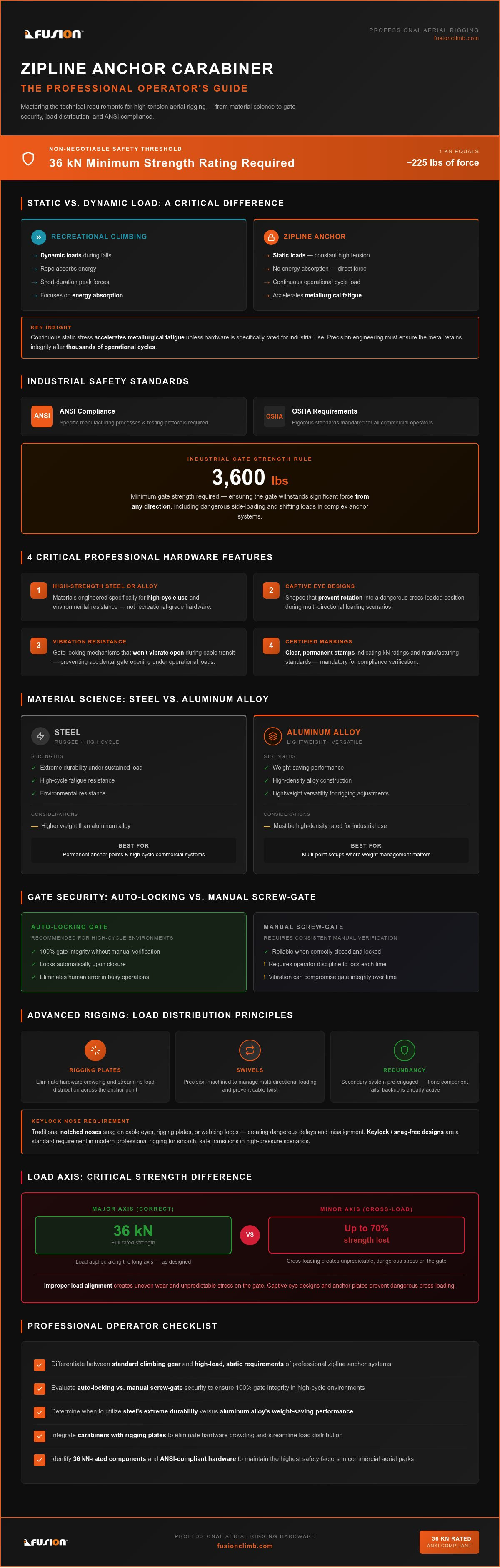
- Differentiate between standard climbing gear and the high-load, static requirements of professional zipline anchor systems.
- Evaluate auto-locking versus manual screw-gate security to ensure 100% gate integrity in high-cycle environments.
- Determine when to utilize the extreme durability of steel connectors versus the weight-saving performance of high-density aluminum alloys.
- Learn how to integrate a specialized zipline anchor carabiner with rigging plates to eliminate hardware crowding and streamline load distribution.
- Identify 36kN-rated components and ANSI-compliant hardware to maintain the highest safety factors in commercial aerial parks.
Understanding the Critical Role of Carabiners in Zipline Anchor Systems
A zipline anchor carabiner functions as a critical structural connector within a high-tension system. Unlike recreational gear intended for short-duration peaks, these connectors must withstand the relentless forces of static rigging. In commercial environments, the anchor system is the foundation of rider safety. It requires hardware that can manage constant tension, multi-directional loading, and the mechanical vibrations inherent in cable travel. Selecting the right hardware ensures the system remains stable under the weight of thousands of riders over a season.
Standard lead climbing gear focuses on energy absorption during a fall. Zipline anchors operate under a different set of physics. They demand significantly higher safety factors because the system remains under load for extended periods. Choosing a high-quality zipline anchor carabiner requires an understanding of metallurgy and load paths. Load distribution is equally vital when connecting trolleys to harnesses; improper alignment creates uneven wear and unpredictable stress on the gate. Professional operators rely on these connectors to facilitate redundancy. By using high-strength carabiners in conjunction with rigging plates, you ensure that if one component fails, the secondary system is already engaged. This clean organization prevents hardware crowding and ensures that load distribution remains balanced across the entire anchor point.
Static vs. Dynamic Load Demands
Zipline anchors face unique mechanical challenges. In traditional climbing, a carabiner experiences dynamic loads during a fall, which the rope partially absorbs. Zipline systems are largely static; they maintain constant, high-level tension throughout the entire operational cycle. This continuous stress accelerates metallurgical fatigue if the hardware isn't specifically rated for industrial use. Precision engineering is required to ensure the metal retains its integrity after thousands of cycles. For this reason, high-strength ratings are non-negotiable for anchor points. One KiloNewton (kN) is the standard unit of force for safety hardware, representing approximately 225 pounds of force.
The Necessity of Industrial Safety Standards
Commercial operators must adhere to rigorous ANSI and OSHA requirements to maintain a safe environment. These standards dictate specific manufacturing processes and testing protocols that separate professional climbing carabiners from their recreational counterparts. A key distinction in industrial rigging is the "3,600 lb gate strength" rule. This requirement ensures that the gate can withstand significant force from any direction, which is vital in complex anchor systems where side-loading or shifting loads might occur. Understanding various carabiner types and safety standards helps riggers choose connectors that meet these high-stakes demands.
Professional zipline anchors prioritize specific features to maintain integrity:
- High-strength steel or alloy: Materials designed for high-cycle use and environmental resistance.
- Captive eye designs: Shapes that prevent the carabiner from rotating into a dangerous cross-loaded position.
- Vibration resistance: Gate locking mechanisms that won't vibrate open during cable transit.
- Certified markings: Clear, permanent stamps indicating kN ratings and manufacturing standards.
Industrial-grade hardware provides the technical assurance needed for high-cycle adventure parks where equipment failure is not an option.
Key Selection Criteria for Professional Zipline Connectors
Rigging a commercial line requires hardware that eliminates guesswork. A professional zipline anchor carabiner must provide absolute gate security while allowing for rapid, snag-free adjustments. While recreational users might prioritize weight, professional operators look for oversized baskets and high-strength gates that can handle the complexity of multi-point anchors. These larger frames allow for better load distribution when multiple lanyards or tethers are attached to a single point, preventing the crowding that often leads to dangerous cross-loading.
Keylock noses are a standard requirement in modern rigging. Traditional notched noses often catch on cable eyes, rigging plates, or webbing loops, creating dangerous delays and potential misalignment. Snag-free designs ensure a smooth transition during high-pressure rigging scenarios. Additionally, understanding major axis versus minor axis strength is vital. Most connectors lose up to 70% of their rated strength when loaded across the gate; oversized carabiners help maintain proper alignment by providing enough space for hardware to sit correctly on the spine. Operators must ensure all connectors meet OSHA fall protection and connector hardware standards to maintain site compliance.
Gate Locking Mechanisms: Triple-Lock vs. Double-Lock
Triple-action auto-locking carabiners represent the gold standard for zipline safety. These require three distinct movements to open: lift, turn, and pull. This complexity prevents accidental opening caused by rope drag, equipment rubbing, or rider contact. While double-lock gates are common in some industries, they lack the extra layer of security needed in the high-vibration environment of a zipline anchor.
Properly managing these connections often involves specialized hardware, such as comparing the security of the Presto Dual Jaw Swivel system connections. These systems ensure that rotational forces don't compromise the locking mechanism or cause the carabiner to shift into a weak orientation. Using non-locking carabiners in a critical anchor point is a fundamental safety failure that bypasses standard protocols. If you're building a new system, integrating a professional-grade carabiner ensures your hardware meets these industrial demands.
Decoding Strength Ratings and Markings
Professional hardware must feature clear, permanent markings to facilitate daily safety inspections. Every Fusion Climb carabiner features laser-etched ratings on the spine, detailing the minimum breaking strength (MBS) for major axis, minor axis, and open-gate scenarios. For rigging applications, look for ratings between 30kN and 50kN to ensure a sufficient safety buffer against the static and dynamic forces of the course.
A 36kN rating is essential for commercial dual-track zipline pulleys to manage the peak forces generated during high-speed arrivals and heavy load transfers. These specific markings provide the technical assurance required for long-term durability. By choosing hardware with high-visibility ratings, you streamline the inspection process and ensure that every link in your anchor system is capable of withstanding the rigors of commercial operation.
Material Science: Steel vs. Aluminum Alloy for Rigging
Choosing the right metallurgical composition for your rigging is a decision based on environment, frequency of use, and mechanical compatibility. While aluminum is popular for its lightweight properties, the abrasive nature of galvanized steel cable will quickly compromise an aluminum surface. This leads to structural weakness over time. Because commercial zipline pulleys are often constructed from hardened steel or high-density alloys, matching your connectors to these materials is essential for system longevity. Selecting a steel zipline anchor carabiner for a permanent terminal point ensures the system remains resilient against environmental degradation and physical wear.
Environmental factors like salt air, high humidity, and extreme temperature fluctuations dictate material choice. Steel offers superior longevity in permanent outdoor installations, whereas aluminum serves better in mobile or rescue applications. Operators working on public lands must often adhere to U.S. Forest Service recreational rigging and anchor guidelines, which specify material durability for fixed installations. Understanding how these metals interact under load prevents premature hardware retirement and maintains a high safety margin for your course.
Steel Carabiners for Permanent and High-Wear Rigging
Steel is the industry workhorse for permanent rigging. It's the preferred material for anchor plates and connectors that remain rigged year-round because it doesn't suffer from the same surface-wear issues as softer alloys. Galvanized or stainless steel provides a rugged defense against corrosion and the constant friction of cable eyes. When managing heavy-duty loads, steel shackles and swivels offer a level of industrial reliability that aluminum simply cannot match. They provide the mass and density required to absorb the vibrations of a high-speed zipline without developing micro-fractures over thousands of cycles.
Aluminum Alloy for High-Efficiency Movement
High-strength aluminum alloys excel in weight-sensitive aerial performance. Rigging plates like the Fusion 4-Hole model utilize precision-machined aluminum to reduce the overall weight of the anchor system without sacrificing critical strength. These components feature rounded, smooth edges that protect soft goods like webbing and rope from abrasion. In rescue or rope-access scenarios where portability is vital, aluminum allows technicians to move faster and with less fatigue. The key is balancing this portability with the known limits of the metal; aluminum is best reserved for components that don't come into direct contact with steel cables or high-friction points.
- Steel: Best for permanent anchors, high-cycle wear, and cable-to-connector interfaces.
- Aluminum: Ideal for portable rigging, rescue kits, and soft-good protection.
- Corrosion Resistance: Always choose stainless or galvanized finishes for coastal environments.
- System Matching: Ensure the hardness of your carabiner matches the hardness of the anchor plate to prevent "gouging."
Advanced Rigging: Integrating Carabiners with Anchor Devices
Rigging for commercial ziplines requires more than just high-strength components; it demands a systematic approach to organization. A single zipline anchor carabiner often serves as the primary link between a cable termination and the rest of the rigging assembly. In complex setups, multiple lines, rescue backups, and secondary tethers often compete for space on a single anchor point. This crowding creates dangerous leverage and potential cross-loading. Advanced rigging utilizes specialized anchor devices to distribute these loads cleanly across the structure. Systems like the Super Ripper ensure that load distribution remains balanced, preventing hardware from clashing or binding during high-speed arrivals.
Managing Multi-Point Connections with Rigging Plates
Rigging plates are the foundation of organized aerial systems. Comparing the Fusion 4-Hole and the Big Foot 5-Hole aluminum rigging plates reveals how different geometries serve specific needs. The 4-hole model provides a compact solution for standard redundant anchors, while the Big Foot 5-Hole offers oversized connection points for more complex, multi-operator platforms. These plates provide dedicated holes for each zipline anchor carabiner, ensuring that connectors never interfere with one another. This level of organization is standard for ropes course safety equipment, where visual inspections must be quick and unambiguous. By separating each link, you eliminate the risk of a gate being forced open by an adjacent piece of hardware.
Rotational Devices for Dynamic Anchor Stability
Static anchors often experience dynamic rotational forces as a rider moves down the line. Without a swivel, these forces translate into twisted lanyards and tangled tethers, which can compromise the user's position or the hardware's alignment. The Presto Aluminum Alloy 36kN Dual Jaw Swivel provides the necessary 360° rotation to keep the system neutral. High-quality swivels utilize sealed stainless steel ball bearings to ensure smooth, consistent performance even under the heavy tension of a commercial zipline. Integrating these swivels with zipline lanyards and tethers creates a more stable experience for the rider and reduces wear on the anchor connectors. This setup allows the hardware to track the load path perfectly, maintaining the strength of the major axis throughout the ride.
To build a system that meets these rigorous standards, explore our complete collection of high-strength anchor devices and rigging hardware.
Essential Fusion Climb Anchor Solutions for Professional Operators
Precision engineering defines the Fusion Climb lineup. A zipline anchor carabiner is only as effective as the system supporting it. Operators requiring technical assurance often turn to the Super Ripper Zipline Pulley Anchor System. This complete rigging solution utilizes color-coded connectors and ANSI-rated D-rings to ensure load stability across the entire course. It simplifies the inspection process for park staff while providing a redundant, stable foundation for every rider. By emphasizing "Made in USA" reliability, these systems offer a level of craftsmanship that industrial operators depend on for high-cycle safety.
For permanent installations involving galvanized eye-and-jaw hardware, the Presto Black Shackle Swivel offers a rugged, low-maintenance connection. It eliminates the need for multiple intermediate links; this reduces the overall complexity of the anchor point. Similarly, the 2.7" Aluminum Rappel & Rigging Ring serves as a versatile, high-strength component for multi-directional loading. When configuring prone flight setups, selecting a precision-engineered adjustable zipline spreader bar ensures the rider stays balanced throughout the transit. This prevents the pulley from tilting under load and maintains a consistent center of gravity.
Standout Swivels and Connectors
The Presto Delta Triangle Swing Swivel is designed specifically for high-performance aerial applications. Its geometry allows for clean alignment with wide webbing or multiple carabiner attachments. For more compact climbing setups, the Oval Swing Swivel provides a streamlined profile that fits into tight rigging spaces without sacrificing strength. Both models benefit from the same high-standard manufacturing found in the 36kN Dual Jaw Swivel. This device provides essential tangle-free rope management for complex rescue or adventure park systems, ensuring that rotational forces never compromise the integrity of your zipline anchor carabiner connections.
Specialized Anchor Straps and Lanyards
Stable anchor points often require high-strength soft goods to bridge the gap between the structure and the hardware. Comparing 1.75" webbing tethers with girth hitch loops reveals how these components provide a secure, non-slip interface for anchor stability. Adjustable nylon anchor straps with integrated D-Rings offer even more flexibility for custom rigging in varied environments. These straps are tested to maintain their integrity under constant tension. They are a reliable choice for professional operators who value substance and meticulous manufacturing over marketing fluff.
Ready to upgrade your rigging? Explore the full Fusion Climb Anchor Device collection here.
Building a Foundation of Technical Assurance
Elevating your rigging standards starts with understanding the mechanical limits of your hardware. You've learned that a professional zipline anchor carabiner must provide more than just a simple link; it must offer absolute gate integrity and industrial-grade 36kN strength. By matching high-density steel to permanent installations and utilizing precision-machined aluminum for portable rigging, you eliminate the guesswork that leads to premature equipment fatigue. These technical choices define the difference between a standard setup and a professional-grade system.
Commercial adventure parks and rescue teams nationwide rely on ANSI and OSHA compliant hardware to manage complex load paths. Clean organization through rigging plates and swivels ensures your system remains redundant and stable under the most demanding conditions. It's about more than just hardware; it's about the sobering sense of security that comes from meticulous manufacturing. Shop Professional Anchor Devices and Connectors to secure your system with rugged, industrial reliability. Take the lead in aerial safety and prepare your course for a season of high-performance adventure.
Frequently Asked Questions
What is the minimum kN rating for a zipline anchor carabiner?
Commercial operations typically require a zipline anchor carabiner with a minimum rating of 36kN for primary load-bearing points. This high-strength threshold provides a significant safety margin against the static tension of the line and dynamic forces during rider arrivals. Using hardware rated below this level in high-cycle environments increases the risk of metallurgical fatigue. Always verify the laser-etched MBS (Minimum Breaking Strength) on the spine before installation to ensure site safety.
Can I use aluminum carabiners for permanent outdoor zipline anchors?
Aluminum is generally not recommended for permanent outdoor installations due to its vulnerability to surface wear and environmental degradation. While high-strength aluminum alloys are excellent for rescue or portable kits, they lack the rugged durability of steel when in direct contact with galvanized cable. Steel connectors provide superior resistance to friction and corrosion in fixed terminal points. For long-term reliability in varying weather conditions, galvanized or stainless steel remains the industrial standard.
What is the difference between a double-locking and triple-locking carabiner?
A triple-locking carabiner requires three distinct actions, typically lifting, rotating, and pulling, to open the gate. A double-locking model only requires two movements. In the high-vibration environment of a zipline, triple-action mechanisms are the gold standard because they significantly reduce the chance of accidental gate opening. This added layer of security is vital for critical anchor points where equipment might rub against the structure or the rider's harness during transit.
Why do I need a rigging plate for my zipline anchor?
Rigging plates are essential for maintaining clean organization and preventing hardware crowding at a single anchor point. By providing dedicated connection holes, these plates ensure that each zipline anchor carabiner sits correctly on its major axis without interfering with other links. This organization eliminates dangerous leverage and simplifies daily safety inspections. Using a multi-hole plate helps distribute loads evenly across the entire redundant system, ensuring no single connector is compromised by adjacent hardware.
How often should I inspect my anchor carabiners for wear?
You should perform a visual inspection of all anchor hardware before every operational day. Professional operators also conduct thorough periodic inspections every six to twelve months, depending on the cycle volume and environmental exposure. Look for signs of gate sluggishness, deep grooves from cable friction, or any hairline fractures in the metal. Hardware showing more than 10% material reduction or any mechanical failure must be retired immediately to maintain professional safety standards.
Is an ANSI-rated carabiner required for commercial ziplines?
Yes, commercial zipline operations must prioritize ANSI-rated hardware to ensure compliance with industrial safety standards. Specifically, ANSI Z359.12 requires a gate strength of 3,600 pounds, which is significantly higher than standard recreational gear. This rating ensures the connector can withstand side-loading and shifting forces common in complex rigging systems. Using certified hardware protects the operator from liability and provides the technical assurance required for high-stakes aerial adventure parks and rescue teams.
What is gate lash and how does it affect anchor safety?
Gate lash occurs when the vibration of a zipline cable causes the carabiner gate to open slightly and then snap shut. This momentary opening significantly reduces the connector's strength, as a carabiner is only rated for its full capacity when the gate is closed. High-tension auto-locking mechanisms and specialized gate designs are used to mitigate this risk. Maintaining proper tension and choosing hardware with heavy-duty springs helps prevent this dangerous phenomenon during high-speed transits.
Can I use a standard climbing swivel for a commercial zipline?
Standard climbing swivels are often insufficient for the high static loads of a commercial zipline. You should utilize industrial-grade swivels, such as the Presto 36kN Dual Jaw Swivel, which are engineered for heavy-duty rotation under constant tension. These devices feature sealed stainless steel ball bearings to ensure smooth 360-degree movement without binding. Using under-rated swivels can lead to bearing failure or tangled rigging, which compromises the safety and stability of the entire anchor system.