


Extending Commercial Zipline Gear Life Through Safe Connections
Gear longevity starts at the connection points. A 2 ft lanyard is used in most cases to connect a zipline harness to the trolley, and each riding accessory should have a dedicated carabiner. Learning how to extend the life of commercial zipline gear also means avoiding side-loaded or chain-linked carabiners, which can compromise how connections work under load.
Wear is part of operating commercial equipment, but connection choices and lanyard length matter. The right setup helps harnesses, lanyards, and carabiners work together as intended without adding unnecessary strain.
This guide explains how to match harness, lanyard, and carabiner connections, why lanyard length matters, and what to consider when choosing gear for a zipline operation. You’ll find practical steps for building a compatible setup and keeping its components in service safely.
Key Takeaways
- Build compatible harness-to-trolley connections and keep accessories from sharing connection points.
- Use each manufacturer’s instructions to guide maintenance, cleaning, storage, and inspection planning.
- Make inspections part of operations, with attention to wear and changes that may affect how each component functions.
- Learn which damage or hardware changes call for removing gear from use, and how to assess harnesses, ropes, and metal components.
Harness, lanyard, and carabiner connections
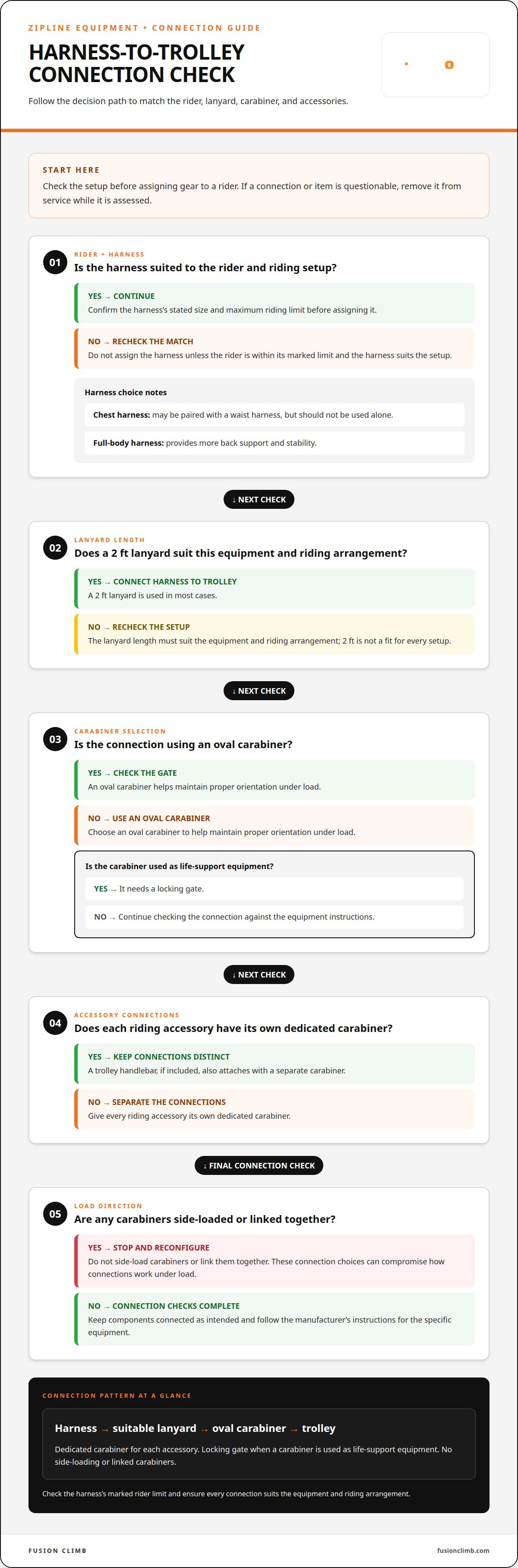
For riders high off the ground, choose a harness suited to the intended riding setup. A chest harness can be paired with a waist harness, but should not be used alone. Full-body harnesses provide more back support and stability. Check the harness’s stated size and maximum riding limit before assigning it to a rider.
Connect the harness to the trolley with a lanyard. A 2 ft lanyard is used in most cases, but the setup must suit the equipment and riding arrangement. Use an oval carabiner to help maintain proper orientation under load. A carabiner used as life-support equipment needs a locking gate.
Give each riding accessory its own dedicated carabiner. Don’t side-load carabiners or link them together. If the setup includes a trolley handlebar, attach it with a separate carabiner. Keeping connections distinct helps prevent components from bearing loads in unintended directions.
There is no single cost comparison between replacement gear, inspection, and repair. The decision depends on the component’s condition and whether the manufacturer permits a suitable repair. Assess each item before deciding.
In the United States, operators should follow applicable requirements for their location and the manufacturer’s inspection instructions. Requirements can depend on the site and equipment, so use the relevant rules alongside the product documentation.
Repair decisions depend on the manufacturer’s instructions for the specific item. Don’t alter or repair a load-bearing connection unless the manufacturer permits that work. Remove questionable gear from service while it is assessed.
For cleaning, follow the manufacturer’s instructions for each material. Separate textile components from metal hardware when their care instructions differ, then dry each item fully before storage to limit lingering moisture.
Store ropes and harnesses away from direct sunlight and damp conditions. Keep metal hardware dry and protect it from corrosive exposure. A clean, dry storage area helps reduce avoidable environmental wear.
Rider weight, stated load limits, and frequency of use all affect how hard gear works. Keep every rider within the harness’s marked limit, and record equipment use so frequently used items receive attention.
Keep inspection logs that record each item’s identifier, inspection date, findings, and any repair or retirement decision. Damaged, expired, or poorly maintained gear can fail during use. Don’t return it to service until it has been assessed.
What manufacturer inspection and maintenance schedules apply to commercial zipline gear?
Use the inspection and maintenance schedule supplied for each specific item. Harnesses, pulleys, lanyards, and carabiners may have different care instructions, so don’t apply one product’s timetable to another. Keep each item’s instructions with its equipment record. If instructions are unavailable, don’t invent an interval or maintenance procedure. Identify the product and obtain the correct manufacturer guidance before setting its schedule. This is a practical starting point for how to extend the life of commercial zipline gear.
Build the operating routine around those instructions. Record the required inspection points, maintenance tasks, and conditions that call for an additional check. For example, attend to a pulley’s moving parts as its instructions direct, and care for a harness according to its textile construction. Assign responsibility to a staff member and keep the procedure consistent across shifts. A defined routine helps operators follow the guidance instead of relying on memory.
- Identify: Match each item to its manufacturer instructions and equipment record.
- Schedule: Enter the stated inspection and maintenance tasks in the operator’s calendar.
- Perform: Follow the specified method for cleaning, adjustment, or other permitted care.
- Document: Record the date, findings, actions, and the person who completed them.
Adapt the schedule to operating conditions. Heavy use, moisture, or dirt can affect equipment condition, but these factors don’t justify unlisted repairs or changes. Follow any additional inspection directions supplied for those conditions. If a check reveals damage, remove the item from use and follow the manufacturer’s assessment instructions. Don’t return it to operation based on appearance alone.
Review the log against the item’s instructions whenever equipment is added or replaced. This keeps the correct schedule attached to the correct product, rather than relying on memory or a generic checklist. Operators planning how to extend the life of commercial zipline gear can explore zipline equipment options alongside each item’s manufacturer guidance.
How often should commercial zipline harnesses, lanyards, helmets, pulleys, and carabiners be inspected?
There isn’t one inspection interval for every zipline component. Follow the schedule in each manufacturer’s instructions, since harnesses, helmets, pulleys, and carabiners can have different inspection requirements. Create a separate schedule for each equipment type, and identify individual items in the inspection log.
Before issuing equipment to a rider, perform a visual and functional check. For a harness, examine the webbing, stitching, buckles, and adjustment points. For a helmet, look for visible shell damage and problems with its straps or fastening system. Assess each item against its manufacturer’s inspection criteria, not a quick glance alone.
Inspect lanyards along their full length, including the stitching and connection areas. Examine pulley wheels and moving parts for visible wear or impaired movement. For carabiners, check the gate and locking action, then look for damage that could affect closure or operation. Use the item’s instructions to determine whether it passes inspection.
Repeat checks at the intervals specified by the manufacturer, and record the date, findings, and inspector. Use the same item identifier each time. This helps staff spot changes across entries, such as a new tear in a harness or a pulley that no longer moves as expected.
- After unusual exposure: Inspect gear after contact with conditions that could damage it, using the manufacturer’s criteria.
- After a concern: Remove an item from use if a check reveals damage or uncertain function.
- Before return: Follow the manufacturer’s assessment process and document the decision.
Inspection frequency also depends on equipment use and the operating environment. Track use and exposure alongside inspection findings, then follow any additional schedule or procedure the manufacturer specifies. Don’t substitute a general checklist for instructions specific to a helmet, harness, lanyard, pulley, or carabiner. A consistent process makes wear easier to identify and keeps decisions traceable.
Carabiners should retain the oval shape that helps maintain proper orientation under load. Include their shape in the visual check alongside gate and locking action. Remove a carabiner from service if it no longer meets the manufacturer’s criteria, and record the finding against its item identifier.
What signs require retiring zipline ropes, harnesses, or metal hardware?
Remove any item from service if an inspection reveals damage that could affect its function. Don’t assume a damaged component is usable based on appearance alone. Record the finding, identify the item, and follow the manufacturer’s assessment or retirement instructions.
On ropes, look for cuts, unusual abrasion, exposed core material, or sections that feel inconsistent along their length. A snagged or visibly damaged area needs assessment before the rope returns to use. Record the location and description so staff can track the concern.
For harnesses and lanyards, examine the webbing, stitching, buckles, and connection points. Cuts, torn stitching, heat damage, or chemical contamination are reasons to remove an item from service. Don’t cover damage with tape or attempt an improvised repair. Follow the manufacturer’s instructions to determine whether the item can be assessed or must be retired.
- Ropes: Flag cuts, exposed core, severe abrasion, or a changed section.
- Harnesses: Remove items with damaged webbing, failed stitching, or impaired buckles.
- Metal hardware: Set aside cracked, bent, heavily corroded, or malfunctioning components.
- Carabiners: Remove units whose gates or locks don’t operate as intended.
Pay close attention to metal hardware’s moving parts and contact surfaces. A pulley that binds or a carabiner that won’t close correctly shouldn’t return to service after a quick adjustment. Document the fault and follow the manufacturer’s directions for assessment, repair, or retirement. If an item has reached a manufacturer-stated retirement date, remove it as directed.
Keep questionable equipment separate from ready-to-use stock, and mark its status clearly. This prevents a damaged rope or harness from being issued by mistake. Review the finding and decision in the equipment log. For replacement planning, explore replacement zipline gear suited to your operation.
A zipline chest harness can be combined with a waist harness but should not be used by itself. Padded zipline harnesses can provide more comfort, especially during longer periods suspended in the harness. Keep these distinctions in mind when selecting replacements. Added comfort does not remove the need to inspect each item and follow the manufacturer’s instructions if damage or wear is found.
Fusion Climb: Full Body Harnesses
Fusion Climb offers full-body harnesses for commercial zipline operations assessing harness options. Its product range also includes Superman-style harnesses, zipline pulleys, and lanyards and tethers. These components can help operators plan compatible setups, while each item’s instructions remain central to inspection and care.
Consider the equipment’s role, rider fit, connection layout, and operating conditions when reviewing a setup. Match gear to its intended use, then follow the manufacturer’s guidance for inspection, maintenance, and retirement. Replace equipment that cannot be returned to service under those instructions. Careful selection and documented upkeep work together to support responsible gear management.
Contact Fusion Climb to discuss its zipline equipment options.
Build a Gear Plan That Moves Forward
A practical plan for how to extend the life of commercial zipline gear starts before equipment reaches the course. Treat gear selection, daily operations, and replacement planning as connected decisions. When equipment needs change, review the setup against the demands of your operation instead of replacing items without considering how they work together.
Make the next step a clear equipment review. Identify where your current setup no longer fits operational needs, then determine which components need replacement or a different configuration. Fusion Climb offers full-body harnesses, Superman-style harnesses, and zipline pulleys for zipline operations. Apply the same deliberate approach as your equipment evolves, and make safe decisions part of every operating cycle.
Contact Fusion Climb about zipline gear to discuss options for your operation. A well-considered gear plan supports confident decisions and helps your team prepare for the rides ahead.
Frequently Asked Questions
How much does replacement commercial zipline gear cost compared with professional inspection or repair?
There is no single cost comparison. It depends on the component, its condition, and whether a suitable repair is permitted; assess each item before deciding.
What standards and regulations govern commercial zipline equipment inspection in the United States?
Operators should follow applicable requirements for their location and the manufacturer’s inspection instructions. Requirements can depend on the site and equipment, so use the relevant rules alongside the product documentation.