



Comfortable Work Positioning Harness Fit and Attachment Points
A harness that feels comfortable but fits incorrectly isn’t ready for work. A comfortable work positioning harness must fit securely and have attachment points suited to the task. Fall-arrest points connect to a system designed to stop a fall, while lateral positioning points support a stable work position. A full-body harness distributes fall-arrest forces across the shoulders, upper thighs, chest, and pelvis.
Choosing a harness means looking beyond padding and strap adjustment. A secure fit helps keep the harness in place, and the attachment point matters because work positioning and fall arrest serve different purposes.
This guide explains how a full-body harness works, how to adjust its chest, shoulder, and leg straps, and what its attachment points are designed to do. You’ll also learn what to consider when choosing a climbing-position harness, how to match equipment to the work, and where positioning ends and fall protection begins.
Key Takeaways
- Understand how a full-body harness distributes fall-arrest forces and why its attachment points have distinct purposes.
- Adjust the chest, shoulder and leg loops so the harness fits securely, and use the attachment point designed for the task.
- For climbing-position work, learn how attachment placement and harness sizing affect a stable, suitable fit.
- Keep work positioning separate from fall arrest: positioning supports a work posture, while fall-arrest equipment is designed to stop a fall.
What is a Full-Body Harness and How Does It Work?
A full-body harness supports the wearer with connected webbing and designated attachment points. Depending on the system, it may position a worker, restrain access to a hazard, or arrest a fall.
Work Positioning and Fall-Arrest Uses
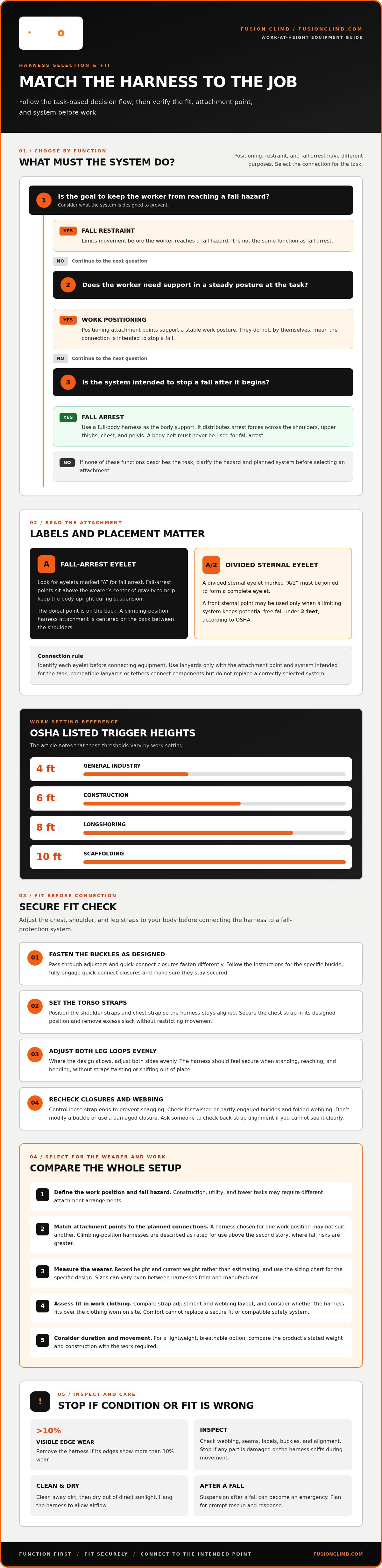
Work positioning supports a worker at a task location; fall arrest stops a fall after it begins. The distinction matters when selecting the system and attachment. In the United States, the Occupational Safety and Health Administration (OSHA) lists a 6-foot trigger height for construction, a 4-foot trigger height for general industry, an 8-foot trigger height for longshoring, and a 10-foot trigger height for scaffolding. These thresholds vary by work setting.
There’s no single cost for a quality work positioning harness. The design and components needed for the task affect the choice.
Attachment-Point Placement and Eyelet Labels
Fall-arrest attachment points sit above the wearer’s center of gravity to help keep the body upright during suspension. The dorsal point is on the back; a front sternal point may be used only when a limiting system keeps potential free fall under 2 feet, according to the Occupational Safety and Health Administration (OSHA). Look for eyelets marked “A” for fall arrest. A divided sternal eyelet marked “A/2” must be joined to form a complete eyelet.
Fall Arrest, Restraint, and Harness Requirements
Fall restraint limits movement before a worker reaches a fall hazard; fall arrest is designed to stop a fall. A full-body harness distributes arrest forces across the shoulders, upper thighs, chest, and pelvis. It is the appropriate body support for fall arrest; a body belt must never be used for that purpose. Use lanyards only with the attachment point and system intended for the task. Compatible lanyards or tethers connect components, but they don’t replace a correctly selected system.
Work Positioning Versus Fall-Arrest Harnesses
Positioning attachment points support a steady work posture, while fall-arrest points connect to equipment that stops a fall. Some harnesses combine functions, so identify each eyelet before connecting equipment. Inspect webbing and seams, remove a harness if its edges show more than 10% wear, clean away dirt, and dry it out of direct sunlight. Hang it for airflow. Suspension after a fall can become an emergency, so plan prompt rescue and response.
Harness adjustment and attachment points
A secure fit depends on adjusting the chest, shoulder, and leg straps to your body. Adjust each strap before connecting the harness to a fall-protection system.
Buckle Types and Adjustment
Harness buckles may use pass-through adjusters or quick-connect closures, and each type fastens differently. Follow the instructions for the specific buckle rather than assuming all mechanisms work alike. With pass-through adjusters, thread the webbing as directed, then remove slack. With quick-connect buckles, fully engage the closure and check that it stays secured. Keep loose strap ends controlled to prevent snagging during movement.
Adjust both sides evenly where the design allows, then recheck each closure during your pre-use inspection. A twisted or partly engaged buckle, or folded webbing, can interfere with fit. Don’t modify a buckle or use a closure that shows damage.
Torso Fit and Adjustment
Torso adjustment positions the shoulder straps and chest strap so the harness stays aligned while you move. EN 361 fall-arrest harnesses have adjustable chest, shoulder, and leg loops. Put the harness on according to its instructions, then adjust the shoulder straps so the body support sits correctly. Secure the chest strap in its designed position, and remove excess slack without restricting movement.
Next, adjust the leg loops evenly. The harness should feel secure when you stand, reach, and bend, without straps twisting or shifting out of place. If you can’t see the back strap clearly, ask someone to check its alignment.
Before work, identify the attachment point intended for the task. A climbing-position harness attachment is centered on the back between the shoulders. Positioning rings and fall-arrest points serve different purposes, so connect only to the point specified for your system. Check labels and webbing during inspection, and stop if any part is damaged or the harness shifts during movement.
For a practical reference when comparing harness fit and attachment options, review harness and attachment options alongside the manufacturer’s fitting instructions.
Choosing full-body climbing-position harnesses
Match the harness to the work, fall-protection system, and wearer’s measurements. Construction, utility, and tower tasks may require different attachment arrangements.
Harnesses for Construction, Utility, and Tower Work
A suitable harness fits the worker, supports the task, and connects properly to the planned system. A harness selected for one work position may not suit another. Climbing-position harnesses are rated for use above the second story, where fall risks are greater.
For construction, utility, or tower work, first identify the work position and fall hazard. Then compare the harness attachment points with the connections the task requires. Measure each worker’s height and record their current weight rather than estimating. Use the sizing chart for the specific design, because sizes can vary even between harnesses from one manufacturer.
Lightweight and Breathable Harness Options
A lightweight, breathable option is one whose stated weight and construction suit the duration and movement the work requires. Comfort matters, but it cannot replace a secure fit or compatible safety system. Compare strap adjustment and webbing layout, then assess how the harness fits over the clothing worn on site.
There isn’t one best lightweight harness for every worker or job. Review the product’s stated weight and sizing information, then compare its adjustment range with the wearer’s measurements. Check that the shoulder and leg straps stay in place during reaching and climbing. A comfortable work positioning harness should support the intended posture without shifting or restricting movement.
Before choosing a model, inspect its labels and attachment layout, then match them to the task. For example, comfort and low weight alone aren’t enough for tower work that requires a specific connection. The harness, lanyards, and other components must work together as a system; follow the manufacturer’s instructions for fitting and use.
What is the difference between a work positioning harness and a fall arrest harness?
A work positioning harness supports a worker in a fixed task position, while a fall-arrest harness connects to a system designed to stop a fall. Positioning components aren’t automatically suitable for fall arrest. Hip-mounted positioning D-rings connect to positioning devices, allowing workers to brace and use both hands for tasks such as rebar tying.
Work positioning limits movement near a hazard; it isn’t designed to catch a fall. A positioning belt or device is intended to keep free fall to two feet or less. For example, a worker secured to an anchor while leaning into a task can stay supported without holding the positioning strap. Positioning hooks aren’t a substitute for a separate fall-arrest connection.
Fall arrest addresses the risk of falling after access to an edge or hazard. The harness connects to a compatible lanyard, rope, or retractable system designed to arrest the fall. A positioning strap may help maintain posture, but workers still need appropriate fall-arrest protection when the task presents a fall hazard. Use each connection according to its purpose and the equipment instructions.
Some full-body harnesses combine positioning and fall-arrest attachment points. Their lateral D-rings are for positioning, while designated fall-arrest points connect to fall-arrest equipment. Before work, identify the points the task requires and confirm that each connector is attached to the corresponding point. This distinction is especially important when a job requires both hands for work and protection from falling.
Choose the system around the hazard, anchor arrangement, and required movement. A Comfortable work positioning harness can support a stable posture, but comfort alone doesn’t make a positioning setup suitable for arresting a fall. Compare full-body harness options for work that requires a harness with designated attachment points.
Fusion Climb: Full Body Harnesses
Fusion Climb offers Full Body Harnesses for those comparing options for work positioning and fall protection. Choose equipment based on the task, fit, and required attachment points, then follow the manufacturer’s instructions for use and compatible connections. Positioning and fall-arrest setups serve different purposes, so identify the system the job requires before selecting components.
For aerial recreation, Fusion Climb also offers Superman Style Harnesses and Zipline Pulleys. Its Lanyard and tether offerings provide additional components to consider when assembling compatible equipment. Match each component to its intended use rather than treating accessories as interchangeable. Start with the activity and system, not appearance alone.
Explore Fusion Climb’s equipment to compare options for your application, or contact Fusion Climb with your questions.
Make Fit Part of the Work Plan
Before the next shift, consider how the harness feels in motion, not just while standing still. Workers may need to reach, lean, climb, or hold one position for an extended period. These movements can show whether a comfortable work positioning harness stays aligned and allows the required range of motion. Assess fit with the work clothing and connection setup you’ll actually use.
Include harness selection in job planning alongside the work position and protection system. This gives workers time to understand their equipment and identify fit or compatibility issues before the task begins. Comfort matters, but it should support correct use, not distract from it.
Fusion Climb offers Full Body Harnesses, Superman Style Harnesses, and Zipline Pulleys for vertical work and aerial applications. For questions about equipment options, contact Fusion Climb for harness help. Move into the next job prepared, with equipment chosen for its demands.
Frequently Asked Questions
Which Features Help Provide a Safe and Comfortable Fit When Working?
Look for adjustable straps that fit your body and work clothing without restricting movement. Before starting, check the fit with the layers you’ll wear on site, then reach and bend as the task requires. A jacket, for example, can change how shoulder straps sit. Recheck the fit and connections if you change clothing or adjust the harness.
What features make a work positioning harness comfortable for all-day wear?
For extended wear, choose a design with an adjustment range suited to your measurements and typical work clothing. A comfortable fit should stay stable as you move through your shift; softness alone isn’t enough. Check whether straps bunch beneath a tool belt or outer layer, and whether the harness allows the movements your work requires. Don’t add unapproved padding or alter the webbing.
What OSHA and ANSI standards apply to work positioning harnesses?
OSHA fall-protection requirements depend on the work setting and the system used. ANSI Z359.11-2021 is a named harness standard; Fusion Climb’s product information identifies it among its harness certifications. A standard reference alone doesn’t establish that every harness suits every positioning task. Match the equipment’s stated certification and instructions to the intended application, and distinguish product standards from workplace requirements.
What are the best lightweight and breathable work positioning harnesses?
There isn’t one best lightweight, breathable harness for every worker or job. Compare the harness’s stated weight, sizing information, adjustable straps, and webbing layout, then check that it stays in place during movement.
Which accessories improve comfort and compatibility with a work positioning harness?
Use lanyards or tethers that are compatible with the harness and intended for the task, and connect them to the correct attachment point. Follow the manufacturer’s instructions for fitting and use.