



Professional Grade Zipline Pulley System: A Buyer’s Guide
The pulley with the highest stated rating isn’t automatically the right choice for a professional line. A Professional grade zipline pulley system must be evaluated as part of an operating setup, where cable compatibility, braking, connection hardware, rider loads, and real-world conditions all matter.
It’s easy to mistake a recreational kit for equipment suited to repeated professional use, or to assume a rating alone settles the decision. It doesn’t. The pulley is one component in a larger system, and its compatibility with the cable and connected safety hardware is central to choosing equipment for the intended use.
This guide provides a practical framework for comparing pulley design, ratings, compatibility, and operating demands. You’ll learn what to assess before choosing, how related components fit together, and why a stated rating needs context. Founded in 1998, Fusion Climb manufactures specialized safety and tactical equipment, including zipline pulleys, lanyards, tethers, and carabiners.
Key Takeaways
- Assess a Professional grade zipline pulley system against its defined operating environment, not just its intended user or headline rating.
- Compare published load ratings, cable fit, materials, bearings, and operating conditions as connected selection factors.
- Match pulley configuration to the line layout, braking approach, and expected rider throughput.
- Use a documented checklist to capture cable data, rider connections, compatibility needs, and maintenance planning before selection.
- Consider how zipline pulleys, harnesses, lanyards, tethers, and carabiners fit together as connected hardware in the setup.
What Makes a Professional Grade Zipline Pulley System Different?
“A pulley is a component; an engineered zipline system is the coordinated design of the line, rider connections, braking, and operating procedures.” That distinction matters when choosing a Professional grade zipline pulley system. Professional grade describes equipment selected for a defined operating environment and documented requirements. The label alone doesn’t prove suitability.
A backyard setup and a commercial operation can have different priorities, and neither use case makes the other invalid. Recreational users may prioritize occasional use and straightforward setup. Operators running rides repeatedly need to account for frequency of use, rider flow, line conditions, environmental exposure, maintenance, and procedures for launching and stopping riders. Speed, expected throughput, and braking approach all shape the demands on compatible equipment.
Which operating demands shape a professional pulley choice?
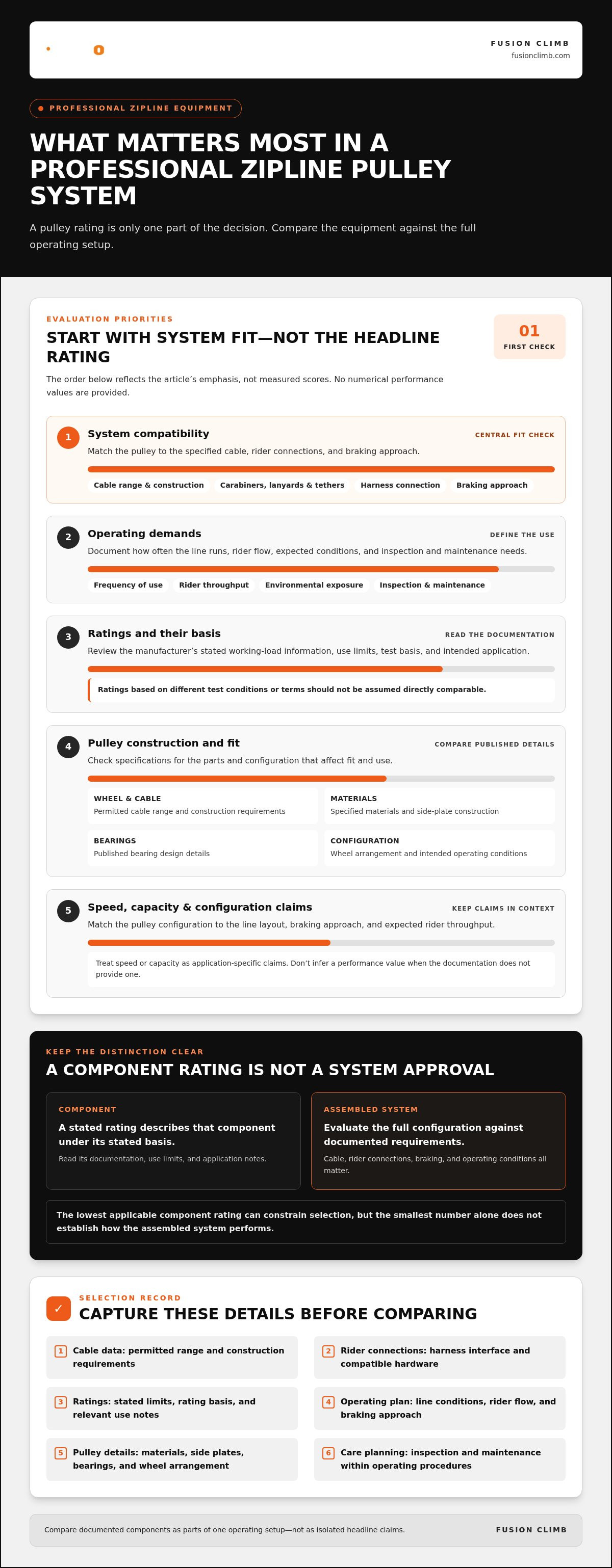
Start with the operating plan. Document how often the line will run, how riders move through it, the conditions the equipment will encounter, and how inspection and maintenance fit into operating procedures. These details provide a basis for comparing pulley requirements and help distinguish measurable needs from broad claims such as “heavy-duty” or “professional.” Those descriptions don’t explain whether a product suits a particular operation.
A clear system design gives you a working reference: what the line must accommodate, how riders connect, and how braking is managed. Without that context, a feature or rating may sound convincing while revealing little about whether the equipment fits the intended setup.
Why is a pulley only one part of the system?
The pulley travels along the cable, while the rider connection links it to the harness through compatible hardware such as carabiners, lanyards, or tethers. Braking components manage the stop. Each part has a distinct role, so compatibility across connections matters. For a foundational overview of What is a zipline?, see this broader explanation of zipline mechanics and uses.
A component’s stated rating describes that component under its stated basis. It doesn’t establish that the assembled system suits its operating conditions. Evaluate the full configuration against documented requirements instead of treating one rating as proof of system performance. For more context on commercial operating considerations, see the commercial zipline pulley engineering and operator guide.
How to Evaluate Professional Grade Zipline Pulley Specifications
Compare specifications with the documented system design, not marketing language alone. Evaluate a Professional grade zipline pulley system by considering the limits and compatibility of its components alongside the conditions in which the equipment will operate. Terms such as “high strength” or “commercial grade” aren’t substitutes for manufacturer documentation explaining what a rating means and how it was established.
Which pulley specifications should buyers compare?
Start with the manufacturer’s stated working-load information and relevant use limits. Read the accompanying notes: a rating is meaningful only in relation to its stated test basis, intended application, and system context. If two ratings use different bases, don’t assume they can be compared directly.
Then review the published details that affect fit and use:
- Wheel and cable fit: Check the permitted cable range and any requirements for cable construction.
- Materials and side plates: Review specified materials and construction details rather than relying on broad durability claims.
- Bearings and configuration: Compare the described bearing design and wheel arrangement with the intended operating conditions.
- Speed or capacity: Treat these as application-specific claims. Don’t infer a performance value when the documentation doesn’t provide one.
The lowest applicable component rating can constrain system selection, but ratings must be compared on a consistent basis. A pulley, connection component, and other parts may use different rating terms or test conditions. The smallest number alone doesn’t establish how the assembled system performs. Interpret each limit using its documentation and the system design.
How do cable and connection requirements affect compatibility?
Match the pulley’s documented cable range and construction requirements to the cable specified in the system design. Physical fit alone isn’t enough: the operating plan and manufacturer’s instructions must support the pairing. Check the attachment interface just as carefully. Carabiners, lanyards, and tethers connect the pulley assembly to the rider’s harness, and their fit and documented use must align with the setup.
Keep a record of the specifications you reviewed, including the rating basis, cable requirements, materials, and connection details. For additional guidance on secure connections, read the professional climbing carabiner guide. ACCT provides resources on industry safety standards. Determine which standards apply to the specific operation and equipment rather than treating a reference as blanket approval.
Fusion Climb manufactures zipline pulleys and connected safety hardware, including carabiners, lanyards, and tethers. Explore Fusion Climb zipline and connection hardware as you compare documented components against your system requirements.
Compare Zipline Pulley System Configurations by Operating Need
Choose a configuration based on how the line will operate, not on a claim that one pulley or braking arrangement suits every installation. Route layout, rider flow, braking method, and operating procedures shape the requirements. A single line with a controlled dispatch process presents different coordination needs from multiple tracks serving riders in parallel. In either case, speed and ride feel depend on the complete engineered setup, not the pulley alone.
What changes between single-line and more complex operations?
For a single line, document its cable layout, rider connection, braking approach, and operating sequence as one coordinated arrangement. With multiple lines or tracks, review each configuration and its shared procedures at the system level. Routes that look similar may differ in cable requirements, braking design, or rider flow. Don’t assume hardware selected for one track transfers to another without supporting design documentation.
| Operating configuration | Compatibility checks | Documentation to review |
|---|---|---|
| Single line, managed rider flow | Pulley fit for the cable, rider attachment interface, and braking arrangement | Line design, component specifications, and operating procedures |
| Multiple lines or tracks | Compatibility within each track and across any shared operating procedures | Track-specific design details, braking information, and inspection records |
| Higher expected rider throughput | Fit between pulley movement, braking approach, and planned dispatch sequence | Throughput assumptions, operating procedures, and maintenance plan |
Use the table as a comparison framework, not as a substitute for design review. Throughput or speed claims have meaning only under the conditions and configuration described in their supporting documentation. OSHA’s resource on zipline safety regulations offers worker- and employer-focused context on inspection, fall protection, and hazard identification. Determine which requirements apply to the specific operation.
How should pulley and braking components be considered together?
The pulley’s movement along the cable and the braking design work together to shape the ride and operating process. Braking approaches can differ in how they manage deceleration and fit the route, but their components aren’t automatically interchangeable. Evaluate the pulley, braking method, and rider connection as a documented configuration. The zipline lanyards and tethers safety guide adds context on connected rider hardware.
Build the comparison around the intended use, track design, and operating procedures, then record why the selected components fit together. Explore Fusion Climb zipline hardware as you assess pulley and connection components for your setup.
Use This Buying Checklist Before Selecting a Professional Zipline Pulley
A sound purchase starts with the line’s documented requirements, not a product label. Use this checklist to turn operating needs into a traceable selection for a Professional grade zipline pulley system. Keep the records together so the reasons for choosing each component remain clear during operation and maintenance.
- 1. Define the use. Record the operating model, route design, expected use patterns, environmental conditions, and operational constraints. Describe the intended rider flow and braking approach without guessing at capacities.
- 2. Document the system. Gather cable type and dimensions, route information, existing hardware details, and the system design’s requirements. Note how the pulley connects to rider hardware, including the harness, carabiners, lanyards, or tethers.
- 3. Compare specifications. Review manufacturer documentation for load information, cable compatibility, materials, bearing and wheel details, and stated limitations. Interpret ratings according to their stated basis and intended use rather than comparing numbers without context.
- 4. Review compatibility. Check that the pulley, cable, rider connections, and braking components align with the documented system design. Treat speed, capacity, and performance statements as specific to the conditions and configuration described in supporting documentation.
- 5. Record the selection. Document the chosen components, the requirements they address, and the instructions and maintenance information that apply. Include inspection planning and any operating procedures relevant to the setup.
What system information should buyers gather first?
Start with facts about the installed or planned line: cable construction and dimensions, route layout, exposure to operating conditions, and hardware already in place. Add expected use patterns and constraints from the operating plan. This information gives the comparison a defined basis and helps separate system needs from assumptions. Let the system design and its documentation establish requirements; don’t substitute estimates for missing capacity data.
How can buyers review safety and maintenance documentation?
Read manufacturer instructions for use limits, inspection criteria, maintenance guidance, and retirement or removal-from-service conditions. Keep those instructions with records identifying the equipment and its role in the setup. If documentation cites ANSI, ASTM, or ACCT standards, verify that the specific requirement applies to the equipment and operation in question. A standard reference alone doesn’t establish that every part of a particular system is covered.
Use this documented framework to narrow your hardware choices, then review Fusion Climb zipline pulleys and connected hardware against the requirements you’ve recorded.
Choose Fusion Climb Hardware for a Professional Zipline Setup
A pulley selection should follow the requirements documented for the line, not lead the design. Match the pulley to the specified cable and operating conditions, then consider how its attachment interface works with the braking approach and rider connection. This keeps the decision grounded in the intended application and system design, rather than a broad product label or an isolated component rating.
Where do Fusion Climb pulleys fit into equipment selection?
Founded in 1998, Fusion Climb manufactures specialized safety equipment. Its zipline pulleys are one hardware category within a larger setup. Related lanyards, tethers, and carabiners connect components to the rider’s harness, so they matter when reviewing interfaces and the documented configuration. Each part must suit its function and the system requirements. A pulley alone doesn’t establish that the complete setup is appropriate for operation.
Use your recorded cable data, braking design, operating conditions, and connection requirements to guide the comparison. For example, evaluate a pulley’s compatibility with a particular cable and its attachment arrangement against the system documentation. Don’t assume compatibility from appearance or a general “professional” description. Keep manufacturer instructions and applicable requirements with the selection record.
What should the final purchase decision accomplish?
A complete decision should leave a clear trail from application to equipment choice. Before finalizing, make sure your records show:
- Application: The intended operation, route, use patterns, and environmental conditions.
- Specifications: The published pulley information and limitations relevant to that use.
- Compatibility: How the pulley fits the cable, braking approach, and connected rider hardware.
- Documentation: The manufacturer instructions and any applicable standards or operating requirements reviewed.
- Maintenance: The inspection, care, and retirement guidance that supports ongoing equipment management.
Fusion Climb manufactures specialized zipline and climbing safety gear, including pulleys and connected hardware. Choose components in the context of the complete system, and keep the documented design at the center of the decision. That’s the practical foundation for selecting a Professional grade zipline pulley system suited to its intended operation.
Explore Fusion Climb professional zipline hardware to review pulley and related hardware categories for your setup.
Make Your Selection With Confidence
A sound pulley decision starts with the intended operation and its documented requirements. Compare published ratings in context, confirm cable and connection compatibility, and consider braking, operating conditions, and maintenance as parts of one coordinated setup. A Professional grade zipline pulley system isn’t defined by a label or a single component. It’s selected to fit the complete system and its use.
Keep the manufacturer’s instructions and selection records together. They provide a clear reference for why each component was chosen and how it fits the operating plan. Founded in 1998, Fusion Climb manufactures specialized safety and tactical equipment, including zipline pulleys, lanyards, tethers, and carabiners.
Use your documented requirements to guide the next step. Explore Fusion Climb’s professional zipline hardware and move forward with a selection grounded in compatibility, clear specifications, and the demands of your setup.
Frequently Asked Questions
What is a professional-grade zipline pulley system?
A professional-grade zipline pulley system is selected for a defined operating environment, system design, and documented equipment requirements. The label alone doesn’t establish capacity, certification, or safety. Evaluate the pulley alongside the cable, braking approach, rider connections, and operating procedures. The assembled system’s suitability depends on its documented design and how its components work together, not on one component’s marketing description or rating.
How do I choose a pulley for a commercial zipline?
Start with the operation’s documented requirements, including cable specifications, route design, expected use, braking approach, and environmental conditions. Then compare the pulley’s published ratings, compatibility information, instructions, and maintenance guidance against those requirements. A Professional grade zipline pulley system should be selected as part of the full setup, not from a “heavy-duty” label alone. The pulley must suit the system design and intended operating procedures.
Can any zipline pulley work with any steel cable?
No. A pulley must match the cable range and construction requirements stated in its manufacturer documentation. Cable dimensions and construction can affect fit and operation, so don’t assume a pulley works with every steel cable. Compare the cable information in the system design with the pulley’s specifications, then account for connected attachment and braking components. A compatible-looking fit by itself doesn’t establish that the combination suits the operation.
What specifications matter most when comparing zipline pulleys?
Review published load information and its stated basis, cable compatibility, wheel configuration, bearing design, materials, and intended use. Consider the braking approach and connected hardware as part of the same selection. Read specifications together rather than treating a single figure as a complete performance promise. If documentation references a standard or certification, assess its stated scope and applicability to the specific equipment and operation. Don’t assume it covers the entire system.
Is a zipline pulley the same as a complete zipline system?
No. A pulley is one component in a setup that may include cable, braking hardware, rider connections, a harness, and operating procedures. Its individual specifications don’t establish that the assembled system suits a particular route or use. Base selection on the system design and relevant equipment documentation, and review compatibility across connected components. Treat the pulley as part of the engineered arrangement, not as proof that the overall system is suitable.
How often should a professional zipline pulley be inspected?
Inspection timing and criteria depend on the manufacturer’s instructions, operating environment, use patterns, and applicable requirements. Follow the documented procedure for the specific equipment rather than assuming one interval applies to every pulley. Understand the stated inspection criteria, maintenance limits, signs that require attention, and retirement guidance. Keep inspection records connected to the hardware and the system where it’s used, so the equipment’s history can inform ongoing operation.
Do professional zipline pulleys need to meet ANSI or ASTM standards?
Applicable requirements depend on the equipment, operation, and relevant standards or regulations. A reference to ANSI or ASTM doesn’t by itself prove that a component, or the complete system, complies. Identify the requirement relevant to the specific application and verify its scope and applicability. Avoid treating a standard name as blanket approval or claiming a certification unless documentation supports that claim for the equipment in question.