



Commercial Zipline Lanyards for Zipline Operators
Choosing commercial zipline lanyards takes more than a quick scan of product descriptions. Start with how the lanyard is designed to connect to the harness. The kit described here is intended for use with a full-body harness that has a hip-height attachment ring. Fit and operating setup matter when comparing options.
Customer reviews can offer useful context, particularly when they describe the equipment’s application and setup. Read them alongside product details, not as a substitute for confirming that an option matches the harness and system it will be used with.
This guide explains how to interpret reviews, compare lanyard options, and identify the details that matter when selecting equipment. You’ll have a clearer basis for evaluating what suits your operation, without relying on a single review or a generic description.
Key Takeaways
- Read customer reviews for details about setup and use, not just overall impressions.
- Compare lanyard options by how they fit the harness and the intended operating setup.
- Understand how applicable safety standards relate to equipment selection in the United States.
- Learn why working load limits and breaking strength are distinct figures to consider when assessing equipment.
Customer reviews
A useful review describes a specific setup, not just a star rating. One customer reported installing four brackets to stabilize a 12 x 18 platform. That account gives readers an installation example, but it does not establish lanyard performance. Keep the review’s subject clear. Platform brackets and a rider connection serve different functions in a zipline system.
First, identify what each review actually discusses. Look for the equipment named, the application, and any setup details. Read comments about a platform, pulley, harness, or lanyard in that specific context. If a review doesn’t identify the item, don’t treat it as evidence about a particular lanyard’s construction or use.
Next, distinguish firsthand observations from broad conclusions. “The connection fit our setup” is more useful than “great product,” especially when the reviewer explains which harness or attachment point was involved. Reviews may raise useful questions, such as whether the equipment matches the intended configuration. They cannot replace product specifications or an assessment of the complete system.
Compare reviews by subject, not rating alone. Note recurring comments about fit, handling, or installation, and separate them from unrelated platform work. For example, an account of four brackets may inform a discussion about platform stabilization, but it says nothing about a lanyard’s working load limit or breaking strength. Check product-specific information for those values.
Use a simple review-reading sequence: identify the product, confirm the described application, and note the specific observation. Then consider what the review cannot establish. A customer’s experience can add practical context, but one account cannot show that equipment suits every zipline arrangement. This distinction keeps reviews useful without treating anecdotes as technical evidence.
Zip-line lanyard product collection
Compare lanyards by intended connection, load information, and compatibility. Reviews can add context, but selection depends on product details and the operating setup.
Working Loads and Breaking Strengths
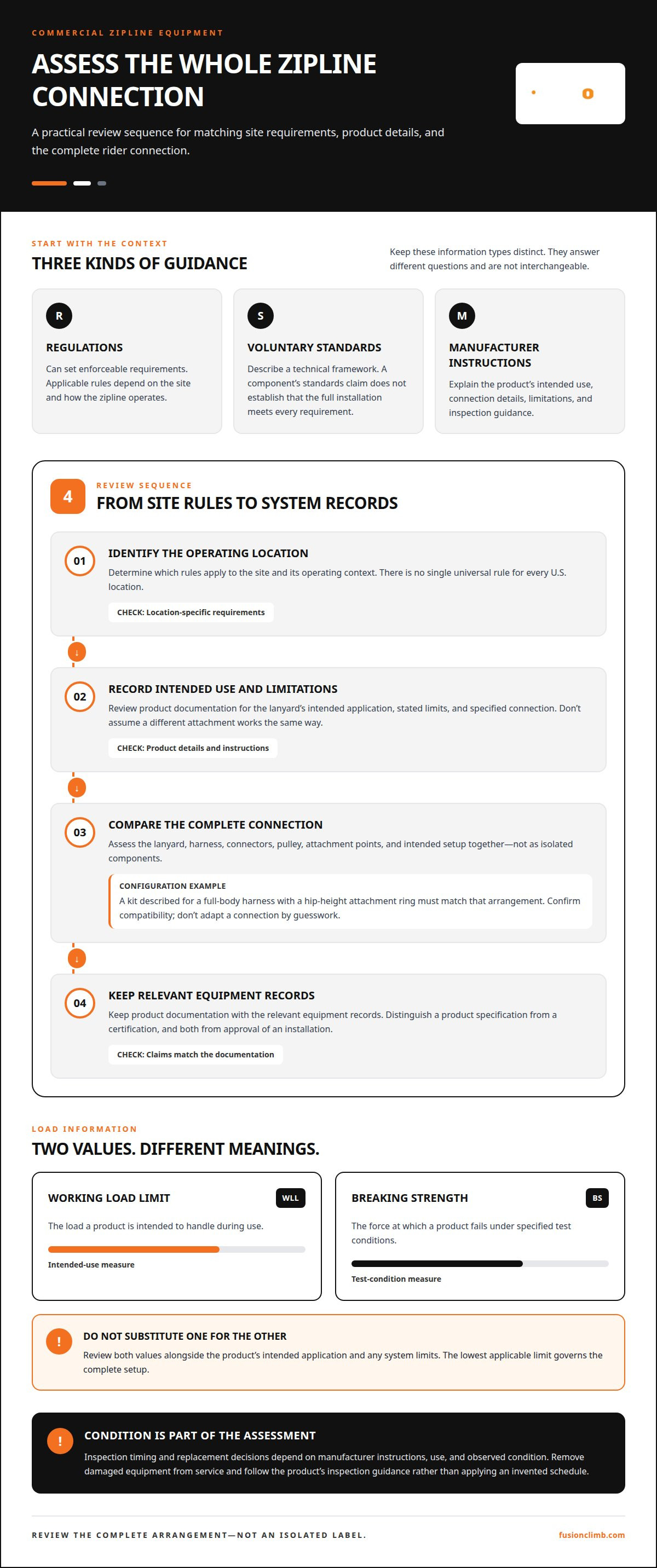
A working load limit describes the load a product is intended to handle during use. Breaking strength describes the force at which it fails under specified test conditions. These are different measures, so don’t use one in place of the other. For commercial zipline lanyards, review both values alongside the product’s intended application and any system limits. The lowest applicable limit governs the complete setup.
Are commercial zipline lanyards subject to state or local regulations? Requirements depend on the jurisdiction and how the zipline operates. There is no single universal rule for every U.S. location, so operators need to account for the requirements that apply to their site.
How often should lanyards be inspected and replaced? Inspection timing and replacement decisions depend on manufacturer instructions, use, and observed condition. Remove damaged equipment from service, and follow the product’s inspection guidance rather than applying an invented schedule.
What are the risks of an incompatible or damaged lanyard? A mismatch can compromise the intended connection or system setup, while damage can weaken the equipment. Either condition can put the rider and operation at risk.
Installation and Connection
Install and connect a lanyard according to its instructions and the intended system configuration. Before use, confirm that the attachment points, connectors, and harness arrangement are compatible. A kit described for a full-body harness with a hip-height attachment ring must match that configuration. Don’t adapt a connection by guesswork.
Use product documentation to resolve questions about fit, connection, and limits. For related straight-gate hardware options, compare the connector details with the lanyard and system requirements.
What safety standards apply to commercial zipline lanyards in the United States?
For a U.S. zipline operation, applicable safety requirements depend on the site and its operating context. Don’t assume an equipment label settles every question. A lanyard is one part of a connected system, so assess its specifications alongside the harness, connectors, pulley, and intended setup. A standard for one component may not address the complete rider connection.
Separate three kinds of information: regulations, voluntary standards, and manufacturer instructions. Regulations can set enforceable requirements; a voluntary standard describes a technical framework; product instructions explain intended use. They are not interchangeable. A claim that a component meets a standard does not, by itself, establish that the full installation meets every applicable requirement.
Use a practical review sequence for each equipment choice:
- Identify the operating location and the rules that apply there.
- Record the product’s intended use and stated limitations.
- Compare the lanyard, harness, and connector configuration as one assembly.
- Keep product documentation with the relevant equipment records.
This sequence helps reveal gaps. If a lanyard’s documentation specifies a particular harness attachment, don’t assume a different attachment works the same way. A component’s strength figure also does not demonstrate compliance with every site or system requirement. Review the complete arrangement, not an isolated label.
For example, documentation describing a lanyard’s intended connection can help determine whether the hardware matches the specified harness arrangement. It cannot answer questions about every local rule or the site’s full system design. Keep claims precise: distinguish a product specification from a certification, and distinguish both from approval of an installation.
Before selecting equipment, review the applicable requirements, product documentation, and system details together. This gives operators a clear basis for identifying which standard or rule governs each decision, without treating a general claim as universal approval.
Applicable requirements depend on the zipline’s location and operating context. Review regulations, relevant voluntary standards, and manufacturer instructions separately. Assess the lanyard as part of the complete rider connection rather than relying on a component label alone.
What are the working load limits and breaking strengths of zipline lanyards?
Use load figures to compare equipment within its intended application. A working load limit describes an intended-use threshold; breaking strength describes failure under specified test conditions. Neither figure alone confirms that a lanyard suits a complete zipline system. Check the product documentation for the exact value, units, and conditions attached to each figure.
Keep the two values separate in purchasing records. A specification sheet may state a working load limit and a distinct breaking strength. Record each under its correct label rather than treating the larger value as an operating allowance. A breaking-strength figure is not permission to load equipment to that point during routine operation.
Then consider the complete connection path. The rider, harness, lanyard, connector, and pulley are linked components. If one component has a lower applicable limit, it can constrain the assembly. A strong lanyard cannot compensate for a connector or attachment point that is unsuitable for the setup.
Read the manufacturer’s stated conditions closely. Test configuration, connection method, and intended use affect how to interpret a value. For example, assess a straight-gate connector using its own specifications and compatible use, not by inferring performance from a lanyard’s strength figure. Avoid comparing values unless their units and test conditions align.
For a practical selection review, match the lanyard documentation to the intended harness connection, identify applicable limits across connected components, and retain those details with equipment records. If the setup changes, reassess the affected components instead of carrying over an old comparison. This keeps selection grounded in documented performance, not assumptions or a single headline rating.
Review straight-gate connector options alongside the lanyard’s documented limits when assessing compatible hardware.
Fusion Climb: Lanyard and tether
Fusion Climb offers lanyard and tether equipment for operators assessing rider connections and system compatibility. Consider these options when comparing lanyards against your harness arrangement, connector details, and documented system limits.
A lanyard is part of a connected system, not an isolated component. Consider its product information alongside the specifications for the harness and other hardware in use. Fusion Climb also offers Full Body Harnesses, Superman Style Harnesses, and Zipline Pulleys, helping operators consider related equipment categories together.
Use product details to guide selection, keeping the intended configuration central to your decision. Contact Fusion Climb about lanyard and tether options for your operation.
Build Your Next Equipment Review
Make your next equipment review a working decision, not a paper exercise. Record the configuration you intend to use, compare each component’s documentation, and keep the selected setup consistent as equipment changes. That process gives your team a clear reference point when evaluating commercial zipline lanyards for an operation.
Consider connected equipment as part of the same planning conversation. Fusion Climb offers Full Body Harnesses, Superman Style Harnesses, and Zipline Pulleys, alongside lanyard and tether options. Reviewing these categories together helps keep attention on how components fit the intended system, rather than treating one item as the whole solution.
Take the next step by reviewing the hardware relevant to your setup and identifying the details that matter for your selection. Contact Fusion Climb about lanyards and move your equipment planning forward with a deliberate, system-focused approach.
Frequently Asked Questions
What are commercial zipline lanyards and how are they used?
Commercial zipline lanyards connect a rider’s harness to zipline equipment as part of the rider-attachment system. Their role depends on the intended configuration and compatible connection points. A system may, for example, connect a harness attachment to a trolley. Product instructions identify the lanyard’s intended use and how it integrates with other components.
What types of lanyards are used for commercial zipline systems?
Commercial zipline lanyards and tethers are selected according to their intended connections and compatible equipment. The category name alone doesn’t establish a lanyard’s design or application, so compare product documentation instead of assuming all options serve the same role. A lanyard intended for a particular harness connection should be considered alongside that attachment and the rest of the system.
How do you choose the correct commercial zipline lanyard for a cable and trolley system?
Match the lanyard’s documented use to the harness connection and trolley arrangement. Start with the trolley’s connection method, then compare it with the lanyard’s specified connectors and intended configuration. Review the equipment documentation as a set, including relevant system limitations. Don’t select a component based only on its appearance or a customer review: neither establishes compatibility.
Which manufacturers sell commercial zipline lanyards in the United States?
Fusion Climb sells lanyards and tethers in the United States for zipline and climbing equipment applications. Related equipment categories include Full Body Harnesses, Superman Style Harnesses, and Zipline Pulleys. Consider the lanyard alongside the intended harness and system connection, using product information to guide selection. This keeps the decision focused on equipment compatibility rather than a category label alone.